
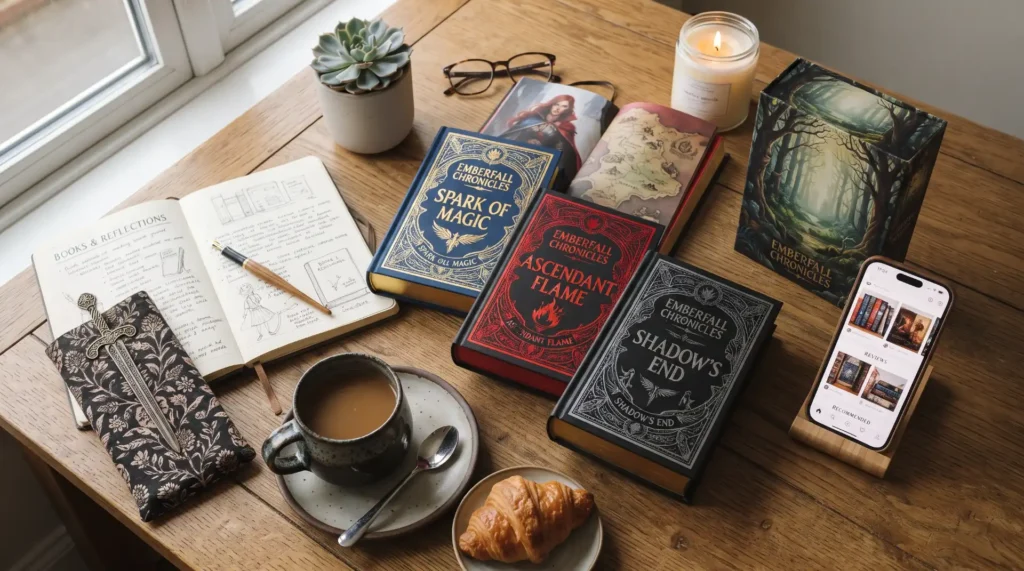
For many years, buying a book was a relatively straightforward experience. A reader found a title they wanted, compared the hardcover and paperback versions, checked the price, and took the book home. The story itself was usually the main reason for the purchase. The cover mattered, but once a reader opened the book, the physical differences between editions often became secondary.
That relationship with books is changing.
Across the United States, younger readers are increasingly encountering books as both stories and physical objects. A novel can now arrive with sprayed page edges, foil lettering, embossed artwork, illustrated endpapers, a ribbon bookmark, a redesigned dust jacket, exclusive artwork, bonus material, a signed page, or packaging created specifically for collectors. In some cases, several different editions of the same novel can appear on bookstore shelves at the same time.
This development has helped create a growing market for special edition books. These editions are particularly visible among young adult, fantasy, romance, romantasy, and other fandom-driven categories, where readers often form strong communities around particular authors, characters, and fictional worlds.
The trend does not mean younger readers have suddenly stopped caring about the stories inside books. In many cases, the opposite is true. A beautiful physical edition can become a way for readers to express their connection to a story they already love. The book becomes something they can read, display, photograph, discuss, collect, and revisit.
For Bookzee readers interested in how reading habits are changing in America, this trend is part of a larger shift toward more personalized reading experiences. Bookzee’s existing article on The New Era of Reading: Print Books, Ebooks, and Audiobooks Compared explores how American readers increasingly choose different formats depending on their circumstances. Special editions represent another part of that broader evolution: the physical book is not disappearing, but becoming more specialized for readers who value ownership and presentation.
What Is a Special Edition Book?
A special edition is generally a version of a book that has been produced with features that distinguish it from a standard edition. The exact features vary considerably. Some special editions contain additional written material, while others primarily change the physical design.
A publisher might produce a special edition with an exclusive cover, decorative page edges, new illustrations, a foreword, a bonus chapter, author notes, a redesigned interior, or a different binding. Retailers and book subscription companies can also offer exclusive versions with their own artwork or physical treatments when licensing arrangements allow them to do so.
Some editions are marketed as deluxe editions, collector’s editions, exclusive editions, anniversary editions, or limited editions. These terms can have different meanings depending on the publisher and retailer, so readers should not automatically assume that every attractive version is rare or likely to increase in monetary value.
What matters for today’s younger readers is often the experience of owning something that feels different.
A standard paperback may contain exactly the same story as a decorated hardcover, yet the two books can serve very different purposes. The paperback may be convenient and affordable, while the special edition may become part of a personal collection.
This distinction is especially important in an era when readers can access books in multiple formats. When a story is available as an ebook or audiobook, a beautifully produced hardcover can offer something digital formats cannot provide: a physical object that represents the reader’s relationship with the story.
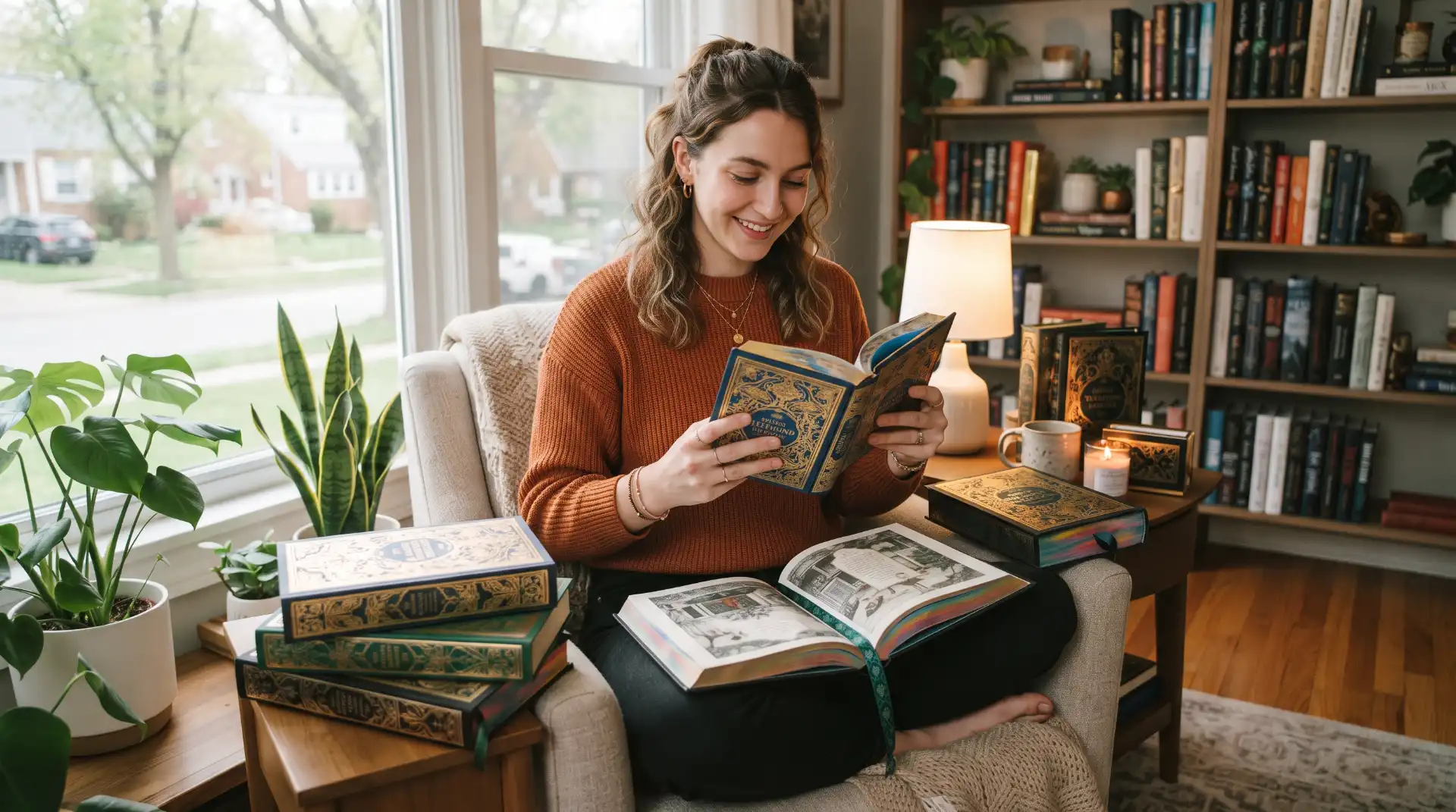
Why Physical Books Still Matter to Younger Readers
It might seem surprising that younger readers would be interested in premium physical books at a time when digital entertainment is everywhere. Smartphones, streaming platforms, gaming, social media, and ebooks have made digital content easier to access than ever.
Yet physical books continue to have a strong place in American reading culture.
Bookzee’s existing coverage of print, ebooks, and audiobooks explains that physical books offer qualities that digital formats cannot completely reproduce. A printed book can be touched, displayed, shared, annotated, collected, and kept for years. It can also become associated with a specific memory or period in a person’s life.
Special editions take those physical qualities even further.
A reader may not simply own a copy of a favorite novel. They may own a version with artwork that reminds them of the fictional world, a particular character, or a favorite moment in the story. The book can become a physical representation of an emotional experience.
This is particularly meaningful for younger readers who participate in fandom communities. When people become deeply interested in a fictional universe, collecting related objects can become part of how they participate in that community.
Books are especially interesting because they combine the role of entertainment with the role of collectible objects.
A figurine might represent a character. A poster might represent a fictional world. A special edition book can do both while also containing the complete story.
The Influence of BookTok and Visual Reading Culture
One of the biggest changes in modern book discovery has been the growing importance of visual social media.
Readers can now discover books through short videos, shelf tours, reading vlogs, recommendation posts, unboxing videos, aesthetic photographs, and discussions about favorite editions. The physical appearance of a book can therefore become part of its online identity.
Special editions are particularly suited to this environment.
A sprayed edge can be shown in a close-up photograph. An embossed cover can catch light in a short video. An illustrated endpaper can be revealed during an unboxing. A collection of matching editions can create a visually striking bookshelf.
The book itself becomes content.
This does not mean social media alone created the special-edition market. Publishing has produced collectible and deluxe editions for generations. However, modern social platforms make it easier for readers to see what other people are buying and collecting.
Publishers Weekly reported in 2024 that publishers and children’s publishing professionals were seeing increased demand for visually distinctive editions, with social-media sharing playing a role in the popularity of features such as sprayed edges and foil treatments. The publication also reported that younger readers increasingly viewed books as objects worth collecting and sharing.
That distinction is important. Social media can amplify an existing interest in beautiful books, rather than creating that interest from nothing.
Sprayed Edges Have Become a Major Design Feature
One of the most recognizable features of modern special edition books is the decorated page edge.
Traditional hardcover books generally have plain white, cream, or occasionally stained page edges. Special editions can transform those edges into another part of the artwork.
The pages may be sprayed with a solid color, a pattern, a landscape, symbols, illustrations, or designs connected to the story. When the book is closed and placed on a shelf, the page edge becomes visible and can make the edition immediately recognizable.
For younger readers, this creates an interesting visual effect.
A bookshelf containing several ordinary books can look very different from one containing editions with coordinated colors and artwork. Readers can arrange books according to color, series, author, genre, or design.
The physical appearance of the collection becomes part of the reading environment.
Publishers have increasingly experimented with these features. In 2026, Publishers Weekly reported that sprayed edges were also moving into middle-grade publishing, showing that premium physical design is not limited to adult fantasy and young adult books.
This suggests that publishers are experimenting with special editions across age groups rather than treating collectible books as a narrow adult market.
Fantasy and Romance Are Driving Much of the Interest
Some genres are especially well suited to special editions because their readers often become deeply connected to fictional worlds.
Fantasy is an obvious example.
Fantasy novels can have elaborate settings, magical systems, mythical creatures, royal families, fictional maps, and distinctive visual identities. A special edition can use those elements to create a physical object that feels connected to the world inside the book.
Romance and romantasy have also become major areas for deluxe editions. Readers may form strong attachments to characters and relationships, making them more interested in owning editions with artwork, exclusive content, or design elements connected to the story.
Publishers Weekly reported in 2024 that the rise of romance and romantasy was an important factor in the expansion of special editions. More recently, its 2026 coverage has described deluxe hardcovers as an increasingly established part of romance publishing and highlighted the role of subscription-box companies in producing redesigned editions.
The growth of these genres also connects with the broader U.S. reading environment. Circana reported that escapist and speculative fiction remained important parts of the 2026 U.S. book market, while manga recorded particularly strong print growth in the first quarter of the year.
This matters because fandom-heavy categories are naturally suited to collectible physical products.
When readers care deeply about a fictional world, the book can become more than something they finish and put away.
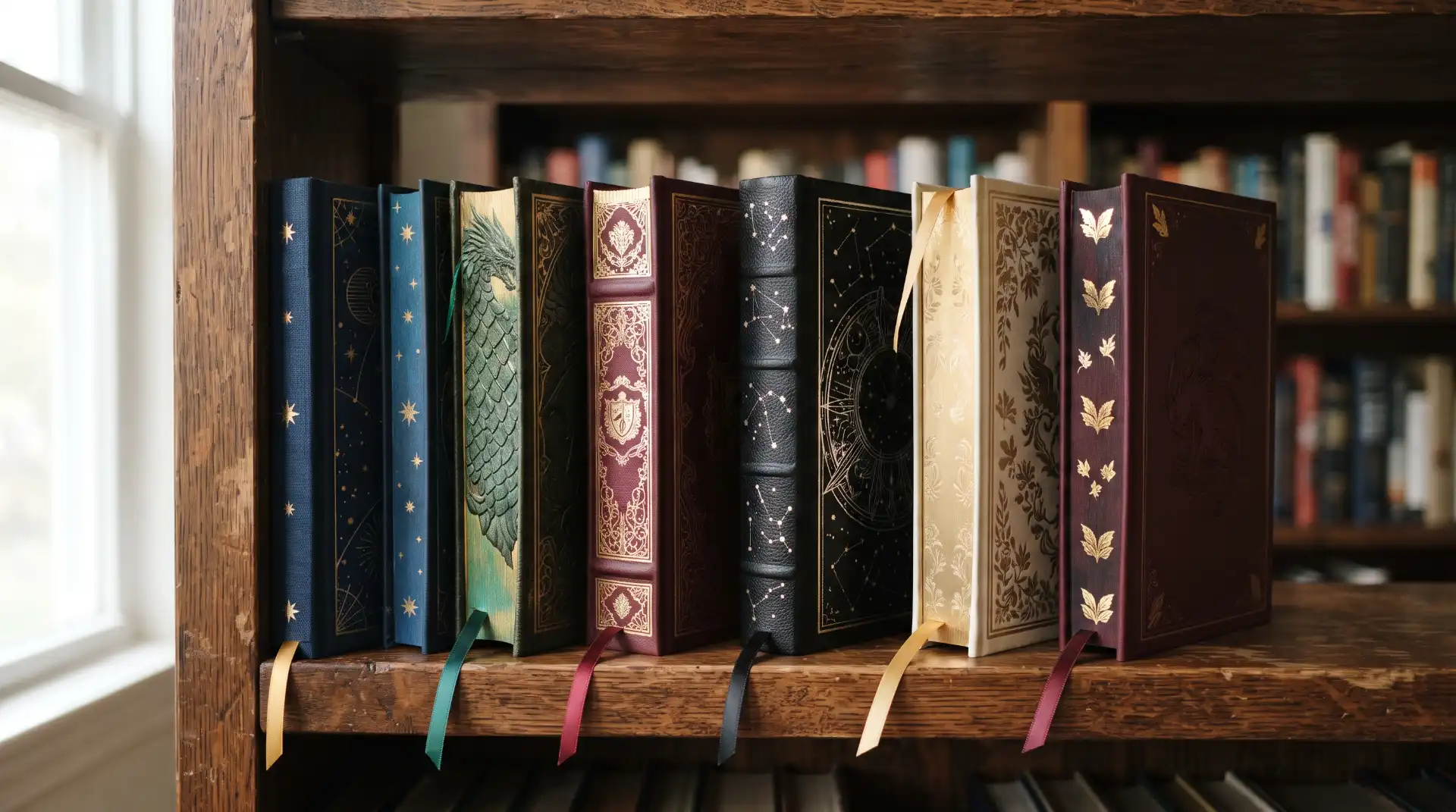
Special Editions Turn Books Into Collectibles
The idea of collecting books is not new.
Collectors have long searched for first editions, signed copies, rare printings, antique books, unusual bindings, and historically important publications. Traditional book collecting often emphasizes scarcity, condition, age, provenance, and historical significance.
Modern special-edition collecting can be different.
A younger reader may collect books because they love the author, series, characters, artwork, or overall design. The goal may not be financial investment. The collection can instead represent personal taste.
This is particularly noticeable among readers who build coordinated shelves.
A reader might collect every volume in a series with matching covers. Another might prefer editions featuring particular artists. Someone else may collect different editions of one favorite novel.
The motivation can be emotional rather than financial.
That distinction is useful because readers should be careful when hearing claims that a special edition will become a valuable investment. Most attractive books should not automatically be treated as financial assets. Rarity, condition, demand, provenance, and market behavior all influence collectible value.
For many younger readers, the enjoyment comes from ownership itself.
The Rise of Book Subscription Boxes
Book subscription services have also helped change the special-edition landscape.
Instead of simply receiving a standard copy of a newly released book, subscribers may receive an edition designed specifically for that service. These packages can include exclusive artwork, decorated edges, protective cases, bookmarks, art prints, or other merchandise.
The subscription model creates a direct relationship between reading and collecting.
Publishers Weekly reported in 2024 that book-box companies had helped make demand for exclusive editions more visible, while its 2026 reporting described a continuing expansion of deluxe editions connected to subscription services.
For younger readers, these boxes can feel similar to other forms of fandom merchandise. The difference is that the central object remains a book.
This can also create a sense of anticipation. A reader knows that an upcoming edition may have exclusive artwork or a design unavailable elsewhere. Opening the package becomes part of the entertainment.
The book is no longer purchased only at the end of the reading journey. The acquisition itself becomes an experience.
The Emotional Value of Owning a Favorite Book
There is another reason special editions appeal to younger readers: emotional attachment.
Readers often remember where they were when they discovered a favorite book. They may associate a novel with high school, college, a vacation, a friendship, a difficult period, or a major personal change.
Owning a beautiful edition can preserve that connection.
A reader who first discovered a novel as an ebook might later buy a hardcover because the story became important to them. Another reader might replace a worn paperback with a special edition after rereading the book several times.
In these cases, the special edition is not necessarily replacing the original reading experience.
It is commemorating it.
This is similar to why people keep concert tickets, photographs, souvenirs, or other physical reminders of meaningful experiences. The object carries personal significance because of what it represents.
A special edition book can perform the same role.
Why Beautiful Books Work So Well on Bookshelves
Bookshelves have also become part of modern reading culture.
A bookshelf is no longer necessarily hidden away as storage. Readers frequently photograph their shelves, organize them by color, create themed displays, or use them as part of home décor.
Special editions are particularly effective in this setting because their design remains visible even when the books are not being read.
This creates an interesting relationship between reading and interior design.
A book can be functional, cultural, emotional, and decorative at the same time.
For younger Americans living in apartments, college housing, shared homes, or smaller spaces, the physical books they choose to keep may therefore become more intentional. Instead of purchasing every book they read, some readers may reserve physical shelf space for books they particularly love.
This can make a special edition feel more meaningful than a standard copy.
The reader may borrow ordinary books from a library, read digital editions when convenient, and purchase a premium physical edition when a story becomes a personal favorite.
That behavior fits neatly with the multi-format reading culture discussed in Bookzee’s article about print books, ebooks, and audiobooks.
Special Editions and the New Generation of Readers
Younger readers are not one single group, and their reading habits differ significantly.
Some teenagers read primarily on paper. Others alternate between print and digital formats. Some discover books through libraries, while others find them through social media, friends, schools, bookstores, or online communities.
The growth of special editions does not mean every young reader wants collectible books.
Instead, it demonstrates that a significant segment of younger readers is interested in the physical experience of books.
Libraries and publishing organizations continue to recognize the importance of books for teen audiences. The American Library Association’s Young Adult Library Services Association maintains its Best Fiction for Young Adults program to help librarians and readers identify notable fiction published for ages 12 to 18.
This broader ecosystem matters because young readers encounter books through many different channels.
A teenager might discover a novel at the library, hear about it on social media, read the ebook, borrow the sequel, and eventually purchase a special hardcover for their personal collection.
The reading journey can therefore move between public access, digital formats, social communities, and physical ownership.
The Connection Between Fandom and Book Collecting
Fandom is one of the strongest forces behind modern special editions.
When readers become fans of a fictional universe, they often want to participate beyond simply finishing the story. They may discuss theories, create fan art, attend conventions, join online communities, follow the author, or collect merchandise.
Special edition books fit naturally into this environment.
They allow fans to own a physical object connected directly to the story they love.
For publishers, this creates opportunities to serve readers who are looking for deeper engagement. For readers, it provides another way to express enthusiasm.
The same pattern can be seen in other entertainment industries. Music fans may purchase vinyl records with exclusive artwork. Movie fans may buy collector’s editions. Game fans may purchase physical collector packages.
Books are increasingly participating in the same broader culture of fandom merchandise while retaining their traditional role as reading material.
The Difference Between a Special Edition and a Standard Reprint
It is useful for readers to understand that not every new cover represents a truly different edition.
Publishers may release books with redesigned covers for marketing reasons, while other editions include substantial physical or content changes. A new paperback cover might look completely different from the original hardcover but still be a standard edition.
A special edition typically has some additional feature or exclusive treatment that distinguishes it from the regular release.
That could involve the binding, cover, page edges, illustrations, bonus content, packaging, or retailer-specific design.
Readers interested in collecting should therefore look carefully at the edition information before purchasing.
They should also consider whether the features matter personally. A reader who loves illustrated endpapers may consider them valuable, while another reader may prefer to spend less on a standard hardcover.
The best collectible book is not necessarily the most expensive one.
It is the one that has meaning for the person who owns it.
Are Special Editions Too Expensive?
Price is one of the most important questions surrounding the trend.
Premium materials, additional artwork, specialized printing, packaging, and limited production can make special editions more expensive than ordinary paperbacks or hardcovers.
For some readers, the higher price is justified because the book is a long-term collectible. For others, the additional cost may not be worthwhile.
Younger readers can also face practical financial limitations. Students and early-career adults may have limited discretionary income, making it difficult to purchase multiple premium editions.
That is why readers should distinguish between enjoying special editions and feeling obligated to collect them.
A beautiful book does not have to become an essential purchase.
Libraries, used bookstores, standard editions, ebooks, and audiobooks all provide ways to enjoy stories without buying premium versions.
This is particularly important in an online environment where readers can see constant displays of large personal collections.
A social-media shelf may make collecting appear effortless, but it does not show every reader’s budget or purchasing priorities.
The FOMO Effect in Book Collecting
The term FOMO, or fear of missing out, has become increasingly relevant to collectible products.
A reader may see a limited quantity announcement and feel pressure to buy immediately. A special edition may be marketed as available only for a certain period or through a specific retailer.
That scarcity can increase excitement.
It can also encourage impulsive purchasing.
Young readers who are new to collecting may benefit from taking a moment to decide whether they genuinely want an edition or simply feel pressured because other readers are buying it.
One useful approach is to ask whether the reader would still want the book without the limited-edition label.
If the answer is yes, the purchase may have lasting personal value.
If the answer is no, waiting may make more sense.
Collecting should remain enjoyable rather than becoming a competition to own every available version.
Special Editions Can Encourage Physical Reading
There is an interesting possibility within this trend.
If a reader is attracted to the physical design of a book, that interest can create another reason to interact with printed books.
A teenager who primarily consumes digital media might encounter a beautifully designed novel online and become curious enough to visit a bookstore. A young adult who normally listens to audiobooks might purchase a physical copy of a favorite story.
In that sense, special editions can function as an entry point into physical book culture.
This does not mean premium editions are responsible for the entire resurgence of interest in print. The U.S. publishing market is influenced by many factors, including popular genres, adaptations, social media, libraries, bookstores, and consumer preferences.
Still, the special-edition phenomenon demonstrates that physical books can offer experiences beyond simply delivering text.
Special Editions and the Broader Future of Publishing
The publishing industry has always adapted to changes in technology and consumer behavior.
Ebooks changed distribution. Audiobooks expanded how stories could be experienced. Online bookstores changed purchasing. Social media changed discovery.
Special editions represent another development: publishers are increasingly treating the physical book as a designed consumer experience.
This does not mean every book needs a deluxe version.
Instead, publishing companies can offer different options for different readers. A standard paperback can remain affordable and accessible, while a hardcover or special edition can serve collectors and dedicated fans.
This creates a wider product ecosystem around the same story.
The approach may become particularly useful for books with strong communities. If a novel develops a large fan base, publishers can offer readers multiple ways to participate in the title’s success.
Some readers will buy the inexpensive paperback. Others will borrow it from a library. Some will choose an ebook or audiobook. A smaller group may purchase a premium edition.
Each group can still be part of the same reading community.
What Younger Readers Are Looking For in a Special Edition
Although preferences vary, several qualities commonly make special editions attractive.
Visual design is one of the most obvious. A distinctive cover can immediately separate an edition from standard copies.
Physical details also matter. Sprayed edges, foil stamping, embossed elements, decorative endpapers, and ribbon bookmarks can make a book feel more substantial.
Exclusive content can add another layer. Readers may appreciate bonus chapters, author notes, illustrations, maps, interviews, or other material that expands their relationship with a story.
Packaging can also contribute to the experience. A slipcase or protective box can make an edition feel more like a collector’s object.
However, design alone cannot sustain reader interest indefinitely.
A beautiful book still needs a story that readers care about.
The strongest special editions combine both elements: a compelling book and a physical presentation that enhances the reader’s connection with it.
What This Trend Means for American Bookstores
For U.S. bookstores, special editions create opportunities to make physical shopping more visually engaging.
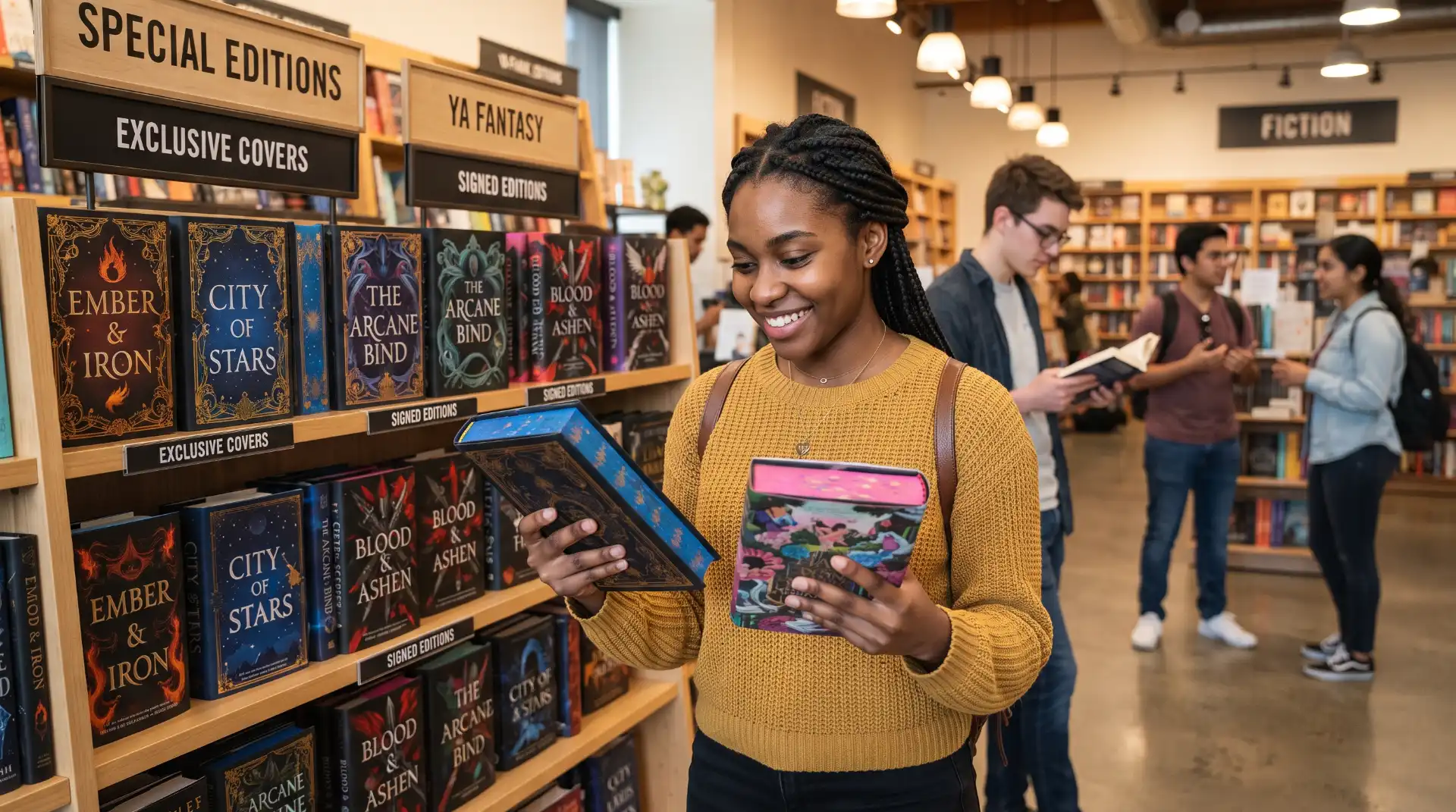
A display featuring decorated books can encourage customers to stop, pick up a copy, inspect the cover, and compare different editions.
This can be especially useful in an environment where online retailers make price comparison easy.
Physical bookstores offer something an online listing cannot completely reproduce: the opportunity to see and touch the actual book.
A reader can examine the texture of the cover, look at the page edges, flip through the illustrations, and compare editions side by side.
This reinforces the idea that physical books are experiences as well as products.
Independent bookstores can also use special editions as part of themed displays, author events, reading groups, and local literary communities.
The Role of Libraries in a Collectible Book Culture
Libraries occupy an interesting position in this trend.
A library’s primary purpose is access, not collecting for personal ownership. Yet libraries can still help younger readers discover the books that eventually become favorites.
A teenager may borrow a novel from a public library, become a fan, and later purchase a special edition.
Libraries also provide access to readers who cannot afford premium books.
This is one reason the growing popularity of collectible editions does not necessarily conflict with traditional library culture. Both can exist within the same reading ecosystem.
Libraries can provide broad access to stories, while bookstores and publishers provide opportunities for ownership and collecting.
The two experiences serve different purposes.
Will Special Edition Books Continue Growing?
The special-edition market is likely to remain an important part of contemporary publishing, although the exact level of growth is difficult to predict.
Publishing companies are clearly experimenting with more premium physical treatments, while book subscription companies continue producing exclusive editions. At the same time, younger readers are participating in online communities where book aesthetics and collections receive considerable attention.
There are also signs that publishers are expanding premium treatments into additional categories and age groups. The 2026 movement of sprayed edges into middle-grade publishing is one example.
However, more editions do not necessarily mean every special edition will become successful.
Readers have limited budgets and limited shelf space. If too many versions of the same book appear, consumers may become more selective.
That could eventually make truly distinctive editions more valuable from a reader’s perspective.
Instead of buying every variation, collectors may focus on editions with meaningful artwork, exceptional design, author signatures, significant anniversaries, or strong personal connections.
How to Choose a Special Edition Without Overspending
For readers who enjoy the trend, the key is to collect intentionally.
A good starting point is to focus on favorite books rather than buying every attractive edition. A reader might choose one or two novels that have personal significance and look for a special version of those titles.
It can also help to compare what the edition actually includes.
A higher price may make sense if the book contains substantial additional material or exceptional production quality. A small cover variation may not justify a significant premium for every reader.
Readers should also check whether an edition is genuinely limited, exclusive to a retailer, or simply a standard reissue with new packaging.
Most importantly, the physical book should remain connected to the enjoyment of reading.
A bookshelf does not need to function as a competition.
A small collection of books that genuinely matter to the owner can be more meaningful than a large collection purchased simply because an algorithm suggested it.
The Future of Books May Be More Physical and More Personal
The rise of special editions reveals something interesting about the future of reading.
Digital technology has made books easier to access, carry, search, and listen to. Yet those developments have not eliminated the desire to own physical books.
Instead, physical books are becoming more specialized.
Readers who simply want access to a story can choose an ebook or audiobook. Readers who want convenience can choose a paperback. Readers who want something permanent and visually distinctive can purchase a special edition.
This creates more choices rather than fewer.
For younger readers, those choices are increasingly connected to identity, community, fandom, and personal expression.
A book can be something they read privately, discuss with friends, recommend online, photograph for a bookshelf post, display in a bedroom, or keep for years as a reminder of a particular stage of life.
That is a very different role from simply being a container for written words.
Final Thoughts
Special edition books are becoming increasingly visible among younger readers because they combine several things that modern book culture values: storytelling, design, fandom, community, ownership, and personal expression.
The trend is particularly noticeable in young adult, fantasy, romance, and other genres with strong reader communities. Sprayed edges, foil details, illustrated endpapers, exclusive covers, bonus material, and subscription-box packaging can transform a familiar novel into an object that feels personal and collectible.
Social media has helped amplify that experience by making book collections and unboxing moments highly visible. Publishing companies and specialty book services have responded by creating more editions designed around the interests of dedicated readers.
But the most important part remains the story.
A special edition has value because of what it represents to the reader. For one person, it might commemorate a favorite character. For another, it might mark the beginning of a reading hobby. Someone else might simply love the artwork and enjoy displaying the book at home.
Younger American readers are showing that physical books can have a role that goes beyond traditional reading. They can be collectibles, conversation pieces, gifts, memories, and expressions of personal taste.
That does not make standard editions less important. It simply gives readers another reason to appreciate the physical book.
As reading continues to evolve in the United States, the future may not belong exclusively to print, ebooks, or audiobooks. Instead, readers may continue choosing different formats for different purposes while reserving special physical editions for the stories they want to keep close.
For a generation surrounded by digital entertainment, there is something surprisingly powerful about owning a beautiful physical object connected to a story they love.
And that may be the real reason special edition books continue to attract younger readers: they turn reading into something that can be experienced, remembered, displayed, and collected long after the final page has been read.