

Understanding the Environmental Cost of Making Books
Books have an important place in American society. They educate students, entertain families, preserve historical knowledge, support independent thinking, and introduce readers to different cultures and experiences. From school textbooks and bestselling novels to illustrated children’s books and specialized academic publications, the publishing industry produces millions of physical books for readers throughout the United States.
However, behind every printed book is a manufacturing and distribution process that requires natural resources, energy, water, transportation, and packaging. Paper must be produced, printing equipment must operate, covers and bindings must be manufactured, and finished books must travel through warehouses, distribution centers, bookstores, libraries, and online retail networks before reaching readers.
These activities create an environmental footprint that is not always obvious when someone picks up a book from a bookstore shelf.
The environmental impact of the book industry involves several interconnected issues. Paper production can contribute to forest pressure, water consumption, energy demand, and greenhouse gas emissions. Printing facilities generate manufacturing waste and may use chemicals, inks, coatings, and adhesives. Packaging and transportation add further environmental costs, particularly when books are shipped over long distances. Unsold inventory and discarded publications also create challenges for publishers and retailers.
At the same time, the publishing industry has opportunities to become more sustainable. Responsible forestry, recycled paper, renewable energy, efficient printing equipment, improved inventory management, environmentally conscious packaging, and book reuse programs can reduce the environmental costs associated with producing and distributing publications.
Readers also have an important role. Purchasing used books, borrowing from libraries, sharing publications, recycling appropriate materials, and supporting publishers that provide credible environmental information can help encourage more responsible practices.
Understanding the environmental impact of the book industry does not mean that printed books should disappear. Physical books offer educational, cultural, and social benefits that remain important. Instead, the challenge is finding ways to preserve those benefits while reducing unnecessary resource consumption and waste.
This guide explores how the American publishing industry affects the environment, what sustainable paper and eco-friendly printing actually involve, how book recycling works, and what publishers, authors, booksellers, and readers can do to support greener publishing.
1. How the Book Industry Affects the Environment
The environmental impact of a book begins long before it reaches a reader. A typical printed publication passes through several stages, including material sourcing, paper manufacturing, printing, binding, packaging, transportation, retail distribution, use, and disposal or reuse.
Each stage requires resources and creates different environmental pressures.
The Environmental Footprint of a Printed Book
The first major stage involves obtaining the materials needed to manufacture a book. Paper is usually the most visible component, but printed publications also require ink, binding materials, adhesives, coatings, cardboard, and packaging.
The production of these materials requires energy and water. Paper mills process wood fibers or recovered paper, while printing facilities operate industrial equipment to transfer text and images onto paper. Binding facilities then assemble the pages and covers into finished products.
Transportation adds another important part of the footprint. Paper may travel from a mill to a printing facility, finished books may move to a distribution center, and individual orders may then be shipped to bookstores or customers.
The exact environmental impact depends on several factors, including the type of paper, the energy sources used by manufacturers, the efficiency of production equipment, the distance traveled, the number of copies produced, and how books are handled after use.
A useful example comes from Oxford University Press’s responsible publishing reporting. Its 2023 carbon footprint data identified paper and book production as responsible for more than two-thirds of its reported greenhouse gas emissions, with shipping printed publications contributing another significant share. This illustrates why sustainable paper sourcing and efficient distribution are major priorities for publishers.
Oxford University Press
It is important not to assume that every book has the same environmental footprint. A small paperback printed close to its intended market may have a very different impact from a large illustrated hardcover manufactured overseas and shipped across several distribution networks.
Forest Resources and Paper Demand
Paper production is closely connected to forest resources because wood pulp is a major source of paper fiber.
Trees are renewable resources when forests are managed responsibly, but that does not mean every forestry operation is automatically sustainable. Poorly managed logging can contribute to habitat destruction, soil erosion, biodiversity loss, and forest degradation.
The environmental consequences depend on how forests are managed, which species are harvested, whether ecosystems are protected, and whether harvested areas are regenerated appropriately.
For the book industry, responsible paper sourcing is therefore about more than simply purchasing paper made from trees. Publishers need to understand where their paper comes from and whether suppliers follow credible environmental and forestry standards.
Recycled paper can reduce demand for virgin fiber, although recycled materials still require collection, processing, cleaning, and manufacturing.
Water and Energy Consumption
Paper manufacturing is an industrial process that can require substantial water and energy.
Water is used in pulping, cleaning, processing, and other stages of paper production. Mills must also manage wastewater containing suspended solids, organic material, and process chemicals.
Energy is required to operate machinery, produce heat, dry paper, and transport materials. The climate impact of this energy depends partly on whether facilities rely on fossil fuels, electricity from renewable sources, or other energy systems.
Printing facilities also consume electricity through presses, lighting, climate control, digital equipment, and finishing machinery.
Improving efficiency at both paper mills and printing facilities can reduce operating costs while lowering environmental impacts.
2. Sustainable Paper: Choosing Better Materials for Books
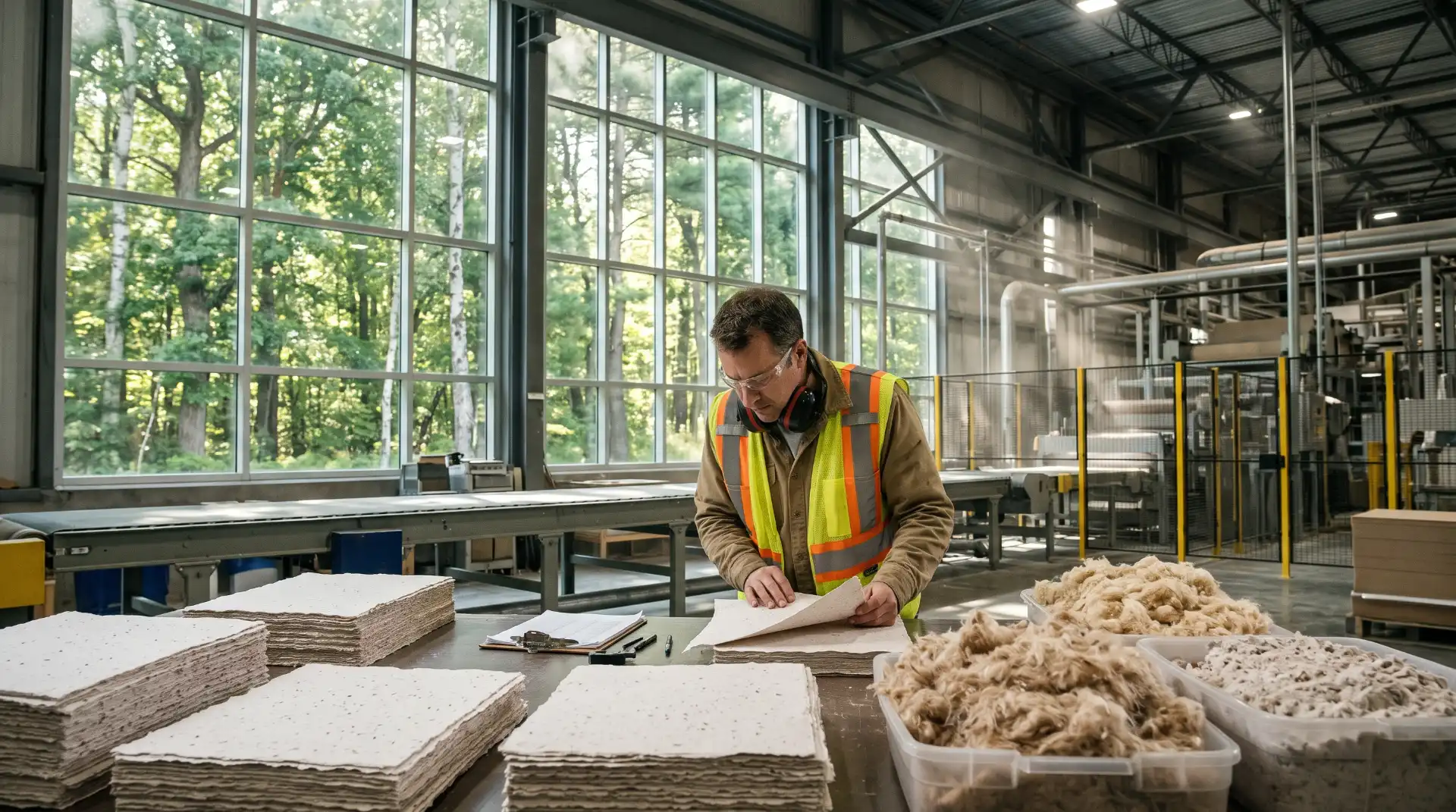
Paper selection is one of the most important decisions in environmentally responsible publishing.
Publishers must balance several considerations, including print quality, durability, appearance, price, availability, and environmental performance.
A novel printed on lightweight uncoated paper has different material requirements from a photography book containing full-color images and heavy glossy pages. Textbooks, children’s books, graphic novels, and art publications also have different production requirements.
Sustainable paper sourcing involves evaluating these differences while choosing materials that reduce environmental harm.
Recycled Paper and Its Role in Publishing
Recycled paper is produced using fibers recovered from previously manufactured paper products.
These fibers can come from newspapers, office paper, cardboard, magazines, books, and other paper waste streams. Instead of relying entirely on newly harvested wood, manufacturers process recovered fibers into material that can be used to produce new paper.
One important distinction is the difference between pre-consumer and post-consumer recycled content.
Pre-consumer material generally includes manufacturing scraps and paper waste recovered before reaching an end user. Post-consumer material comes from products that consumers have already used and discarded through appropriate collection systems.
Post-consumer recycled content is particularly valuable because it helps return materials from the waste stream into productive use.
However, recycled paper is not automatically the best choice for every publication. Fiber quality, manufacturing energy, transportation distances, available infrastructure, and the intended use of the paper all influence its environmental performance.
Some publications require specific paper characteristics that can be difficult to achieve with certain recycled grades. High-quality illustrations, photographic reproduction, and specialized printing may require careful material selection.
A responsible publisher should evaluate the entire production process rather than relying on a single environmental label.
FSC-Certified and Responsibly Sourced Paper
Another important approach involves sourcing paper from responsibly managed forests.
The Forest Stewardship Council, commonly known as FSC, operates a certification system designed to promote responsible forest management and traceability throughout participating supply chains.
FSC certification can help publishers and buyers identify paper products associated with specific forest-management and sourcing requirements.
However, readers should understand that certification labels can represent different material categories. An FSC-certified product is not necessarily made entirely from recycled material. Some certified products contain fiber from responsibly managed forests, recycled sources, or a combination of approved materials.
Publishers should also verify that environmental claims apply to the actual paper used in a particular book rather than assuming that a company’s general sustainability statement covers every publication.
For readers, looking for credible sourcing information can be a useful starting point when comparing publishers.
Why Paper Quality Still Matters
Sustainability does not mean that every book should use the thinnest or cheapest paper available.
A book needs to remain readable, durable, and appropriate for its purpose.
A children’s picture book may need stronger pages to withstand frequent handling. A college textbook may require paper that supports highlighting and repeated use. A photography publication may need paper capable of reproducing detailed images.
If an environmentally marketed book deteriorates quickly and must be replaced, the intended resource savings may be reduced.
Durability is therefore an important part of sustainable design.
Publishers can improve sustainability by selecting paper that meets the book’s functional requirements without unnecessary weight, excessive coating, or decorative materials that complicate recycling.
3. Eco-Friendly Printing: Making Book Production Cleaner
Printing is another major part of the publishing industry’s environmental footprint.
Traditional book printing involves industrial machinery, energy consumption, inks, cleaning materials, plates, coatings, and finishing processes. The environmental impact varies according to the printing technology and the operational practices of each facility.
Eco-friendly printing attempts to reduce these impacts through better equipment, material choices, energy management, and waste prevention.
Vegetable-Based and Lower-Impact Inks
Printing inks contain pigments, binders, and other ingredients that determine their appearance and performance.
Some conventional inks use petroleum-derived components. Certain alternatives use vegetable oils or other formulations designed to reduce reliance on petroleum-based ingredients.
Soy-based inks are one example that has received attention in discussions about environmentally conscious printing.
However, vegetable-based ink should not automatically be considered completely harmless. Its overall environmental performance depends on the ingredients, manufacturing process, printing application, and end-of-life treatment.
Publishers should ask printers for information about ink composition, chemical management, emissions, and compatibility with paper recycling.
The goal is to use inks that meet print-quality requirements while minimizing unnecessary environmental impacts.
Energy-Efficient Printing Equipment
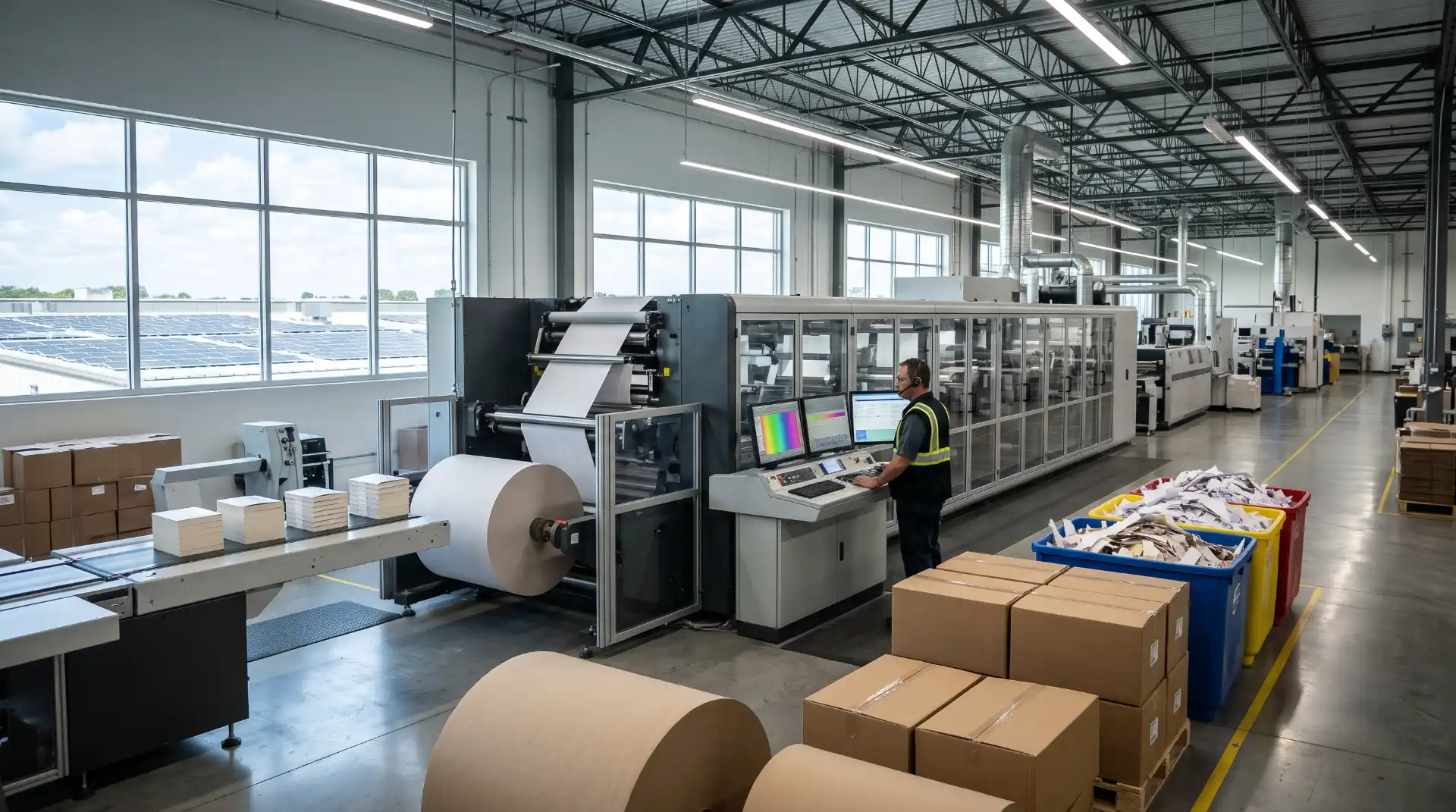
Modern printing facilities can reduce electricity consumption by upgrading equipment, improving production planning, and maintaining machinery properly.
Energy-efficient presses may reduce power requirements while improving production consistency.
Other improvements include automated systems that reduce setup waste, efficient lighting, optimized ventilation, and better temperature management.
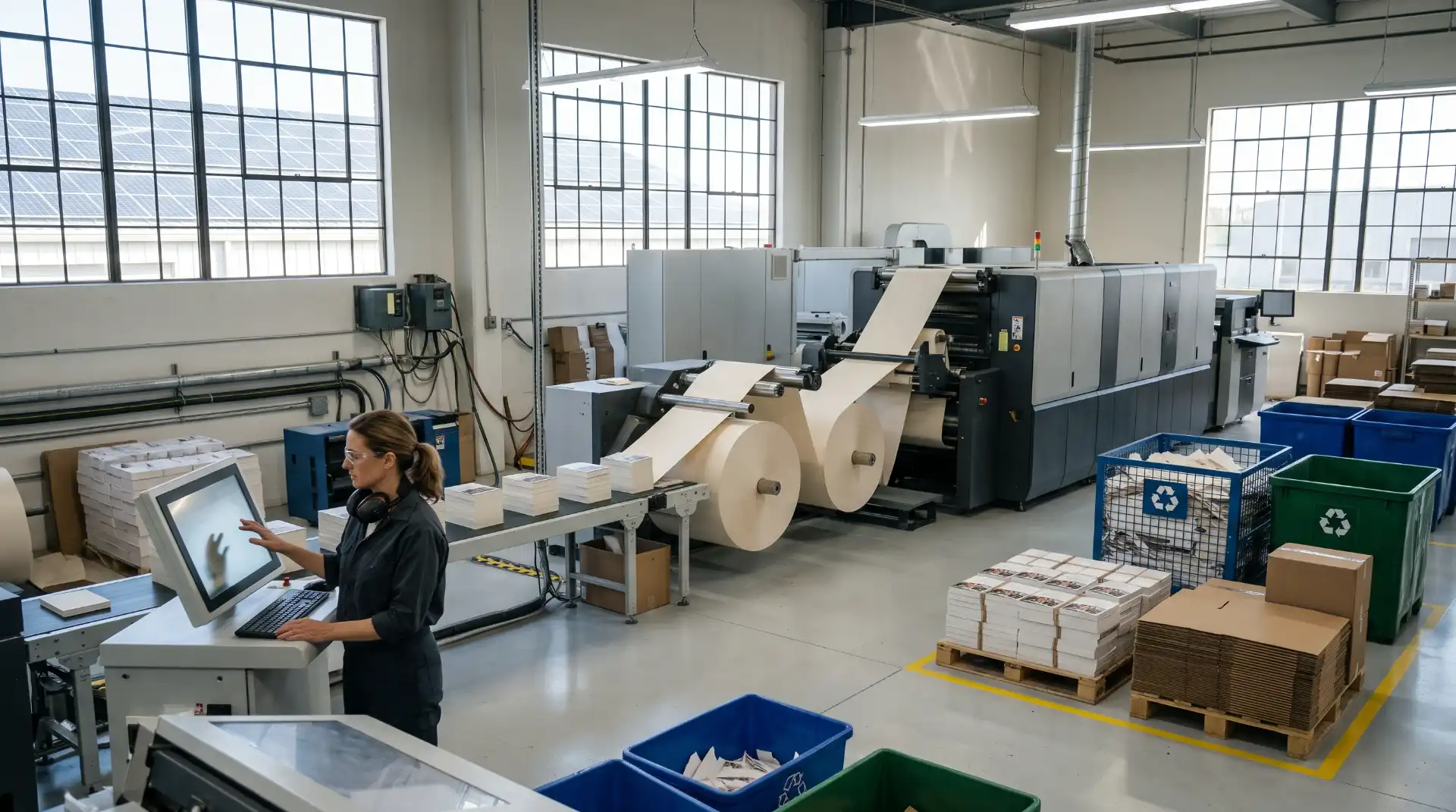
Printing facilities can also evaluate renewable electricity options, including onsite solar installations or electricity purchased through appropriate renewable-energy programs.
These improvements can be particularly valuable for large printers operating continuously or producing substantial volumes of books.
Reducing Printing Waste
One of the simplest ways to improve environmental performance is to prevent unnecessary waste before it occurs.
Traditional printing can generate waste during machine setup, color adjustments, test runs, cutting, binding, and finishing.
Digital workflow improvements can reduce some of these losses by making it easier to check layouts, proof pages, and correct errors before full production begins.
Better coordination between publishers and printers can also reduce rejected batches and unnecessary reprints.
For example, publishers can establish more accurate production specifications and review digital proofs carefully before approving a large print run.
These improvements reduce material waste while saving money.
Digital Printing and Short-Run Production
Digital printing has become increasingly important for publishers that need smaller quantities or more flexible production schedules.
Traditional offset printing is often efficient for large print runs, but producing thousands of copies of a book before demand is established can create inventory problems.
Digital printing allows publishers to manufacture smaller quantities more economically in certain situations.
This can be especially useful for independent authors, specialized academic publications, niche nonfiction, and books with uncertain demand.
Short-run production can reduce the risk of producing large quantities of books that never sell.
However, digital printing is not automatically environmentally superior in every situation. The impact depends on equipment efficiency, materials, print volume, and distribution arrangements.
Publishers should compare actual production requirements rather than assuming that one printing method is always greener.
4. Print-on-Demand Publishing and the Problem of Overproduction
One of the publishing industry’s most significant environmental challenges is producing more books than readers actually purchase.
Traditional publishing often requires publishers to estimate demand months before a book reaches stores. These estimates influence printing quantities, distribution plans, promotional activities, and inventory decisions.
If demand is underestimated, publishers may miss sales opportunities. If demand is overestimated, however, thousands of unsold copies may remain in warehouses or eventually be removed from distribution.
How Print-on-Demand Reduces Unnecessary Inventory
Print-on-demand, commonly called POD, allows a book to be printed when an order is received rather than requiring a publisher to manufacture a large quantity in advance.
This approach has become particularly useful for independent authors, small publishers, educational publications, and books with specialized audiences.
For example, an independent author might publish a regional history book that attracts a relatively small but consistent audience. Instead of printing 2,000 copies immediately, the author can use print-on-demand production to fulfill individual orders as they arrive.
This reduces the need for large inventories and can limit the risk of unsold books.
Print-on-demand also makes it easier to keep older publications available without maintaining extensive warehouse stock.
However, POD is not automatically the most environmentally efficient method. Printing and shipping individual copies can involve additional packaging and transportation. A conventional print run may have lower production impacts per copy when a large number of books are guaranteed to sell.
The most sustainable approach depends on demand, production efficiency, shipping distances, and the number of copies required.
Why Publishers Need Better Demand Forecasting
Publishers can improve environmental performance by understanding how readers discover, purchase, and use books.
Historical sales figures, preorders, bookstore feedback, library requests, and online interest can help estimate demand more accurately.
For example, a publisher releasing a new textbook may have information about university enrollment, course adoption, and institutional purchasing plans. These details can help determine an appropriate initial print quantity.
Publishers can also use smaller initial print runs and schedule additional production when sales justify it.
This strategy reduces the financial risks associated with overproduction while helping prevent unnecessary material consumption.
What Happens to Unsold Books?
Unsold books may be returned by retailers, stored in warehouses, discounted, donated, recycled, or destroyed.
The outcome depends on publishing agreements, inventory conditions, distribution arrangements, and the commercial value of the remaining stock.
Returns are particularly challenging because a book may travel from a publisher to a distribution center, then to a retailer, and eventually back through the supply chain without reaching a reader.
Better inventory management and more accurate demand forecasting can reduce these unnecessary movements.
Publishers should also explore responsible donation and resale channels before treating unsold publications as waste.
5. Book Recycling: What Happens When Readers Finish Their Books?
Recycling is one of the most familiar environmental practices, but recycling books is not always as straightforward as recycling ordinary office paper or newspapers.
Books contain different materials that may need to be separated before their paper components can enter an appropriate recycling process.
Hardcovers, paperback covers, glossy pages, adhesives, protective coatings, and decorative elements can all affect how a publication is handled.
Understanding these differences can help readers dispose of unwanted books responsibly.
Can Paperback Books Be Recycled?
Paperback books are generally easier to prepare for paper recycling because their covers are often made from paper-based materials.
However, local recycling programs may have different rules regarding book covers, adhesives, and mixed paper products.
Some facilities accept paperback books intact, while others may require certain components to be removed.
Readers should check their local recycling provider’s instructions rather than assuming that every paper product belongs in the same recycling container.
It is also important to avoid placing books in recycling bins when they are contaminated with food, liquids, or other materials that can interfere with processing.
Can Hardcover Books Be Recycled?
Hardcover books can be more complicated because their covers may contain cardboard, cloth, laminated paper, plastic coatings, and adhesives.
Some recycling programs accept hardcover books, while others require the covers to be separated from the interior pages.
The spine and binding materials can also complicate processing.
Before discarding hardcover books, readers should check whether their municipality or recycling provider has specific preparation instructions.
A useful alternative is donating books that remain readable and in good condition.
Why Reusing Books Is Often Better Than Recycling Them
Recycling helps recover materials, but reusing a book can preserve more of the value already invested in its production.
A book that remains in good condition may be read by several people before eventually reaching the recycling stage.
For example, a family could pass children’s books to relatives, donate older textbooks to educational organizations, or exchange novels with neighbors.
Libraries also extend the useful life of publications by lending copies to multiple readers.
Used bookstores provide another important channel. They allow readers to purchase previously owned books at lower prices while keeping publications in circulation.
This approach supports affordability and reduces the need to manufacture replacement copies.
Book Donation Programs in the United States
American readers have several options for donating books.
Public libraries may accept donations for collections, book sales, or community programs, although acceptance policies vary.
Schools, literacy organizations, community centers, nonprofit groups, shelters, and educational programs may also welcome appropriate publications.
However, not every organization accepts every type of book. Textbooks, outdated reference materials, damaged publications, and older technical manuals may have limited usefulness.
Before making a donation, contact the organization to confirm its needs.
Books should be clean, readable, and in reasonable condition. Donating unusable materials simply transfers the disposal problem to another organization.
6. The Role of Libraries, Used Bookstores, and Book Exchanges in Sustainable Reading
The most environmentally responsible book is not necessarily a new book made from recycled paper. In many circumstances, extending the useful life of an existing publication can be an effective way to reduce demand for additional manufacturing.
Libraries, used bookstores, and community exchange programs make this possible.
Public Libraries and the Shared Book Economy
Public libraries allow many people to access the same physical publication.
Instead of every interested reader purchasing an individual copy, a library can circulate a book among numerous borrowers.
Libraries also provide digital books, audiobooks, educational resources, and research materials.
This shared-access model can help reduce the need for individual purchases, particularly when readers only want to access a book once.
However, libraries also have environmental responsibilities. They purchase new materials, maintain buildings, operate computer systems, and transport books between branches.
Their overall environmental performance depends on how effectively they manage these activities.
Nevertheless, the ability to share books across a community makes libraries important participants in sustainable reading.
Used Bookstores and Secondhand Markets
Used bookstores help publications remain in circulation after their original owners no longer need them.
A reader might purchase a secondhand novel, enjoy it, and later resell or exchange it with another person.
This process can extend the useful life of a publication for years.
Secondhand bookstores also make reading more affordable. Students, families, collectors, and budget-conscious readers can find books at lower prices than many new retail editions.
Online used-book marketplaces have expanded these opportunities by connecting sellers and buyers across the country.
The environmental benefits are strongest when secondhand purchases genuinely replace the demand for new copies rather than simply increasing the total number of books purchased.
Organizing Community Book Exchanges
Book exchanges provide a simple way for readers to share publications without requiring complicated arrangements.
A neighborhood can establish a small book-sharing shelf in a community center, apartment building, workplace, or public space with permission.
Participants can leave books they no longer need and take publications they want to read.
Schools and libraries can organize larger exchange events during reading weeks or community celebrations.
For families, book exchanges can be particularly helpful because children frequently outgrow reading materials or move on to different interests.
Community exchanges also encourage social interaction and make reading more accessible.
Bookzee has explored related reading-community developments in its coverage of how readers are discovering books through digital platforms and community recommendations.
7. E-Books and Audiobooks: Are Digital Books Better for the Environment?
Digital publishing is frequently presented as an environmentally friendly alternative to printed books.
E-books eliminate the need to manufacture paper pages, print covers, and physically ship individual copies. Audiobooks can also provide access to literature without requiring a new printed publication.
However, digital reading still has an environmental footprint.
Electronic devices require raw materials, manufacturing, electricity, data storage, software development, and eventual disposal.
Determining whether digital books are more sustainable requires examining how readers use technology and how many physical books are actually replaced.
The Environmental Cost of E-Readers and Tablets
E-readers and tablets contain electronic components that require materials such as metals, minerals, glass, and plastics.
Manufacturing these devices consumes energy and creates emissions. Batteries and electronic components also create waste-management challenges when devices reach the end of their useful lives.
The environmental impact of an e-reader can be spread across thousands of reading sessions if someone uses the same device for several years.
However, a person who purchases an expensive device and uses it only occasionally may not receive the same environmental benefit.
Device longevity, repairability, energy consumption, and recycling options are important considerations.
Digital Reading and Data Center Energy Use
Digital books are delivered through online systems that depend on servers, networks, data centers, and electricity.
Downloading a book is not environmentally impact-free, although the energy required for an individual transaction may be relatively small.
The larger environmental questions involve the entire digital infrastructure and the growing volume of online content.
Cloud storage, digital distribution, streaming, and electronic services all depend on physical equipment and energy resources.
Readers should therefore avoid assuming that digital publishing has no environmental costs.
When E-Books May Be More Sustainable
E-books can be a practical option for people who read frequently on an existing device.
Someone who already owns an e-reader and downloads hundreds of books may avoid purchasing and transporting a comparable number of printed publications.
Digital formats are also useful for students who need access to large collections of academic materials and travelers who want to carry many books without additional physical weight.
However, the environmental benefits depend on actual purchasing and reading behavior.
A recent 2026 study published in Cleaner and Responsible Consumption examined the relationship between digitalization and the environmental impact of the book market. Its findings suggest that e-books can reduce emissions for heavy readers, while physical books may perform favorably when they are widely shared. The study also cautions that digital distribution can expand overall consumption rather than simply replace printed books.
ScienceDirect
This distinction is important. If someone purchases an e-reader, continues buying the same number of printed books, and also begins downloading additional titles, digitalization may increase total consumption rather than reduce it.
Choosing Between Physical and Digital Books
There is no universal answer to whether physical or digital books are better for the environment.
The most appropriate format depends on reading habits, existing devices, distribution methods, book-sharing opportunities, and the type of publication.
Readers can make more informed choices by considering whether they genuinely need a new device or a new printed copy.
For example, borrowing a physical book from a library may be more sensible than purchasing an electronic device for occasional reading.
Conversely, a frequent reader who already owns a long-lasting e-reader may find digital books convenient and resource-efficient.
Bookzee also examines the changing relationship between technology and reading in Interactive AI E-Books and the Future of Reading in 2026.
8. Sustainable Packaging and Shipping in the Publishing Industry
A finished book still needs to reach its destination.
For publishers, transportation and packaging can represent important parts of the environmental footprint, especially when books travel across long distances or are shipped individually to customers.
Sustainable distribution focuses on reducing unnecessary packaging, improving shipping efficiency, and making better decisions about where books are manufactured and stored.
Reducing Plastic Packaging
Many books are shipped using cardboard boxes, protective paper, plastic wrapping, and padded mailers.
Packaging protects books from moisture, damage, and handling during transportation. However, excessive packaging creates unnecessary material consumption.
Publishers and retailers can reduce packaging waste by selecting appropriately sized boxes, using recyclable protective materials, and avoiding unnecessary plastic components.
For example, a small paperback does not always require a large shipping box filled with plastic cushioning.
Packaging should provide adequate protection without using significantly more material than necessary.
Using Recyclable and Reusable Shipping Materials
Cardboard is widely used in book distribution because it can provide strong protection and is accepted by many paper recycling programs.
Publishers can also explore recycled-content packaging and responsibly sourced shipping materials.
Reusable shipping containers may be practical in certain business-to-business distribution systems where packages move repeatedly between known locations.
However, reusable packaging must be collected, cleaned, and returned efficiently to provide meaningful environmental benefits.
Improving Distribution Networks
The distance a book travels can influence its environmental footprint.
A publication manufactured overseas and shipped to a warehouse in the United States may travel through several transportation stages before reaching a customer.
Some publishers are exploring regional printing and distributed manufacturing to reduce unnecessary transportation.
For example, a publisher may use production partners closer to major customer markets rather than manufacturing every book at a single distant facility.
However, local production is not automatically greener. Energy sources, paper manufacturing efficiency, printing technology, and shipping methods all influence the final outcome.
The objective should be to optimize the complete supply chain rather than focusing exclusively on geographic distance.
9. What Publishers Can Do to Make the Book Industry More Sustainable
Publishers have considerable influence over the environmental performance of books because they make decisions about materials, production quantities, printing partners, packaging, and distribution.
While individual readers can make responsible purchasing choices, industry-wide improvements require publishers to incorporate environmental considerations into everyday business operations.
Establishing Sustainable Paper Purchasing Policies
Publishers can develop purchasing policies that prioritize responsibly sourced paper, recycled content, and suppliers that provide credible environmental information.
These policies should include clear expectations for paper manufacturers and printing partners.
Rather than relying on vague claims such as “eco-friendly paper,” publishers should request information about recycled content, forest certification, manufacturing energy, water management, and chemical use.
The Forest Stewardship Council provides information about its certification system through its official FSC certification resource.
Publishers can use such information to improve purchasing decisions and communicate material sourcing more transparently.
Measuring the Environmental Footprint of Publications
A growing area of sustainable publishing involves calculating the environmental impact of individual books.
This process may examine paper production, printing, binding, packaging, transportation, and end-of-life treatment.
Life-cycle assessments can help identify which stages create the greatest environmental pressures.
For example, a publisher might discover that a particular book’s paper production is responsible for a substantial share of its emissions. Another publication may have relatively efficient production but unusually high transportation impacts.
These findings can guide specific improvements.
The Publishing 2030 Accelerator has also explored methods for calculating book carbon footprints and encouraging sustainability improvements throughout the publishing supply chain. Its work emphasizes the importance of developing consistent approaches for understanding the environmental impact of printed publications.
IPA SDG Dashboard+1
Publishers should avoid presenting carbon figures without explaining their boundaries and assumptions. A meaningful environmental measurement should clarify which stages are included and which are excluded.
Working With Environmentally Responsible Printers
Publishers can improve their environmental performance by selecting printing partners that have established environmental management practices.
Important considerations include energy efficiency, waste reduction, wastewater treatment, responsible chemical handling, and material sourcing.
Printers may also provide information about renewable electricity, recycled paper availability, ink systems, and production efficiency.
Establishing long-term relationships with responsible suppliers can make sustainability improvements easier to implement.
Smaller publishers that lack large purchasing budgets can still ask suppliers for environmental information and compare available production options.
Reducing Unnecessary Book Returns and Destruction
Publishers and retailers should also examine how unsold books are handled.
Accurate demand forecasting, flexible printing, improved inventory systems, and stronger communication between retailers and distributors can reduce unnecessary production.
When books remain unsold but are still usable, donation, resale, and discounted distribution should be considered where practical.
A publication that can still educate or entertain someone should not automatically become waste simply because it did not achieve its original sales target.
10. Sustainable Publishing and the Growing Role of Independent Authors
Independent authors and small publishing companies are becoming important participants in conversations about sustainable book production.
They often have greater flexibility when selecting production methods, determining print quantities, and choosing distribution arrangements.
Although small publishers may have limited budgets, they can adopt practical sustainability measures without completely changing their business models.
Printing Only What Is Needed
Independent authors can begin by estimating demand before ordering large quantities of printed books.
Preorders, reader interest, launch campaigns, and previous sales can provide useful information.
A new author might initially produce a limited number of copies for promotional activities and use print-on-demand services for additional customer orders.
This approach can reduce financial exposure while limiting the risk of unused inventory.
Selecting Responsible Printing Partners
Independent publishers should compare printers based on more than the lowest quoted price.
Questions about paper sourcing, recycled content, production waste, printing technology, and packaging can reveal important differences between suppliers.
Authors should also ask whether a printer can provide documentation supporting environmental claims.
This helps prevent misleading marketing statements and encourages more transparent business practices.
Designing Books for Durability
Book design influences both production and long-term use.
A durable publication that remains attractive and readable over many years has a better opportunity to be resold, shared, donated, or passed between generations.
Authors and publishers can consider practical design decisions such as appropriate binding, paper weight, cover materials, and protective finishes.
Unnecessary decorative elements may increase material consumption without improving the reader’s experience.
A well-designed book does not need excessive packaging or complicated materials to feel professional.
Communicating Sustainability to Readers
Independent authors can also explain their environmental choices through author websites, book descriptions, and publishing information.
For example, an author might identify the use of recycled paper or explain that a publication is produced through a short-run printing arrangement.
However, environmental claims should be accurate and specific.
Terms such as “carbon neutral,” “zero waste,” and “100% sustainable” should not be used unless the claims can be properly supported.
Honest communication helps readers understand what has actually been achieved.
11. How American Readers Can Support Sustainable Publishing
Readers influence the publishing industry through their purchasing decisions, reading habits, and expectations.
Although individual choices may seem small, widespread interest in responsible publishing can encourage bookstores, publishers, and manufacturers to improve their practices.
Buy Books That Will Be Read and Kept
One practical approach is purchasing books based on genuine interest rather than buying publications simply because they are trending.
Readers can take time to explore reviews, summaries, library recommendations, and author information before making purchases.
This reduces the likelihood of accumulating books that remain unread or are quickly discarded.
Choosing books that readers genuinely value can also encourage long-term ownership and sharing.
Borrow Before Buying
Public libraries provide an excellent opportunity to explore books before deciding whether to purchase them.
Readers can borrow novels, nonfiction publications, cookbooks, biographies, and children’s books without manufacturing a new copy for every reading experience.
Library services also provide access to e-books and audiobooks.
For readers who enjoy exploring several books each month, borrowing can be an affordable and practical way to reduce unnecessary purchasing.
Choose Secondhand Books
Used bookstores, library sales, community markets, and online secondhand platforms provide alternatives to buying new publications.
A secondhand book can deliver the same educational or entertainment value as a new copy while extending the useful life of an existing product.
Readers should remember that older books may have worn covers, markings, or minor damage. These conditions do not necessarily reduce their usefulness.
Purchasing secondhand is especially practical for older novels, classic literature, out-of-print titles, and books that are unlikely to require the latest edition.
Recycle Books Responsibly
When a publication can no longer be reused, readers should check local recycling requirements.
The U.S. Environmental Protection Agency provides guidance on handling common recyclable materials through its official recycling resources.
Local rules differ because recycling facilities do not all process the same materials.
Readers should avoid placing books in recycling containers without checking whether their local program accepts them and whether covers or other components need to be separated.
Support Publishers With Transparent Environmental Practices
Readers can encourage responsible publishing by paying attention to the environmental information provided by publishers and bookstores.
Look for specific details about paper sourcing, recycled materials, production methods, and packaging.
A publisher that explains its environmental goals and reports measurable progress provides more useful information than one relying entirely on general marketing language.
Readers can also ask bookstores whether they carry publications from publishers with responsible sourcing practices.
12. The Challenges and Limitations of Green Publishing
Although sustainable publishing offers many opportunities, the transition is not without difficulties.
Publishers operate in a competitive industry where production costs, deadlines, print quality, customer expectations, and distribution requirements all influence business decisions.
Some environmentally preferable materials may cost more or have limited availability. Certain printing methods may be efficient for one type of publication but unsuitable for another.
Understanding these challenges is important because sustainable publishing should be based on realistic improvements rather than unrealistic promises.
The Cost of Sustainable Materials
Recycled paper, certified materials, and specialized printing products may have different prices depending on availability and manufacturing requirements.
Smaller publishers may find it difficult to absorb higher production costs without increasing book prices.
However, purchasing decisions should consider the total cost of production, including material efficiency, waste, transportation, and inventory.
Reducing overproduction, for example, can create financial savings that help offset investments in better materials.
Limited Availability of Certain Recycled Papers
Not every paper grade is available with the same recycled content.
Specialized books may require specific thicknesses, textures, finishes, and color-reproduction characteristics.
Publishers must balance environmental preferences with functional requirements.
This is one reason why a single paper standard cannot work equally well for every publication.
Greenwashing and Misleading Environmental Claims
Greenwashing occurs when a company exaggerates or misrepresents the environmental benefits of its products or operations.
In publishing, this may involve labeling a book as environmentally friendly without explaining its materials, production process, or supporting evidence.
For example, using vegetable-based ink does not automatically make an entire publication sustainable.
Likewise, a recycled-paper label does not explain how much recycled content the product contains or what other materials were used.
Publishers should provide specific, verifiable information rather than relying on vague environmental language.
Readers should also recognize that no single certification or production improvement automatically makes a book environmentally harmless.
Balancing Print Quality and Environmental Responsibility
Books must meet readers’ expectations for readability, appearance, durability, and usability.
A textbook needs to withstand regular use. A children’s publication must be appropriate for its intended audience. A photography book needs suitable reproduction quality.
Sustainable publishing should not compromise these basic requirements unnecessarily.
Instead, publishers should identify where environmental improvements can be made without reducing the quality or usefulness of the finished product.
13. What the Future of Sustainable Publishing May Look Like
The publishing industry is likely to face increasing pressure to improve environmental transparency and reduce waste throughout the coming years.
Readers, authors, retailers, universities, and institutional buyers are becoming more interested in how products are manufactured and distributed.
This creates opportunities for innovation across the entire book supply chain.
More Transparent Environmental Information
Future publications may provide more detailed information about paper sourcing, recycled content, manufacturing locations, and production footprints.
Standardized environmental reporting could help bookstores, libraries, and consumers compare products more easily.
Digital supply-chain information may also make it easier for publishers to communicate material characteristics to retailers and distribution partners.
However, such information must be based on reliable data and consistent measurement methods.
Smarter Printing and Inventory Systems
Improved forecasting technology may help publishers determine more accurate production quantities.
Digital sales information, bookstore orders, preorders, and historical performance can contribute to better inventory decisions.
More flexible printing arrangements may also allow publishers to respond to demand without manufacturing excessive quantities in advance.
These developments could reduce storage requirements, returns, and unnecessary disposal.
Greater Investment in Renewable Energy
Paper mills, printing facilities, warehouses, and distribution centers can reduce their environmental footprints by improving energy efficiency and using cleaner electricity.
Solar installations, renewable electricity purchasing, improved industrial equipment, and more efficient building systems may become increasingly important.
The greatest benefits will depend on the scale of implementation and the actual energy sources being replaced.
A More Circular Book Economy
The concept of a circular economy focuses on keeping products and materials in use for as long as possible.
For publishing, this means designing books for durability, encouraging secondhand markets, expanding library access, improving collection systems, and recovering materials when publications reach the end of their useful lives.
Instead of following a simple model of manufacturing, selling, and discarding, the book industry can place greater emphasis on reuse and resource recovery.
This approach allows books to retain their educational and cultural value for longer periods.
Frequently Asked Questions About the Environmental Impact of the Book Industry
1. What is the biggest environmental problem in the book industry?
Paper production is one of the most significant environmental concerns because it involves forestry, energy consumption, water use, and manufacturing emissions. However, transportation, printing, packaging, and unsold inventory also contribute to the industry’s environmental footprint.
2. Are recycled-paper books better for the environment?
Recycled-paper books can reduce demand for virgin wood fiber and help reuse materials that might otherwise enter waste streams. However, the overall environmental benefit depends on the recycled content, manufacturing process, energy sources, transportation, and quality of the finished paper.
3. Is digital reading more environmentally friendly than printed books?
It depends on reading habits and existing technology. E-books can reduce emissions for people who read frequently on devices they already own. Printed books may be a reasonable environmental choice when they are borrowed, shared, purchased secondhand, or kept for many years.
4. Can hardcover books be recycled?
Some recycling programs accept hardcover books, while others require the covers to be removed before processing. Because book covers and bindings may contain mixed materials, readers should follow their local recycling provider’s instructions.
5. What is green publishing?
Green publishing refers to environmentally responsible practices throughout the book production and distribution process. It includes responsible paper sourcing, recycled materials, efficient printing, reduced packaging, better inventory management, and responsible disposal or reuse.
6. What does FSC-certified paper mean?
FSC certification refers to a system that promotes responsible forest management and provides information about the sourcing and chain of custody of qualifying forest-based materials. The specific FSC label indicates the material category and certification requirements that apply to a product.
7. How can authors make their books more sustainable?
Authors can choose responsible printing partners, use recycled or certified paper where appropriate, consider print-on-demand, avoid unnecessary print quantities, reduce packaging, and communicate environmental claims accurately.
8. Why is print-on-demand considered environmentally useful?
Print-on-demand can reduce overproduction because books are manufactured when customers place orders. This can limit excess inventory and unsold copies. However, individual printing and shipping arrangements should also be considered when evaluating its overall environmental impact.
9. Are used books better than new books?
Used books can extend the life of existing publications and reduce demand for new manufacturing. They are particularly useful for readers who want affordable access to novels, classic literature, textbooks, and older publications.
10. What can bookstores do to become more environmentally responsible?
Bookstores can reduce unnecessary packaging, offer used publications, participate in community book exchanges, improve inventory management, reduce waste, and work with publishers that provide credible information about their materials and production practices.
Conclusion: Building a More Sustainable Future for the Book Industry
Books have the power to educate, entertain, preserve knowledge, and connect people across generations. Their importance in American culture is unlikely to disappear, even as technology changes how readers discover and consume publications.
However, the environmental costs of producing and distributing books deserve greater attention.
From forestry and paper manufacturing to printing, packaging, shipping, and disposal, every stage creates opportunities for improvement. Publishers can choose responsibly sourced materials, reduce printing waste, improve inventory forecasting, and work with environmentally conscious suppliers. Independent authors can explore short-run production and print-on-demand services, while bookstores can support secondhand markets and community exchange programs.
Readers also have meaningful opportunities to contribute. Borrowing books from libraries, purchasing used editions, sharing publications, recycling appropriately, and supporting transparent publishers can all help encourage more responsible practices.
The future of publishing does not have to involve choosing between environmental responsibility and the enjoyment of physical books. Instead, the industry can focus on producing better-designed publications, reducing unnecessary waste, extending the useful life of books, and making informed decisions about materials and distribution.
Ultimately, sustainable publishing is about recognizing that the value of a book extends beyond the moment it is purchased. A well-made publication can educate several generations, travel between households, support libraries, and remain part of a community’s cultural history.
By making sustainability part of everyday publishing decisions, the book industry can continue sharing stories and knowledge while taking greater responsibility for the natural resources that make those publications possible.
For American readers, authors, publishers, and booksellers, supporting green publishing is an opportunity to protect both the future of reading and the environment on which every future generation depends.