
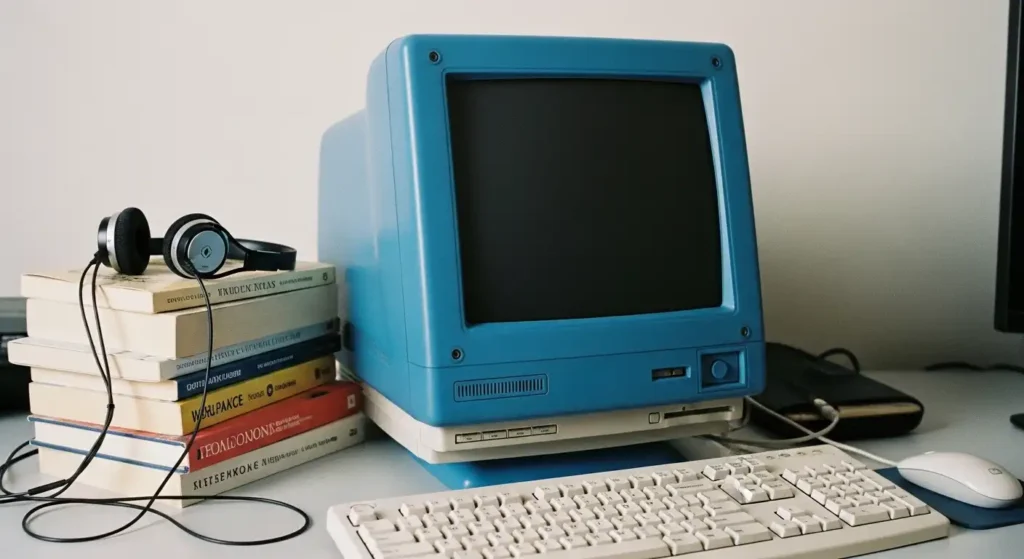
If you walked into a bookstore today, you might be forgiven for thinking you’d accidentally stepped through a wormhole back to 2004. Between the low-rise jeans making a comeback on the streets and the sudden influx of neon-hued book covers featuring flip phones and wired earbuds, the literary world has officially entered its “New Nostalgia” era. While we have spent much of early 2026 discussing the rise of Romantasy and Cozy Fantasy, a new powerhouse genre is claiming its space on the shelves: 2000s nostalgia books.
What Exactly is “Recent Historical Fiction”?
For decades, “historical fiction” meant the Victorian era, the World Wars, or perhaps the glamor of the 1950s. However, in 2026, the definition has shifted. We are now seeing the rise of “Recent Historical Fiction”—stories set specifically between 1995 and 2008. To a generation of readers born after the launch of the iPhone, the era of dial-up internet and T9 texting feels as distant and atmospheric as the Regency era felt to their parents.
These books aren’t just contemporary stories that happen to be old; they are carefully researched period pieces. They capture a very specific cultural inflection point: the transition from an analog world to a digital one. This “in-between” space provides fertile ground for authors to explore themes of privacy, connection, and the last gasp of true boredom before the algorithm took over our lives.
The Aesthetic Appeal: Why Y2K is Winning BookTok
Visual storytelling is inseparable from modern book marketing. On platforms like TikTok and Instagram, the “Y2K Aesthetic” has become a dominant force. 2000s nostalgia books benefit from this trend immensely. Publishers are leaning into “vibe-based” marketing, using cover art that mimics the saturated colors of digital cameras from 2005 or the gritty, grainy texture of 35mm film.
Readers aren’t just looking for a good story; they are looking for a mood. They want to read about characters who have to wait for a landline to ring, who burn CDs for their crushes, and who experience the world without a GPS in their pocket. This aesthetic provides a sense of “tactile reality” that feels missing in our increasingly virtual 2026 lives.
The Psychology of the “Analog Longing”
Why are we so obsessed with the early 2000s right now? Psychologists suggest it’s a reaction to the “Hyper-Digital Age.” In 2026, we are surrounded by AI-generated content, virtual reality, and constant connectivity. Much like the comfort found in Cozy Fantasy, nostalgia acts as a psychological buffer against the rapid pace of technological change.
The early 2000s represent the “Goldilocks Zone” of technology. We had the internet, but it wasn’t everywhere. we had cell phones, but they didn’t track our every move. Reading 2000s nostalgia books allows readers to inhabit a world where characters can still get lost, where secrets can stay hidden, and where “logging on” was a choice rather than a constant state of being.
Key Tropes in 2000s Nostalgia Fiction
As this genre matures, several distinct tropes have emerged that define the best-sellers of 2026:
- The Digital Yearning: Long-distance romances conducted over AIM (AOL Instant Messenger) or MSN, where every “Away Message” carries the weight of a Shakespearean sonnet.
- The Mall Culture: The suburban shopping mall serves as the “village square”—a place of teenage rebellion, first jobs, and consumerist wonder.
- The Physical Media Quest: Plots revolving around a lost mixtape, a specific DVD, or a printed photograph that can’t be easily duplicated or found online.
- The Pre-Social Media Scandal: Drama that spreads through word-of-mouth and physical notes rather than viral tweets.
Essential 2000s Nostalgia Reads for Your 2026 TBR
If you want to understand why this trend is taking over, here are the books currently making waves in the community:
1. “The Glow of the CRT” by Elena Vance
A gripping mystery set in 2002 involving a group of hackers who discover something they shouldn’t have on a primitive message board. It perfectly captures the “Wild West” feeling of the early web.
2. “Meet Me at the Food Court” by Julian Parks
A heartwarming “Recent Historical” romance that feels like a love letter to the year 2005. It’s the ultimate “Cozy” read for anyone who misses the smell of Cinnabon and the sound of a humming escalator.
3. “Disconnected” by Sarah Chen
An emotional drama about a family dealing with a crisis in 1998, highlighting how different our support systems were before smartphones allowed for 24/7 communication.
How to Write Your Own Nostalgia-Driven Story
For aspiring authors, the “Recent Historical” genre offers a unique challenge: accuracy. Unlike writing about the 1800s, writing about 2003 requires getting the tiny details right for an audience that actually lived through it. Did people use that slang yet? Was that specific Nokia model out? Was that song on the radio?
The key to successful 2000s nostalgia books is not just listing the products of the time, but capturing the feeling of the era. It’s the specific sound of a modem connecting or the frustration of a Discman skipping while you walk. Those sensory details are what transport the reader.
Conclusion: Is the Trend Here to Stay?
As we look toward the latter half of 2026, the appetite for nostalgia shows no signs of slowing down. Just as the 1970s became a obsession in the 1990s, the “20-year cycle” has brought the early 2000s back into the spotlight. Whether you lived through the Y2K scare or you’re discovering the era for the first time through a book cover, there is something undeniably magnetic about this period of history.
By blending the emotional depth of contemporary fiction with the atmospheric “otherness” of a past era, 2000s nostalgia books offer the perfect escape for the modern reader. They remind us of where we came from, right as we decide where we are going next.
What is your favorite piece of “Recent Historical Fiction”? Do you think the 2000s are “old enough” to be considered history? Join the conversation in the comments below, and don’t forget to check out our previous guide on the evolution of Romantasy!