
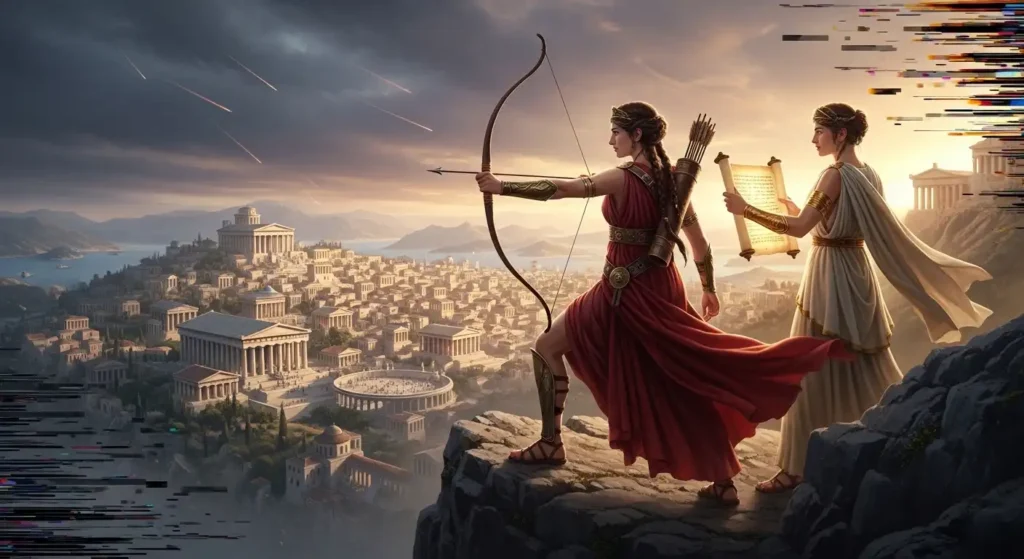
The literary landscape of 2026 is undergoing a profound transformation. While the “retelling” genre has been a staple of bookstores for over a decade, we are currently witnessing a distinct and powerful evolution: The Sapphic and Feminist Wave of Mythology. Readers are no longer satisfied with simply seeing the “woman’s side” of a story; they are demanding a total deconstruction of the patriarchal structures that defined ancient epics.
The Catalyst: Luna McNamara and the 2026 Shift
 The focal point of this trend is undoubtedly the release of The Witch and the Huntress by Luna McNamara. Building on the momentum of her previous works, McNamara has managed to capture a cultural zeitgeist that values both historical resonance and modern identity. By focusing on Medea—the “witch”—and Atalanta—the “huntress”—McNamara effectively bridges the gap between traditional romantasy and high-brow literary fiction.
This surge in interest isn’t accidental. In an era where digital inheritance and the preservation of identity are at the forefront of our technological discussions, literature is looking backward to reclaim identities that were previously erased or marginalized. This wave of mythology is less about “updating” the past and more about “uncovering” the truths that were always there, hidden beneath centuries of male-centric translation.
Beyond the Golden Fleece: Why Sapphic Narratives Dominate
One of the most notable features of the 2026 wave is the shift toward sapphic narratives. In titles like The Witch and the Huntress, the bond between female characters is the driving force of the plot, rather than a side-plot to a hero’s journey. This reflects a broader movement in the publishing industry toward intersectional representation.
For many readers, these stories provide a sense of “historical belonging.” By placing queer joy and complex female relationships in the setting of ancient Greece or Rome, authors are validating the presence of these identities throughout history. This trend is closely linked to the themes we’ve explored regarding how AI and digital archives are helping us reconstruct forgotten narratives from fragments of papyrus and pottery.
The Technical Side: SEO and Book Discovery
From a digital marketing and SEO content strategy perspective, “mythology retellings” remains one of the highest-growth keywords in the book niche. However, the competition for broad terms is fierce. To rank in 2026, content must pivot toward specific niches such as “feminist Greek myth reimagining” or “sapphic myth retellings.”
Search intent has shifted. Readers are no longer just searching for “good books to read”; they are searching for “books that subvert the hero’s journey” or “feminist takes on Medea.” By focusing on these specific literary tropes, Bookzee continues to stay ahead of the curve in 2026 literary trends.
Intersectional Mythology: Expanding the Horizon
While Greek myths often take center stage, the 2026 wave is also expanding to include global mythologies. We are seeing a rise in West African, East Asian, and Mesoamerican retellings that utilize the same feminist framework. Authors like Kylie Lee Baker and Rin Chupeco are at the forefront of this expansion, proving that the desire to reclaim heritage is a universal human impulse.
This global perspective is essential for any modern content plan. It allows us to draw parallels between different cultures’ approaches to the “divine feminine” and how these ancient archetypes continue to influence modern storytelling, from video games to long-form SEO articles.
Digital Inheritance and the “Ghost Bots” of Antiquity
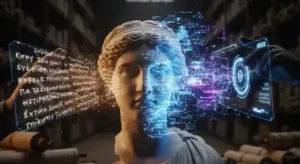 Perhaps the most fascinating intersection of this trend is its relationship with modern technology. In our previous discussions on AI and the digital afterlife, we noted how technology is being used to give voice to the deceased. In a literary sense, these feminist retellings act as a form of “analog ghost bot.”
Authors are using historical research as a prompt to “generate” a voice for women who were silenced. When an author writes from the perspective of a character like Briseis or Clytemnestra, they are essentially performing a digital-age seance, bringing a long-dead perspective into the modern conversation. This is the ultimate form of heritage preservation through fiction.
How to Navigate the Mythic Wave: A Curated Reading List
If you are looking to build your “Mythic TBR” for the remainder of 2026, consider these essential categories:
- The Heavy Hitters: Look for the new releases by Luna McNamara and Madeline Miller. These are the “pillar posts” of the mythology genre.
- The Mystery-Crossover: Many new retellings are adopting a “thriller” pace. Check out our guide on upcoming 2026 thrillers for titles that blend ancient curses with modern-day investigations.
- The Indie Gems: Keep an eye on small-press publications that focus on “dark academia” aesthetics, as these often contain the most daring and experimental feminist narratives.
Conclusion: Why These Stories Endure
Why are we still obsessed with myths in 2026? Because they are the ultimate “PBN” (Private Blog Network) of human history—a series of interconnected sites and stories that boost the authority of our shared cultural identity. The Sapphic and Feminist Wave is not a passing fad; it is a necessary recalibration of the stories we tell ourselves about who we were, so we can better understand who we are becoming.
As we continue to navigate the intersection of legacy, technology, and literature, Bookzee will remain your home for deep-dives into the stories that define our era. Whether it’s the latest “ghost bot” narrative or a reimagined goddess, the future of reading is rooted in the past.