

For decades, discovering a new book in the United States followed a familiar path. Readers browsed bookstore shelves, asked friends for recommendations, visited libraries, read newspaper reviews, followed bestseller lists, or relied on booksellers and librarians to point them toward something worth reading. Those traditional methods remain important, but the modern reading landscape has become much larger and more interconnected. Today, readers can discover books through social media, online communities, newsletters, video creators, digital reading platforms, and increasingly, podcasts.
Literary podcasts have become an important part of this changing environment. Some focus specifically on books and authors, while others approach literature through history, culture, entertainment, education, or particular genres. A single episode can introduce listeners to a debut novelist, revisit a classic, examine a controversial literary theme, discuss a publishing trend, or encourage listeners to explore an entire genre they have never considered before.
The growth of podcasting in the United States provides important context for this development. According to Edison Research’s The Infinite Dial 2026, 58% of Americans age 12 and older had consumed a podcast during the previous month, representing approximately 167 million people. Weekly podcast consumption reached 45%, or approximately 130 million Americans. Edison Research also found that 57% of Americans age 12 and older had both listened to and watched a podcast, demonstrating how podcasting increasingly operates across audio and video rather than existing solely as an audio medium.
These numbers do not mean that every podcast listener is automatically a book buyer or that podcasts have replaced traditional book discovery. Instead, they show that podcasts have become a significant part of the media environment in which American readers make decisions about what to watch, listen to, learn, and read next. Edison Research’s The Infinite Dial 2026 provides useful current data about this broader U.S. podcast landscape.
Why Literary Podcasts Are Becoming Important to Book Discovery
The relationship between books and podcasts is surprisingly natural. Reading requires attention to written language, while podcasts allow people to listen to conversations while driving, exercising, cooking, commuting, walking, or completing household tasks. This means podcasts can introduce books during parts of the day when people might not otherwise be sitting down to read.
A listener may hear an author discussing a novel while driving to work and become interested enough to search for the book later. Another listener might hear a literary critic explain why a particular historical novel is important and decide to borrow it from the library. Someone else may discover a new poet after hearing an interview and then purchase a collection from a local bookstore.
The podcast is not necessarily the final destination. It can be the first step in a much longer discovery journey.
This is an important change because book discovery has become increasingly fragmented. Readers no longer depend on a small number of gatekeepers to tell them what deserves attention. They can encounter recommendations through dozens of channels, and podcasts offer one of the more conversational forms of those recommendations.
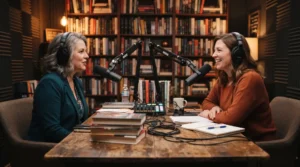 Podcasts Add Personality to Book Recommendations
A book description can tell a reader what a book is about, but it does not always communicate why someone should care about it. A podcast conversation can provide that missing context by allowing another person to explain what makes the book interesting.
Imagine a reader discovering an unfamiliar historical novel. A retailer’s product page might provide the title, author, description, publication information, and reviews. A podcast interview with the author could go much further. The author might explain what originally inspired the story, how much historical research was required, which real events influenced the plot, and why a particular character became central to the narrative.
That conversation creates an emotional and intellectual connection before the reader even opens the book.
Podcast hosts also become part of this discovery process. Listeners who regularly follow a particular host often become familiar with that person’s literary preferences. They learn what genres the host enjoys, what writing styles appeal to them, and what types of books they frequently recommend. Over time, this creates a sense of trust.
The recommendation becomes more personal because the listener is not simply seeing a title in an advertisement. They are hearing another reader explain why the book deserves attention.
How Author Interviews Change the Reading Experience
Author interviews are one of the strongest features of literary podcasting. They allow readers to hear directly from the person who created the book, often in a much more relaxed environment than a formal publicity appearance.
Authors can discuss subjects that may not fit into a traditional book description. They can talk about rejected ideas, research challenges, characters that changed during the writing process, unexpected influences, favorite passages, and the emotional experience of completing a manuscript.
These conversations can make a book feel more tangible. Instead of seeing an author’s name as simply another piece of information on a cover, readers begin to recognize the person behind the work.
This can be especially valuable for debut authors. A first-time novelist may not have the same level of public recognition as an established writer, but a compelling podcast conversation can introduce that author to a highly interested audience.
The podcast therefore becomes a bridge between the author and potential readers.
Literary Podcasts Give Readers More Context
One of the biggest differences between podcasts and short-form book recommendations is the amount of context they can provide. A social media post might introduce a book in a few sentences, while a podcast episode can spend an hour or more discussing its themes, characters, historical background, writing style, and cultural relevance.
That additional context can be particularly useful for literary fiction and nonfiction. Some books are difficult to summarize in a single paragraph because their value comes from the ideas they explore rather than simply from their plots.
A podcast can slow down the recommendation process. Instead of simply saying that a book is interesting, a host can explain what makes it interesting and why different readers might respond to it differently.
This makes literary podcasts particularly useful for readers who want more than a quick recommendation.
Book Discovery Is Becoming More Personalized
The enormous number of books available to American readers creates a strange problem: there are more opportunities to read than ever, but it can be difficult to determine where to begin.
Personalization has therefore become increasingly important. Readers often want recommendations based on their interests rather than generic lists of the most popular books. Someone who enjoys historical fiction may not be interested in the year’s biggest romance novel. A reader who loves literary memoir may not want a recommendation based solely on overall sales.
Literary podcasts can provide a more personal route into book discovery because listeners often choose programs based on shared interests. A reader might follow a podcast devoted to historical fiction, contemporary literature, mystery novels, poetry, science fiction, romance, biographies, or translated literature.
This creates a more focused environment for recommendations.
Bookzee has explored this broader transformation in how personalized book discovery is changing the way readers find books. The same principle applies to literary podcasts: the more closely a recommendation reflects a reader’s interests, the more useful that recommendation can become.
Podcasts Can Introduce Readers to Smaller Genres
Traditional bookstores have physical limitations. Even a large bookstore cannot stock every title or dedicate unlimited shelf space to every genre. Podcasts operate under very different constraints.
A relatively small podcast can devote an entire episode to a narrow literary subject. There can be a program about historical mysteries, a show focused on contemporary poetry, a discussion devoted to translated Japanese fiction, or a series examining overlooked American novels.
This creates opportunities for books that might otherwise remain outside mainstream attention.
For readers, niche podcasts can function almost like specialized literary guides. Instead of browsing an enormous catalog without direction, listeners can enter a conversation designed around a specific interest.
This can also encourage readers to experiment. Someone who normally reads contemporary fiction might hear a podcast discussion about historical novels and decide to try one. A mystery reader might discover literary fiction after hearing a host discuss a particularly suspenseful character-driven novel.
Discovery becomes a process of exploration rather than simply following bestseller lists.
 How Podcasts Can Bring Older Books Back Into Conversation
Literary podcasts are not limited to newly published books. This is one of their most important advantages.
A host can revisit a novel published ten, twenty, or even fifty years ago. An older book can become relevant again because of a new film adaptation, a cultural discussion, a historical anniversary, an author’s influence on a contemporary writer, or simply because a podcast host believes the book deserves another look.
This creates new opportunities for backlist titles.
Publishing attention often concentrates on new releases, but readers do not necessarily want to read only books published this year. Podcasts can help maintain a continuing conversation around literature across different periods.
A podcast episode about an older novel can introduce that work to listeners who might never have encountered it through a traditional bookstore display.
In this way, literary podcasting can act as a form of cultural rediscovery.
The Connection Between Podcasts and Social Media
Literary podcasts do not exist separately from social media. In many cases, the two formats reinforce each other.
A long podcast interview can be turned into short video clips, quotations, discussion questions, or promotional posts. Those shorter pieces can attract new listeners who may then seek out the full episode. At the same time, a book that becomes popular on TikTok, Instagram, YouTube, or another social platform can become the subject of a podcast conversation.
This creates a circular discovery process.
Readers can encounter a title in one format and then explore it through another. Someone might first see a recommendation on social media, listen to a podcast interview with the author, read reviews, and eventually purchase or borrow the book.
Bookzee has also examined how BookTok and social media are reshaping book discovery. Literary podcasts fit naturally into this larger environment because they provide more space for conversations that begin in shorter social-media formats.
Why Video Podcasts Matter to the Book Industry
The rise of video podcasts is particularly relevant to literary content. A traditional audio interview depends almost entirely on the voices of the participants. A video version can show the author, host, books, studio environment, reading materials, and other visual elements.
This gives literary discussions another dimension.
An author can hold up an early edition of a book that influenced them. A host can show the cover of a novel being discussed. A poet can read directly from a collection while viewers watch the performance. A historian can display photographs or research materials related to a nonfiction book.
Edison Research’s 2026 data indicates how significant this shift has become. Its study found that 57% of Americans age 12 and older had both listened to and watched a podcast, suggesting that podcasting increasingly operates as a dual-format medium rather than purely as audio.
For publishers and authors, this creates more opportunities to present books in a visually engaging way. For readers, it makes literary conversations easier to encounter on platforms that were traditionally associated with video rather than audio.
Literary Podcasts and Independent Authors
Independent authors can also benefit from literary podcasting because podcasts can provide access to specialized communities.
An independent author may not have the marketing resources available to a major publishing house. However, appearing on a podcast with a highly relevant audience can create a direct connection with potential readers.
A fantasy author can appear on a fantasy podcast. A historical novelist can speak with a host who specializes in historical fiction. A poet can participate in a poetry discussion. A nonfiction writer can join a program focused on the subject covered in the book.
The audience may be smaller than the audience of a major mainstream media outlet, but it can be much more closely aligned with the author’s subject.
This targeted approach can make podcast interviews particularly valuable for authors trying to establish long-term relationships with readers.
Podcasts Help Authors Build Recognition Beyond One Book
An author interview does not have to focus exclusively on a single title. A conversation about writing can introduce listeners to an author’s broader body of work.
An author might discuss a new novel while also talking about earlier books, influences, research interests, or future projects. Listeners who enjoy the conversation may then search for additional titles.
This is important because author discovery can be just as valuable as book discovery.
A reader may initially discover one novel but eventually become a dedicated reader of the author. The podcast can therefore create a relationship that extends beyond one publication.
This is one reason literary podcasts can be useful to the publishing industry. They provide an environment where books can be discussed as part of a larger creative career rather than as isolated products.
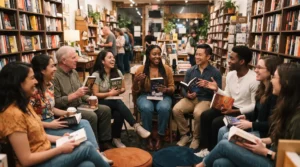 How Podcasts Can Support Libraries and Independent Bookstores
Podcasts also have the potential to strengthen traditional literary institutions rather than replace them.
Public libraries, for example, can use podcasts to extend their programming beyond the physical building. A library podcast could feature local authors, librarians, book recommendations, community reading programs, or conversations about regional history.
Independent bookstores can use similar approaches. A bookstore podcast could include author interviews, staff recommendations, discussions of upcoming releases, or conversations recorded during literary events.
These programs can make a bookstore or library feel more accessible to people who cannot attend every in-person event.
The relationship can work in both directions. A listener who discovers a book through a podcast may eventually visit a local bookstore or library to obtain it.
In that sense, digital discovery can actually encourage physical literary experiences.
Podcasts and the Continued Importance of Physical Books
The rise of podcasting should not be interpreted as evidence that physical books are disappearing.
American readers continue to use multiple formats. Pew Research Center’s 2026 research on book reading found that print remained the most commonly used book format among U.S. adults, even though e-books and audiobooks have become established parts of the reading environment.
This suggests that digital discovery and physical reading can coexist.
A reader may discover a book digitally and ultimately choose a paperback. Another person may hear an author on a podcast and borrow the hardcover from a library. Someone else may listen to the audiobook after learning about it through an interview.
The discovery method and the reading format do not have to be the same.
In fact, this is one of the most important changes in modern book culture. Digital media increasingly helps readers find books that they eventually experience in traditional formats.
The Role of Trust in Podcast Recommendations
As literary podcasts become more influential, readers should also recognize that podcast recommendations are not automatically objective evaluations.
Podcast hosts have personal preferences, just as booksellers, reviewers, librarians, and friends do. An enthusiastic recommendation represents a person’s response to a book rather than a universal measurement of quality.
That does not make the recommendation useless. In many cases, the personal nature of the recommendation is precisely what makes it valuable. Readers can learn what another person enjoyed and decide whether those preferences overlap with their own.
Good literary discussions can also present multiple perspectives. A host might enjoy a book while acknowledging its weaknesses. A guest might disagree with the host. A group discussion might produce several different interpretations.
These differences can make literary conversations more useful because they give readers more information before making their own decisions.
Podcasts Can Encourage Deeper Reading
Another important benefit is that podcasts can prepare readers to approach books more thoughtfully.
Hearing an author explain the research behind a novel may encourage a reader to notice historical details. Listening to a poet explain rhythm or structure can change the way someone approaches a collection of poems. Hearing a historian describe the evidence behind a nonfiction book can encourage readers to pay greater attention to sources and context.
The podcast does not replace the reading experience. Instead, it can create questions that the reader carries into the book.
This can make reading more active.
Rather than simply asking whether they like a book, readers may begin asking why an author made a particular choice, how a historical setting affects the story, or what an unusual narrative structure accomplishes.
In this way, literary podcasts can contribute to a deeper culture of reading.
The Growth of Audio Fits Into Broader Reading Trends
Podcasting is also part of a larger shift toward audio content. Readers increasingly move between print, e-books, audiobooks, podcasts, interviews, and other forms of spoken-word media.
This does not necessarily mean that readers are spending less time with books. Instead, their relationship with books can extend across multiple formats.
A reader may listen to an author interview in the morning, read a paperback during lunch, listen to an audiobook during a commute, and discuss the story with friends in the evening.
Book discovery therefore becomes part of a larger media routine.
Bookzee’s discussion of immersive audiobooks and changing reading experiences provides another example of how audio is expanding the ways readers interact with books and storytelling.
Literary Podcasts Are Creating New Literary Communities
Books have always created communities. Book clubs, library programs, literary festivals, university courses, author events, and bookstore discussions all give readers opportunities to talk about what they are reading.
Podcasts extend that community into the digital environment.
Listeners can become part of a recurring conversation even when they live hundreds or thousands of miles away from the host or other listeners. Someone in California can listen to the same literary discussion as someone in New York, Texas, Illinois, Florida, or Washington.
This geographic flexibility is particularly valuable in the United States because literary interests can connect people across regions.
A reader does not have to live near a major publishing center or literary festival to participate in a book-focused conversation.
That accessibility can make literary culture feel less concentrated in a handful of large cities.
What Literary Podcasts Mean for the Future of Book Discovery
The future of book discovery is unlikely to depend on one technology or one platform. Readers will continue finding books through bookstores, libraries, friends, social media, newsletters, search engines, recommendation systems, authors, and other readers.
Podcasts are becoming another important part of that ecosystem because they combine several discovery methods at once.
They can introduce an author, provide a recommendation, explain a genre, offer literary criticism, discuss cultural context, and create a sense of community within a single episode.
The continued growth of podcast consumption suggests that this role may become increasingly significant. Edison Research reported record levels of U.S. podcast consumption in 2026, including 167 million Americans who consumed a podcast in the previous month and 130 million who consumed one during the previous week.
For the publishing industry, those numbers represent a large potential environment for literary conversations. For authors, podcasts can offer another way to build relationships with readers. For booksellers and libraries, they can create additional channels for recommendations and programming. For readers, they offer another way to discover books that might otherwise remain outside their usual reading habits.
Why Literary Podcasts Matter to Modern Readers
The most important contribution of literary podcasts may be their ability to make book discovery feel human.
Algorithms can recommend books based on reading history. Bestseller lists can identify popular titles. Search engines can provide thousands of results. Retail websites can display ratings and reviews.
Podcasts add conversation to that enormous information system.
Readers can hear an author explain an idea. They can listen to a host describe why a novel affected them. They can hear two critics disagree about a character. They can discover a forgotten book through a conversation about literary history.
That human element can transform a title from an item in a catalog into a story someone wants to explore.
For many readers, the question is no longer simply, “What book is popular right now?” Instead, the question becomes, “What book should I discover next, and why might it matter to me?”
Literary podcasts provide one increasingly important answer to that question.
Conclusion: From Listening to Reading
The rise of literary podcasts represents more than the addition of another promotional channel for publishers. It reflects a broader transformation in how Americans encounter books and participate in literary culture.
Podcasts allow readers to hear authors speak about their work, discover recommendations from hosts they trust, explore specialized genres, revisit older books, participate in literary conversations, and connect with readers outside their immediate communities.
At the same time, podcasting does not have to compete with bookstores, libraries, print books, e-books, or audiobooks. It can connect them.
A podcast episode can lead someone to a library shelf. An author interview can inspire a paperback purchase. A discussion about a classic novel can send a reader searching for an older edition. A conversation about a debut writer can turn a first-time listener into a long-term fan.
This interconnected approach to discovery is likely to remain an important feature of American reading culture.
As podcast audiences continue to expand and audio and video increasingly overlap, literary podcasts have an opportunity to become a lasting part of the book ecosystem. Their greatest strength is not simply their ability to promote books. It is their ability to create curiosity.
And curiosity remains one of the most powerful reasons people pick up a book.