

For a poem composed nearly three thousand years ago, The Odyssey is having an unusually modern moment. Homer’s epic is appearing in bookstore displays, library hold queues, book club discussions, college reading groups, social media recommendations, and the personal reading lists of Americans who may not have opened a Greek classic since high school.
The renewed attention is not the result of one development alone. A major film adaptation has introduced Odysseus to a new audience, while accessible translations have made the poem feel less remote. Readers already interested in Greek mythology, retellings, fantasy, and morally complicated heroes are also discovering that many of their favorite modern stories have roots in Homer’s work.
According to an August 2026 report from The Guardian, print sales of The Odyssey in the United States rose considerably as interest in the new screen adaptation spread. American bookstores and public libraries also reported stronger demand for the poem, especially for Emily Wilson’s contemporary English translation.
However, a successful movie can explain only part of the resurgence. The more interesting question is why readers who encounter the story through film, social media, or a modern novel decide to return to the ancient source. The answer involves translation, cultural timing, the continuing popularity of mythology, and a story that still asks recognizable questions about war, identity, temptation, leadership, family, and the meaning of home.
A Major Film Adaptation Brought Homer Back Into Popular Culture
The most visible reason for the current revival is Christopher Nolan’s film adaptation of The Odyssey. A large-scale Hollywood production can place an older work in front of millions of people who might never encounter it through a traditional literature course. Trailers, interviews, reviews, casting discussions, and conversations about the differences between the book and the film all lead curious viewers back to the original poem.
This pattern is familiar in American publishing. When a novel becomes the basis of a widely discussed film or television series, readers often want to experience the source material for themselves. Some hope to discover scenes or characters that were changed during adaptation. Others want to understand references they missed or compare the filmmaker’s interpretation with the original author’s vision.
That curiosity is particularly powerful with The Odyssey because there is no single obvious version for readers to buy. The poem is available in numerous translations, abridgments, illustrated editions, graphic adaptations, audiobooks, and editions created for younger readers. Interest in the movie therefore opens a larger conversation about how an ancient story changes when it is retold by a translator, publisher, artist, narrator, or filmmaker.
The adaptation has also made the title itself more visible. People who vaguely remember the Cyclops or the Trojan Horse from school may suddenly recognize that many familiar characters and adventures belong to a much larger narrative. The movie gives those scattered cultural memories a name, encouraging readers to explore how the episodes fit together.
Readers interested in similar screen-driven literary revivals can also explore how anticipated books and adaptations are shaping reading choices in 2026.
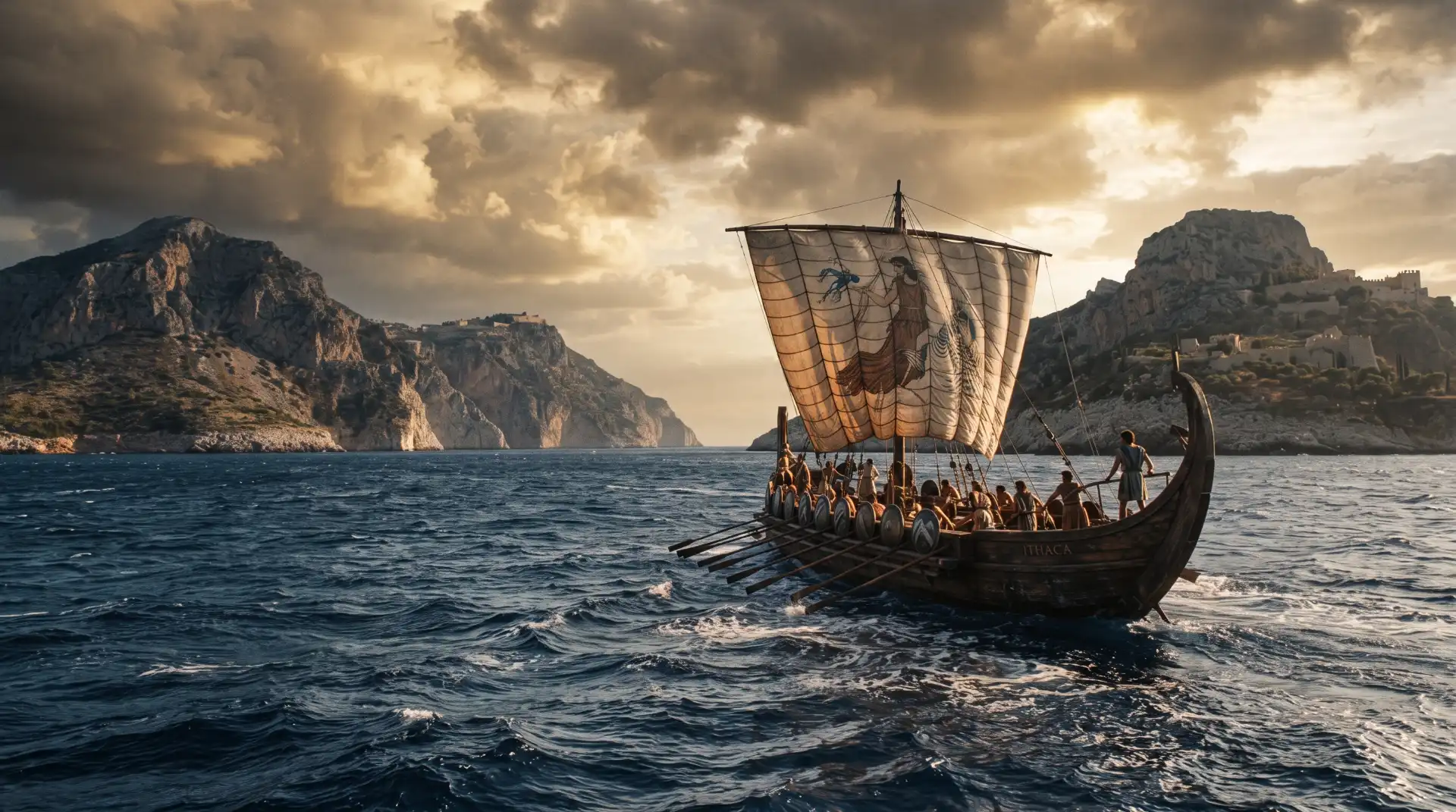
Modern Translations Make the Poem More Approachable
Many Americans first encountered The Odyssey through an older classroom edition. Depending on the translation and teaching method, that experience may have made the poem seem formal, distant, or difficult. The current revival is different because readers can choose from translations with noticeably different rhythms, vocabulary, notes, and interpretations.
Emily Wilson’s 2017 translation has played an important role in introducing the poem to contemporary English-language readers. Wilson became the first woman to publish a complete English translation of The Odyssey, and her version uses direct language and a carefully maintained poetic meter. Her choices have encouraged renewed discussion about how translators present Odysseus, Penelope, enslaved people, the gods, and the women encountered during the journey.
Other widely read translations include versions by Robert Fagles, Robert Fitzgerald, Richmond Lattimore, Stanley Lombardo, and Robert Verity. One version may sound elevated and ceremonial, while another may feel faster or more conversational. None can reproduce every sound, association, or ambiguity of the ancient Greek text, so each translation becomes an interpretation as well as a reading experience.
This variety is an advantage for new readers. Someone who struggles with one edition does not have to conclude that the poem is inaccessible. A different translation, audiobook, annotated edition, or graphic adaptation may provide a much better entry point.
The Penguin Random House reader’s guide to The Odyssey shows how many of the poem’s major themes can support discussion. These include leadership, hospitality, marriage, parenthood, revenge, justice, personal identity, and the responsibilities of a person returning from war.
Readers no longer need to approach the poem as if there were one correct edition reserved for specialists. They can compare opening passages, listen to samples, examine the available notes, and choose the version whose language keeps them engaged.
Greek Mythology Is Already Popular With Modern Readers
The Odyssey is returning to reading lists at a time when Greek mythology is already thriving in American popular culture. Novels inspired by Circe, Achilles, Patroclus, Medusa, Persephone, and other mythological figures have attracted readers across historical fiction, fantasy, romance, young adult fiction, and literary fiction.
For many people, the path now moves in reverse. Instead of reading Homer first and then recognizing his influence on later books, they discover a modern retelling and become curious about its ancient foundation. Someone who reads a novel focused on Circe or Penelope may want to see how that character appears in The Odyssey. A fantasy reader familiar with quests, monsters, prophecies, and divine interference may want to explore one of the works that helped establish those narrative patterns.
Mythology also works well in online reading communities. Its characters are recognizable, yet open to debate and reinterpretation. Readers can discuss whether Odysseus is heroic, selfish, resourceful, dishonest, or some combination of all four. They can compare ancient expectations with contemporary values or examine how modern writers give greater attention to characters who occupy less space in Homer’s poem.
This creates a productive cycle. Retellings send readers toward the original epic, while the original gives them additional context for understanding newer books. The ancient and modern works do not have to compete. Each can make the other more interesting.
The Story Feels Familiar Even to First-Time Readers
Readers who open The Odyssey for the first time often discover that they already know parts of it. The one-eyed Cyclops, the enchanting Circe, the Sirens, the descent into the underworld, and the long-awaited return to Ithaca have been retold for centuries. Their influence appears in novels, films, television programs, comic books, video games, songs, and everyday expressions.
Even the word “odyssey” has become a common term for a long and eventful journey. A person does not need to know ancient Greek literature to recognize the basic appeal of a traveler trying to get home while facing one danger after another.
The familiarity of the episodes makes the poem easier to enter, but the complete work is more complicated than its famous adventures suggest. The Odyssey does not begin with Odysseus sailing away from Troy. It opens years into his absence and initially focuses on his son, Telemachus. The narrative then shifts across locations and time periods before Odysseus tells much of his own story in retrospect.
This structure gives the poem more depth than a simple monster-filled adventure. Readers see what prolonged absence does to a family and a community. They watch Telemachus attempt to grow into adulthood without his father. They see Penelope navigate pressure, uncertainty, and danger while the suitors consume the household’s resources. Homecoming becomes a question not merely of reaching a destination, but of determining whether a person can return to an earlier role after being transformed by war and wandering.
Odysseus Is the Kind of Complicated Hero Readers Debate
Modern readers are accustomed to protagonists who are morally complicated. Odysseus fits that interest remarkably well. He is intelligent, persuasive, adaptable, courageous, deceptive, proud, patient, and reckless. The skills that save him in one episode contribute to disaster in another.
His encounter with the Cyclops is a clear example. Odysseus devises the plan that allows him and several of his men to escape. Yet after reaching relative safety, he reveals his identity and taunts the blinded Cyclops. That decision allows Polyphemus to call upon Poseidon, helping turn the voyage home into a prolonged catastrophe.
The episode raises questions that remain relevant: What separates justified confidence from destructive pride? Is a leader still heroic when other people bear the consequences of his choices? Does intelligence excuse manipulation? Can someone be admirable and deeply flawed at the same time?
The poem does not reduce Odysseus to a simple example of virtue. Readers may sympathize with his desire to return home while questioning how he treats companions, strangers, enemies, and women. A classroom or book club can therefore discuss him without requiring everyone to reach the same conclusion.
That ambiguity helps explain why the epic works so well in current reading culture. Online literary conversations often grow around characters who invite disagreement. Odysseus is not merely a hero to admire or a villain to condemn. He is a figure whose behavior must be interpreted.

Its Questions About Homecoming Still Matter
The emotional center of The Odyssey is the desire to return home. Odysseus is offered extraordinary experiences and, in some versions of his encounter with Calypso, even freedom from ordinary mortality. Yet he continues to long for Ithaca.
That desire gives the poem significance beyond its mythological setting. Home can represent a physical place, a family, a social identity, a lost period of life, or a sense of belonging. American readers who have moved across the country, returned from military service, experienced immigration, left home for college, or lived through a long separation can recognize the mixture of hope and uncertainty attached to return.
The poem does not treat homecoming as an automatic restoration of the past. Odysseus has been away for twenty years, including the Trojan War and the journey that follows it. Telemachus has grown up. Penelope has spent years resisting the suitors. Ithaca has continued without its king. Before Odysseus can resume his place, he must determine whom he can trust and whether he is still recognizable to those who knew him.
He also returns in disguise. This allows him to gather information, but it turns reunion into a series of tests. Recognition depends on private memories, physical signs, shared knowledge, and careful observation. The poem repeatedly asks what makes someone the same person after decades of change.
These concerns feel especially timely in a culture where people regularly present different versions of themselves at work, at home, and online. The technologies are new, but the question of how identity survives change is ancient.
The Epic Opens Conversations About War and Leadership
Odysseus is not simply an adventurer. He is a veteran returning from the Trojan War and a king responsible for the men under his command. His journey can therefore be read as an extended examination of leadership after conflict.
Some of the threats his crew encounters come from hostile gods or supernatural beings. Others develop from poor judgment, disobedience, lack of restraint, or Odysseus’s own decisions. The crew’s destruction is not attributable to one cause, which makes the poem useful for examining how responsibility is shared between leaders and followers.
The poem also shows that the characteristics rewarded during war do not always translate smoothly into domestic life. Secrecy, deception, suspicion, and violence may help a warrior survive, but they complicate his return to family and civic order. Odysseus must move from commanding soldiers to reclaiming his roles as husband, father, son, and ruler.
American reading groups can approach these sections from several perspectives. Some may focus on military homecoming and trauma. Others may examine political authority, loyalty, or the consequences of leaders placing pride above collective safety. The poem does not offer a modern theory of leadership, but it dramatizes choices that continue to matter.
Hospitality Gives the Story an Unexpectedly Relevant Theme
One of the most important ideas in The Odyssey is xenia, often translated as guest-friendship or hospitality. In the world of the poem, hosts are expected to receive strangers appropriately, while guests have obligations not to exploit their welcome.
The journey repeatedly contrasts good and bad forms of hospitality. Some strangers provide food, safety, information, and transportation. Others threaten, imprison, deceive, or consume their guests. Back in Ithaca, the suitors represent an extreme violation: they occupy Odysseus’s home, consume its wealth, pressure Penelope, and plot against Telemachus.
For an ancient audience, these actions carried religious and social importance. For modern readers, they can prompt discussion about how communities treat strangers, how power operates between hosts and visitors, and what happens when generosity is abused.
Hospitality may sound like a smaller theme than war or destiny, but it helps organize much of the epic. Nearly every new place requires Odysseus to determine whether he will be welcomed, questioned, tested, detained, or attacked. The treatment of an unfamiliar traveler becomes a measure of a society’s values.
Penelope and Other Women Invite New Interpretations
Contemporary interest in The Odyssey is also connected to renewed attention to its women. Penelope, Athena, Circe, Calypso, Nausicaa, Eurycleia, and the Sirens influence Odysseus’s survival and return in markedly different ways.
Penelope is particularly important to modern readings. She is often remembered mainly as the faithful wife who waits, but waiting is not a passive activity in the poem. She manages a dangerous household, delays the suitors through strategy, protects her position, and exercises caution even when Odysseus finally appears before her.
Her famous weaving scheme mirrors Odysseus’s own reliance on intelligence and deception. By weaving during the day and secretly undoing the work at night, she creates time and preserves her ability to choose. When the disguised Odysseus returns, she does not surrender her judgment merely because others accept his identity.
Modern translations and retellings encourage readers to reconsider these women as more than obstacles, rewards, helpers, or temptations in a male hero’s journey. They also invite difficult questions about power, consent, slavery, violence, and whose perspective receives attention.
Those questions do not make the ancient poem less readable. They make reading more active. A classic remains alive when each generation can examine both what it reveals and what it leaves unresolved.
It Works Well for Book Clubs and Shared Reading
The Odyssey may look intimidating because of its reputation, but its episodic structure suits group reading. The poem is divided into 24 books, allowing a club or class to cover several sections at a time. Each stage of the journey introduces new characters, ethical problems, and opportunities for discussion.
A group might begin by asking whether Odysseus is an effective leader. Another meeting could compare the different forms of hospitality. Later discussions could consider Penelope’s choices, Telemachus’s development, the role of Athena, or the violent conclusion in Ithaca.
Readers can also compare translations without completing every available version. Examining a few passages—such as the opening invocation, the Cyclops episode, the Sirens, or Penelope’s final test—can show how word choice changes tone and characterization.
Audiobooks offer another way to make the experience manageable. Because the poem emerged from an oral poetic tradition, listening can restore qualities that silent reading may obscure. Repetition, rhythm, formal speeches, and recurring descriptive phrases often feel natural when heard aloud.
Anyone unsure where to begin can use Bookzee’s guide on how to find a new book to read to compare format, translation, difficulty, and personal interest before selecting an edition.

Readers Can Choose an Edition That Matches Their Goals
The best edition of The Odyssey depends on why someone wants to read it. A reader interested in poetic structure may prefer a translation that preserves a regular meter. Someone reading primarily for the story may favor direct contemporary language. A student may need extensive notes, while a casual reader may find too much scholarly material distracting.
Before choosing, readers can compare sample pages and consider the introduction, footnotes, map, glossary, and pronunciation guide. An edition with a clear map can be helpful, although the precise geography of Odysseus’s voyage remains the subject of debate. Lists of characters and gods can also reduce confusion during the early sections.
First-time readers should not feel obligated to understand every mythological reference. The central narrative becomes clearer as it unfolds, and unfamiliar names can be checked when they become important. Reading a short overview before beginning is not cheating; it can provide the framework needed to appreciate how the poem tells its story.
Readers with busy schedules might divide the poem over several weeks or combine print and audio editions. Bookzee’s recommendations for reading more with a busy schedule can help turn a demanding classic into a realistic reading project.
The Odyssey Continues to Shape Modern Storytelling
The epic’s influence extends far beyond books that directly retell Greek mythology. Stories about dangerous journeys, delayed homecomings, disguised identities, faithful partners, missing parents, tempting detours, and heroes tested by a series of episodic trials all draw from patterns that The Odyssey helped establish.
Later writers have adapted the poem to different periods, places, and cultural experiences. James Joyce organized Ulysses around Homeric parallels in a single day in Dublin. Derek Walcott’s Omeros reworked Homeric themes in a Caribbean setting. Other authors have centered Penelope, Circe, or lesser-known figures, demonstrating how the story changes when narrated from another perspective.
The poem’s continuing influence means that reading it can alter how people understand modern fiction. A familiar plot may suddenly reveal itself as a homecoming narrative. A clever wanderer may resemble Odysseus. A hospitable or dangerous household may echo the social tests found throughout the epic.
This recognition is one of the pleasures of reading an influential classic. The goal is not simply to finish an important old book. It is to acquire a set of characters, patterns, and questions that continue to appear across literature and entertainment.
Why The Odyssey Is Popular Again in America
The Odyssey is back on American reading lists because several cultural forces have met at the right moment. A major film adaptation created widespread visibility. Modern translations reduced the distance between the ancient poem and contemporary readers. The popularity of mythology-inspired fiction prepared an audience already interested in Greek stories. Libraries, bookstores, audiobooks, and online reading communities then made it easier to participate in the revival.
Yet publicity alone cannot explain why readers stay with the poem. Its lasting power comes from the tensions inside the story. Odysseus wants to return home, but his own pride repeatedly delays him. He is a celebrated hero whose decisions can be destructive. Penelope is defined by waiting, yet she acts with considerable intelligence and control. Hospitality creates safety in one place and danger in another. Home is the journey’s goal, but reaching it does not erase what has changed.
These contradictions allow the epic to support different interpretations without becoming empty or vague. A teenager, veteran, parent, traveler, student, fantasy reader, and classicist may all notice something different in the same episode.
The current resurgence may have been accelerated by Hollywood, but it is sustained by readers who discover that Homer’s questions remain surprisingly recognizable. What do people owe their families, guests, leaders, and communities? How should power be used? Can someone return home after becoming a different person? When does cleverness become deception, and when does confidence become pride?
Those questions have no expiration date. That is why The Odyssey can move from an ancient oral tradition to a modern American reading list and still feel capable of beginning a new conversation.