
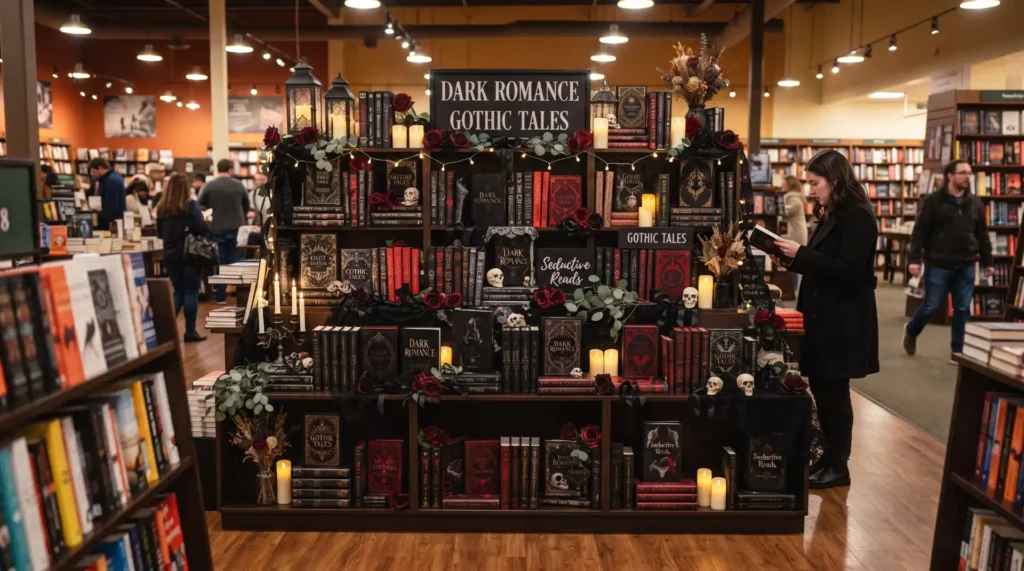
Dark romance has moved from a niche corner of romance publishing into a much larger conversation about escapist fiction. U.S. readers increasingly explore morally complicated characters, dangerous relationships, psychological tension, dark fantasy, horror, and emotionally intense stories. The appeal often comes from experiencing extreme fictional situations within the controlled distance of a book.
Dark Romance Has Become Hard to Ignore
Romance remains one of the most visible areas of American commercial fiction.
Yet the books gaining attention do not always resemble the lighthearted romantic comedies that once dominated prominent romance displays.
Stories built around antiheroes, dangerous attraction, morally complicated relationships, revenge, obsession, supernatural threats, and psychological tension have developed large audiences.
This shift does not exist only within romance.
Horror, psychological thrillers, dystopian fiction, dark fantasy, and other intense genres have also attracted readers seeking emotionally charged stories.
Circana described this broader movement as a shift toward darker escapist themes. Its U.S. BookScan data found strong growth across romance and several adjacent categories. In 2025, U.S. year-to-date print romance sales were up 24 percent compared with the previous year. Circana also reported 51 million romance units sold during the preceding 12 months.
By 2026, adult genre fiction continued to play a major role in the U.S. bestseller market. Circana highlighted strength across romance, science fiction, and thrillers.
Dark romance sits directly inside this changing reading culture.
What Is Dark Romance?
Dark romance combines the emotional structure of romance with themes that may feel unsettling, dangerous, morally ambiguous, or psychologically intense.
A traditional romance might focus on misunderstandings, personal growth, attraction, family expectations, or competing life goals.
Dark romance often raises the stakes.
Characters may operate outside accepted moral boundaries. Relationships may develop in dangerous environments. Power, revenge, criminal worlds, obsession, trauma, captivity, supernatural danger, or ethical conflict may influence the plot.
The exact definition varies between readers.
Some books use relatively mild darkness, such as a morally gray protagonist or suspense-heavy storyline.
Others explore extremely disturbing subjects.
That range explains why two novels labeled “dark romance” can create completely different reading experiences.
The romance component remains central, but the surrounding world can resemble a thriller, horror novel, crime story, or dark fantasy.
That flexibility has helped dark romance connect with readers who previously considered traditional romance too predictable.
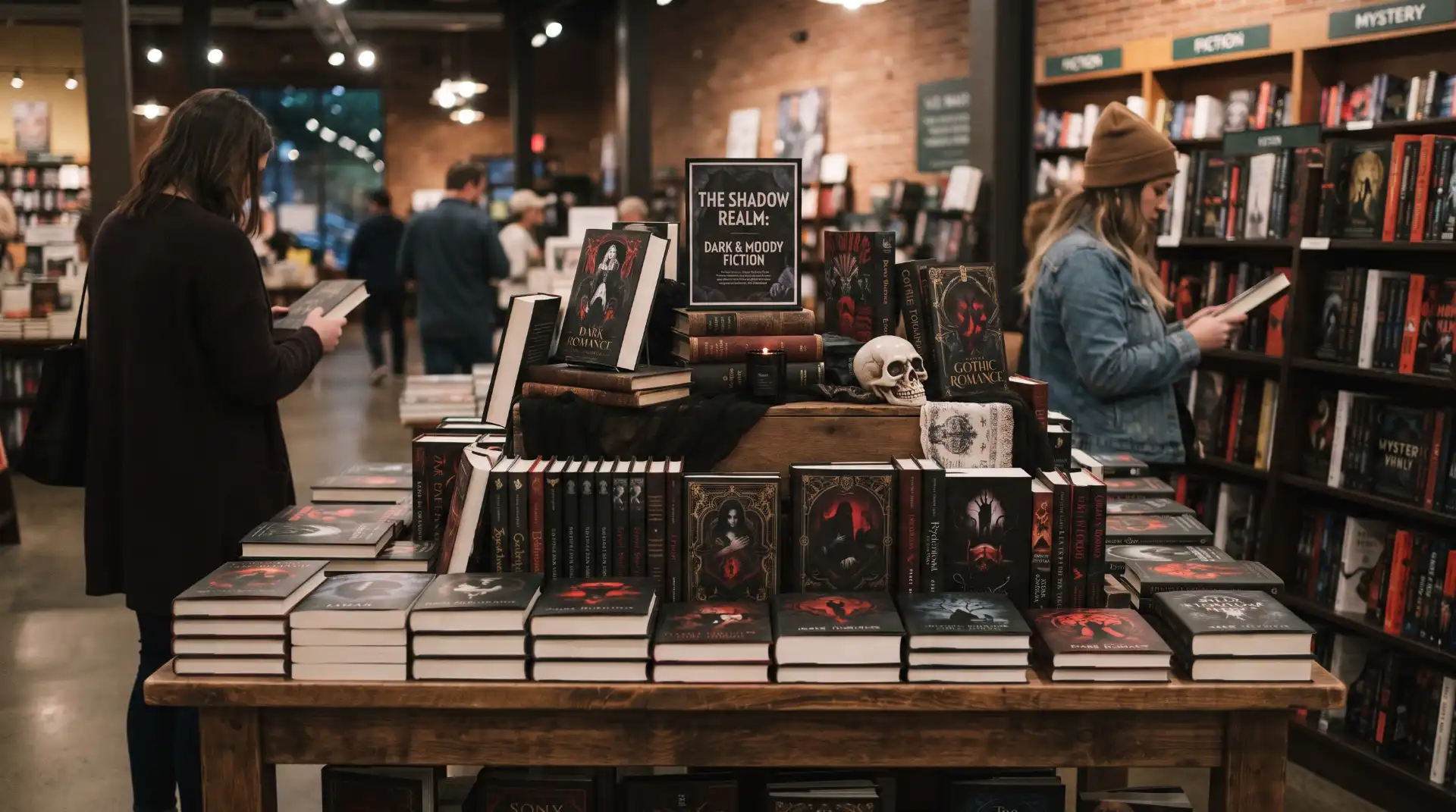
Dark Romance Is Part of a Bigger Escapist Shift
The growth of dark romance becomes more interesting when viewed beside other publishing trends.
Circana reported that interest in darker romance themes aligned with growth in psychological thrillers, dark fantasy, and horror. Its 2025 figures showed psychological thrillers up 29 percent, dark fantasy up 23 percent, and horror up 13 percent.
The pattern continued into 2026.
Circana’s first-quarter analysis identified escapist and speculative fiction among areas showing strength in the U.S. market. Science fiction, horror, and manga were among the categories receiving attention.
The underlying connection is emotional intensity.
Readers can enter worlds that feel more dangerous, dramatic, mysterious, or unpredictable than everyday life.
Escapism does not always mean comfort.
Sometimes escape means entering a fictional environment where every emotion becomes larger.
Love becomes obsession.
Conflict becomes survival.
Jealousy becomes danger.
Trust becomes a difficult choice.
A fantasy kingdom becomes brutal rather than whimsical.
A romantic interest becomes morally complicated rather than conventionally heroic.
These stories give readers controlled access to experiences they would rarely want in real life.
Why Does Dark Fiction Feel Like Escapism?
The term “escapist fiction” often brings peaceful images to mind.
A reader might picture a cozy village, a gentle mystery, a magical bakery, or a charming romance.
Those books certainly provide escape.
Dark fiction offers another form.
Instead of reducing tension, it redirects attention toward a fictional source of tension.
A reader worried about work, money, family obligations, or endless notifications may become absorbed by a fictional conspiracy, dangerous romance, supernatural conflict, or psychological puzzle.
The fictional problem demands attention.
For several hours, ordinary concerns move into the background.
This helps explain why comfort fiction and darker fiction can grow during the same cultural period.
They offer opposite routes toward a similar goal.
One reader wants emotional calm.
Another wants intense distraction.
The same person may even want both at different times.
Bookzee explored the lighter side of this contrast in Why Romantasy and Cozy Fantasy Are Trending in 2026. That trend shows how strongly reading choices now revolve around mood and experience.
Dark romance represents the other end of that emotional spectrum.
The Appeal of Morally Gray Characters
One of the clearest characteristics of darker fiction is the rise of the morally gray protagonist.
Traditional heroes usually give readers an easy moral position.
The hero protects people.
The villain causes harm.
The audience understands whom to support.
Darker fiction often removes that clarity.
A protagonist might protect one person while hurting another. A romantic lead may have admirable qualities alongside deeply troubling behavior.
Readers must constantly reconsider their judgment.
Is the character redeemable?
Does intention matter more than action?
Can love change someone?
At what point does understanding become forgiveness?
These questions create tension that simple hero-versus-villain storytelling cannot always provide.
Morally gray characters also fit well into serialized online discussions.
Two readers can finish the same novel and reach completely different conclusions about a character.
That disagreement creates conversation.
Dark Romance and Romantasy Frequently Overlap
Romantasy has become one of the most visible genre combinations in modern publishing.
It blends romance with fantasy, allowing romantic plots to unfold alongside magical systems, political conflict, supernatural creatures, kingdoms, wars, and quests.
Dark romance can easily enter that structure.
A dangerous ruler, cursed warrior, enemy commander, vampire, assassin, or supernatural antihero creates immediate romantic tension.
Fantasy also gives authors distance from ordinary reality.
An extreme relationship dynamic may feel different when it exists inside a fictional kingdom governed by magic and war.
Bookzee has already explored the wider growth of fantasy romance and romantasy.
That genre blending helps explain why bookstore categories feel less rigid than they once did.
A single novel can contain romance, fantasy, horror, mystery, political intrigue, and psychological suspense.
Readers increasingly shop for the experience rather than a perfectly defined category.
Psychological Thrillers Share the Same Audience
Dark romance also overlaps naturally with psychological thrillers.
Both genres depend heavily on uncertainty.
Characters may hide motives.
Relationships can become manipulative.
Narrators may prove unreliable.
Secrets gradually change how readers interpret earlier scenes.
The major difference usually involves the central emotional arc.
A psychological thriller might treat a dangerous relationship primarily as a source of suspense.
Dark romance may place romantic attraction at the center of the same type of conflict.
The audiences can still overlap considerably.
Readers interested in darker emotional storytelling can also explore Bookzee’s guide to psychological thrillers of 2026.
This crossover matters for publishers because genre boundaries increasingly function as entry points rather than fixed walls.
Horror Is Moving Closer to Romance
Horror and romance might appear to represent completely different emotional goals.
One centers fear.
The other centers intimacy.
Together, however, they can intensify each other.
Fear creates vulnerability.
Isolation forces characters together.
Supernatural danger raises the cost of trust.
A threatening setting can make emotional attachment feel more urgent.
Gothic fiction has combined attraction and danger for generations. Today’s darker romance trend gives that relationship a contemporary commercial form.
Circana’s data supports the broader rise of darker subjects alongside romance. Horror was among the growing adult fiction areas identified during the darker escapism shift.
The result is a growing space between categories.
Some novels can comfortably appear on romance, fantasy, or horror reading lists at the same time.
BookTok Helped Turn Tropes Into Discovery Tools
Social media has changed the language readers use to find books.
A shopper once relied heavily on genre, author reputation, reviews, bookstore displays, or jacket descriptions.
Many online readers now search through tropes.
They want enemies to lovers.
Forced proximity.
Morally gray characters.
Villain romance.
Forbidden attraction.
Possessive characters.
Revenge plots.
Gothic atmosphere.
Dangerous fantasy worlds.
These labels describe emotional experiences rather than traditional genres.
That distinction matters.
A reader who likes enemies-to-lovers stories might enjoy fantasy, contemporary romance, historical fiction, science fiction, or dark romance.
Social platforms make those connections easier to discover.
Bookzee’s guide to BookTok and social media’s influence on reading explores this shift in book discovery. BookTok has helped genre labels, aesthetics, and tropes become major tools for finding new reads.
Dark romance benefits from this environment because its recognizable themes translate easily into short-form recommendations.
Emotional Intensity Makes Books Highly Shareable
Dark romance frequently produces strong reader reactions.
Shock, anger, fascination, attraction, discomfort, and surprise give readers something to discuss.
A quiet literary novel may create deep emotional impact, but explaining that impact in a 30-second video can prove difficult.
A dramatic fictional situation creates an immediate hook.
That does not mean every popular dark romance book succeeds only because of social media.
It means emotionally extreme fiction fits the structure of online recommendation culture particularly well.
Readers can describe the premise quickly.
They can react to major scenes.
They can debate characters.
They can discuss whether a book crossed a personal boundary.
They can recommend another title with a similar emotional intensity.
The conversation continues after the final page.
For publishers and authors, that reader engagement can become part of a book’s visibility.
Reading Dark Romance Does Not Equal Approving Its Characters
One misunderstanding often appears when darker fiction becomes popular.
Some people assume that enjoying a fictional relationship means approving the same behavior in reality.
Fiction does not work that simply.
Readers routinely enjoy murder mysteries without approving murder.
They read horror without wanting supernatural danger.
They enjoy dystopian stories without wanting authoritarian governments.
They can also read morally disturbing romance without treating it as a model for healthy relationships.
Fiction allows people to explore uncomfortable ideas from a position of distance.
A reader can find a character fascinating while recognizing that the same person would be dangerous in real life.
That distinction becomes especially significant in dark romance because authors may intentionally create characters who violate ordinary social expectations.
The tension between attraction and danger often drives the story.
Content Information Matters More in Darker Fiction
The broad dark romance label does not tell readers exactly what a book contains.
One title might involve a criminal antihero and violent action.
Another might contain graphic abuse, coercion, stalking, captivity, or other disturbing material.
The difference can be substantial.
That makes detailed book descriptions and content information valuable.
Readers approach difficult fictional material differently.
One person may enjoy horror but avoid sexual violence.
Another may enjoy obsessive characters but avoid stories involving child harm.
Someone else may prefer dark fantasy while avoiding realistic domestic abuse.
There is no universal boundary.
Clear descriptions give readers more information before choosing a book.
This approach does not require revealing every plot twist.
It simply recognizes that “dark” covers a very large range.
The Genre Is Not One Single Aesthetic
Social media can make dark romance look visually uniform.
Black covers.
Red roses.
Gothic typography.
Candles.
Daggers.
Dark libraries.
Stormy castles.
Those visual cues help readers identify the mood quickly, but the actual genre contains much more variety.
A dark romance can take place in contemporary America.
Another might use historical settings.
Some involve organized crime.
Others use paranormal worlds.
Fantasy versions may revolve around kingdoms and supernatural enemies.
Suspense-driven books may resemble crime thrillers.
Gothic stories can emphasize isolation and atmosphere.
The common thread involves heightened emotional danger, not a single setting.
That variety gives publishers room to develop different subgenres without abandoning the dark romance audience.
Why Physical Editions Matter
Books have also become visual and collectible objects.
That matters for genres with strong aesthetics.
A dark romance hardcover can incorporate decorative edges, foil details, illustrated endpapers, dramatic typography, maps, character art, or other design elements.
The physical book becomes part of the reading experience.
This connects with a broader 2026 interest in physical reading and screen-free activities.
Circana has reported growing consumer interest in hands-on and screen-free categories. Its 2026 market analysis also describes readers seeking alternatives to digital entertainment.
Bookzee has examined this shift through the return of physical books and slow reading.
Dark romance fits naturally into collectible book culture because atmosphere matters so much to its audience.
Dark Escapism Goes Beyond Romance
The larger trend reaches far beyond romantic fiction.
Psychological thrillers invite readers into unstable minds.
Horror creates controlled fear.
Dark fantasy explores violent worlds and difficult moral choices.
Dystopian fiction exaggerates political and social anxiety.
Crime fiction lets readers enter dangerous situations from a safe distance.
Mature manga can explore trauma, violence, isolation, identity, and morally difficult decisions.
Even climate fiction can move into eco-horror and dystopian territory.
Bookzee’s coverage of cli-fi and eco-horror shows another way darker themes are spreading across genre fiction.
These categories do not tell identical stories.
They do, however, reveal a broader appetite for fiction that embraces emotional and moral intensity.
Comfort Reading and Dark Reading Can Coexist
The success of darker fiction does not mean readers have abandoned comforting books.
Cozy fantasy, uplifting romance, gentle mysteries, and hopeful fiction still attract audiences.
The two trends can exist together because readers do not have one permanent emotional need.
Someone may read a quiet romance after finishing an intense thriller.
A horror reader may alternate between frightening novels and cozy fantasy.
A dark romance fan may also enjoy humorous contemporary romance.
Reading habits often depend on mood.
This helps explain why modern publishing can support both cozy escapism and dark escapism at the same time.
One provides relief through safety.
The other provides relief through immersion.
Both move the reader somewhere else.
Why Publishers Are Paying Attention
Commercial publishing follows reader behavior closely.
Circana’s 2025 analysis showed romance leading growth in the total U.S. print market at that point. The company also identified strong growth within romantasy, sports romance, suspense romance, and contemporary romance.
Darker themes added another dimension to that growth.
Authors associated with dark or antihero-driven romance were among those Circana highlighted when discussing the category’s momentum.
The wider 2026 market also continues to show the strength of genre fiction.
Circana reported that adult genre fiction was dominating bestseller activity in early 2026, especially across romance, science fiction, and thrillers.
For publishers, that creates opportunities across editorial acquisition, cover design, special editions, social marketing, and bookstore positioning.
The trend does not require every romance novel to become darker.
It simply expands the range of stories that can reach a commercial audience.
Readers can explore Circana’s analysis of romance books with darker themes for additional U.S. market context.
Dark Romance Also Creates Debate
Popularity brings scrutiny.
Critics sometimes question whether books romanticize abusive or dangerous behavior.
Fans often respond that adult readers can separate fictional fantasy from real-world standards.
Both concerns shape ongoing discussions around the genre.
The most useful conversation usually recognizes that books differ.
A carefully written story can portray harmful behavior while making its consequences clear.
Another novel might intentionally present an exaggerated fantasy with little interest in realism.
Different readers may interpret those approaches differently.
That disagreement is part of literary culture.
Readers have debated morally troubling characters for centuries.
Dark romance places that old debate inside a highly visible modern genre.
Choosing Dark Romance Based on Personal Taste
Readers entering dark romance for the first time may discover that the label alone provides too little information.
A better approach focuses on tone, themes, intensity, and genre crossover.
Someone who already enjoys psychological thrillers might prefer suspense-heavy dark romance.
A fantasy reader may gravitate toward dark romantasy.
Fans of gothic fiction might prefer isolated settings, supernatural elements, and slow-building dread.
Crime readers may respond to stories involving criminal organizations, revenge, or dangerous antiheroes.
The key is recognizing that dark romance contains many levels.
A reader does not need to enjoy every version to appreciate the genre.
What the Trend Says About Modern Reading
Dark romance reveals something larger about contemporary book culture.
Readers increasingly organize their choices around feelings.
They search for books that promise comfort, tension, devastation, obsession, mystery, fear, longing, or escape.
Genre still matters, but emotional expectations matter too.
This helps explain the success of hybrid categories.
Romantasy combines romantic payoff with fantasy adventure.
Dark romance combines intimacy with danger.
Horror romance combines affection with fear.
Psychological romance adds uncertainty and manipulation.
These combinations let readers choose increasingly specific experiences.
Bookzee’s overview of top reading trends for 2026 reflects the wider shift toward immersive and emotionally meaningful reading.
Where Darker Escapist Fiction Goes Next
Dark romance appears less like an isolated publishing fad and more like one part of a broader change in genre fiction.
Romance remains commercially important.
Thrillers remain highly visible.
Horror and speculative fiction continue attracting readers.
Hybrid genres increasingly connect these audiences.
The next stage may involve even more blending.
Romance can move deeper into horror.
Fantasy can embrace darker psychological themes.
Thrillers can give romantic relationships larger roles.
Manga and graphic novels can influence visual aesthetics and narrative pacing.
Special editions can turn these books into collectibles as well as reading material.
The boundaries between categories may continue becoming less important than the emotional promise on the page.
Is Dark Romance Still Growing in the United States?
Recent publishing data supports continued interest in romance and darker escapist genres.
Circana documented strong U.S. romance growth during 2025 alongside rising interest in psychological thrillers, dark fantasy, and horror.
Its 2026 analysis also identified escapist and speculative fiction as significant areas of consumer interest.
That does not mean every dark romance title becomes successful.
It does show that the genre sits within several larger reading trends rather than existing in isolation.
Why Are Readers Attracted to Dark Romance?
Different readers have different reasons.
Many enjoy emotional intensity, morally complicated characters, suspense, fantasy, or high-stakes relationships.
Others like exploring uncomfortable fictional scenarios from a safe distance.
Some readers simply want romance that feels less predictable.
Genre crossover also expands the audience.
A thriller reader can enter through suspense.
A fantasy fan can enter through world-building.
A romance reader can enter through the relationship.
The same book can satisfy several interests at once.
Is Dark Romance the Same as Horror?
No.
Dark romance centers the romantic relationship, while horror generally centers fear, dread, or threat.
The genres can overlap.
A dark romance might contain supernatural monsters, violent events, or disturbing imagery commonly associated with horror.
A horror novel can also contain a major romantic subplot.
The difference depends on which emotional storyline drives the book.
Dark Romance Reflects a Wider Desire for Intense Escapism
Dark romance is growing inside a book market where readers increasingly seek strong emotional experiences.
Some want warmth.
Some want wonder.
Others want danger, tension, obsession, fear, and morally complicated characters.
Darker escapist fiction meets that demand by creating worlds readers can enter without experiencing those risks themselves.
The trend also extends beyond romance.
Horror, psychological thrillers, dark fantasy, dystopian fiction, and other speculative genres reflect a similar appetite for intense stories. Current U.S. market data shows that these categories remain important parts of contemporary genre publishing.
Dark romance therefore represents more than provocative tropes or dramatic book covers.
It reflects a broader change in what readers expect from escapism.
Sometimes escape means entering a peaceful world.
Sometimes it means entering a dangerous one and closing the cover when the journey ends.