
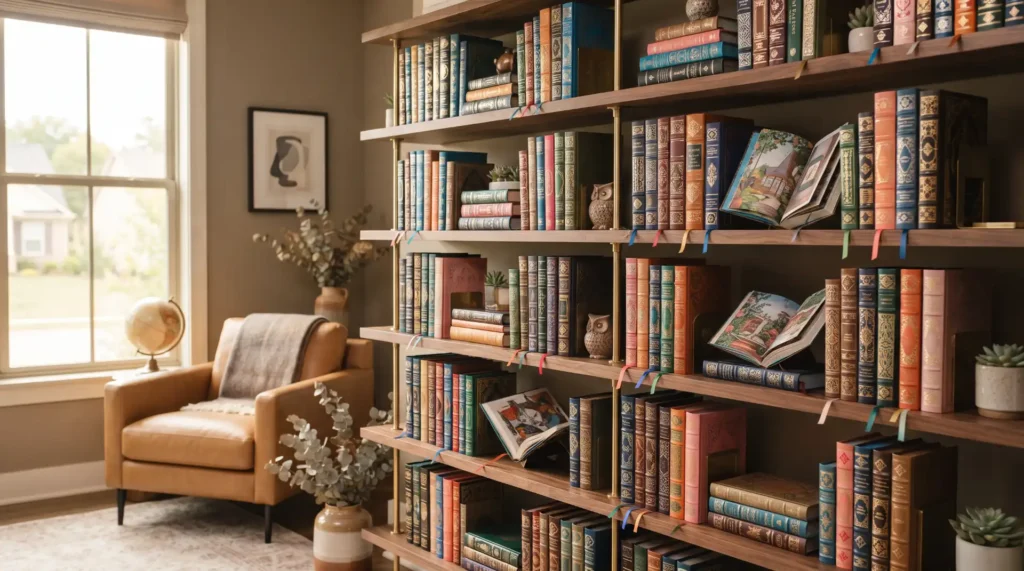
For generations, readers have treasured particular books because of the stories inside them. Increasingly, however, American readers are also paying close attention to what those books look and feel like on the outside. Sprayed page edges, embossed covers, foil stamping, illustrated endpapers, ribbon bookmarks, redesigned dust jackets, signed pages, and exclusive bonus material have transformed ordinary hardcover releases into objects that many readers actively collect.
That shift has helped make collectible book editions one of the most visible trends in the U.S. publishing industry. What once seemed mostly limited to anniversary editions, literary classics, and expensive private-press books has moved into mainstream bookstores. New fantasy novels, romances, young adult titles, bestselling backlist books, and even some middle-grade releases are now appearing in elaborate editions designed as much for display as for reading.
The trend reflects more than attractive packaging. It connects with changes in social media, reading communities, publishing economics, nostalgia for physical media, and the way younger consumers think about collections and personal identity.
For readers, the result is a book market in which choosing a title can sometimes mean choosing between several versions of the same story.
Collectible Books Are Moving Into the Mainstream
Special editions are not new. Publishers have long produced leather-bound classics, anniversary volumes, signed editions, illustrated releases, and limited printings for dedicated collectors. What is different today is how common premium editions have become for newly released commercial fiction.
A major fantasy or romance release may now appear as a standard hardcover, a retailer-exclusive version, a subscription-box edition, an international edition, and perhaps another deluxe printing several months later. Each may include different artwork, page-edge designs, bonus chapters, signatures, or covers.
Publishers Weekly has described the growth of deluxe books as significant enough that some people in publishing increasingly treat the premium hardcover almost like another publishing format alongside hardcover, paperback, e-book, and audiobook. In its 2026 coverage of book subscription services, the publication noted how elaborate hardcovers have proliferated especially rapidly within romance and fantasy communities.
Readers interested in the broader industry can explore Publishers Weekly’s reporting on the growth of deluxe editions and book subscription boxes.
The phenomenon is particularly interesting because premium editions are no longer limited to proven classics. Publishers increasingly create them for new novels before anyone knows whether those titles will remain popular for decades.
Sprayed Edges Have Changed How Books Look on Shelves
Few features symbolize the collectible-book boom more clearly than sprayed edges.
Instead of leaving the exposed edges of the pages plain white or cream, publishers add solid colors, gradients, symbols, landscapes, floral designs, character motifs, or other illustrations. When several books are displayed together, the page edges can create an almost gallery-like effect.
Some readers even turn selected books around so the decorated page edges face outward rather than displaying the traditional spines.
Sprayed edges became especially visible in fantasy, romantasy, romance, and young adult publishing, but they are spreading well beyond those categories. In August 2026, Publishers Weekly reported that premium treatments such as sprayed edges were reaching middle-grade books as publishers looked for additional ways to make physical books attractive to young readers.
This matters because the book itself becomes part of the experience surrounding the story. A reader might remember not just the plot but the particular edition they bought, where they found it, and what made that printing different.
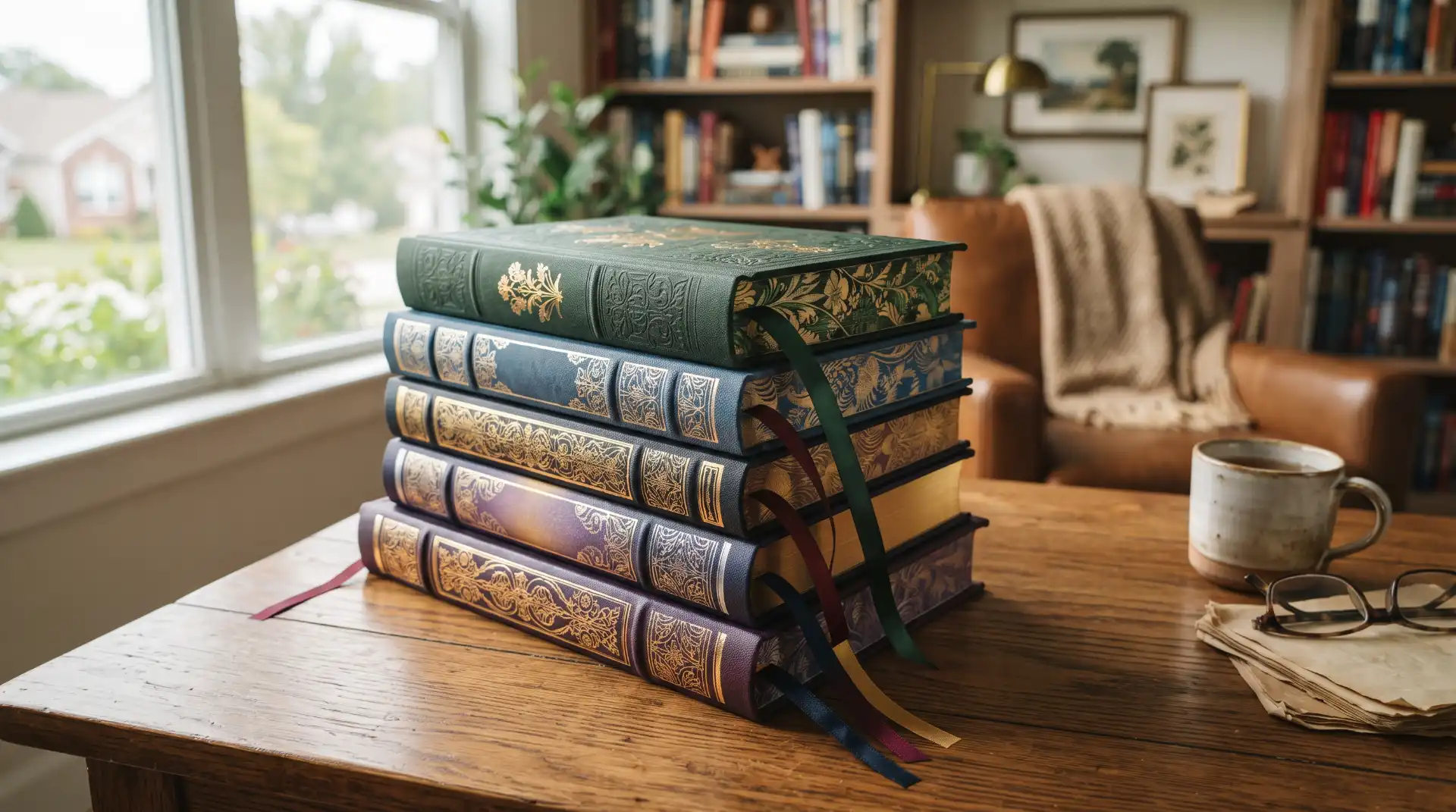
BookTok Turned Books Into Highly Visual Objects
The rise of visual book culture on social media is one of the strongest forces behind collectible editions.
Books have always had cover art, but platforms such as TikTok and Instagram changed the environment in which that art is seen. A book is now frequently photographed, filmed, unboxed, stacked, organized by color, displayed on shelves, and shared with thousands or even millions of viewers.
A beautiful edition therefore has marketing value far beyond the bookstore.
An elaborate cover or dramatic page-edge illustration immediately gives creators something visually interesting to show their audiences. A short video revealing hidden artwork beneath a dust jacket or displaying a complete set of matching sprayed edges can attract attention even before the viewer knows much about the story.
This relationship between social media and book discovery is already a major part of modern reading culture. Bookzee readers can explore it further in BookTok’s Revolutionary Impact on Reading Culture and Book Selection.
Industry executives have also acknowledged this connection. Previous Publishers Weekly reporting noted that visual social platforms have contributed to reader demand for features such as sprayed edges and foil treatments.
The important distinction is that social media did not invent book collecting. What it did was make collecting dramatically more visible.
Readers who once maintained private shelves can now share them with enormous communities.
Books Have Become Part of Personal Aesthetics
For many readers, a home library communicates something about identity.
Bookshelves appear behind people during video calls, in social media posts, in home-design photography, and increasingly as carefully planned parts of interior décor. The books someone chooses to display can reflect favorite genres, authors, intellectual interests, travel experiences, fandoms, or even preferred color palettes.
Collectible editions naturally fit into this environment because they are designed to be visually distinctive.
A shelf filled with coordinated fantasy hardcovers may function simultaneously as a personal library and a display of fandom. A row of clothbound classics may complement a traditional home office. Colorful sprayed-edge romance novels can become a major visual feature in a contemporary reading room.
For readers who enjoy designing their own literary space, Bookzee’s guide on how to create the perfect reading nook offers additional inspiration.
None of this necessarily means readers care less about the writing. Instead, the physical object has become another layer of enjoyment surrounding the text.
Physical Books Offer Something Digital Formats Cannot
The rise of collectible editions is also closely connected with the continuing value of print.
E-books provide convenience. Audiobooks allow stories to fit into commutes, workouts, household tasks, and travel. Both formats have expanded the number of ways people can enjoy books.
But neither can completely reproduce the physical qualities of an elaborate hardcover.
You cannot feel embossed lettering on an e-book. An audiobook cannot reproduce the surprise of opening a cover and discovering illustrated endpapers. A digital file cannot be signed in the traditional sense, stacked beside related volumes, or displayed with decorative page edges.
That difference may become more important as everyday entertainment becomes increasingly digital.
Many Americans already spend substantial amounts of their day looking at phones, laptops, televisions, tablets, and other screens. A physical book offers something tangible that requires no battery, notification settings, subscription login, or operating system.
This physical dimension may help explain why premium editions can thrive even while digital reading remains convenient and widely available.
The Return of the Book as an Object
For much of publishing history, books were valued as physical artifacts as well as containers of information. Fine bindings, gilding, illustrations, decorated endpapers, and hand-finished details all existed long before modern sprayed edges.
Today’s collectible-book movement is therefore not entirely new. In some respects, it represents a modern return to an older idea: that a book can be both literature and craftsmanship.
The difference is accessibility.
Historically, highly decorated books could be expensive luxury objects available primarily to wealthy collectors. Modern printing and manufacturing make it possible to produce visually elaborate books in much larger quantities.
A $30 or $40 deluxe hardcover is still significantly more expensive than a mass-market paperback, but it occupies a completely different economic category from rare antique volumes or handcrafted fine-press books costing hundreds or thousands of dollars.
This has opened book collecting to a much larger audience.
Subscription Boxes Have Created a New Collector Economy
Book subscription boxes have played a major role in accelerating demand.
Instead of simply sending subscribers a standard retail edition, many services work with publishers and authors to create exclusive versions. These may include redesigned covers, foil cases, character artwork, digital signatures, author letters, bonus scenes, colored edges, illustrated endpapers, or matching design elements across a series.
Scarcity adds another layer of appeal.
If an edition is available only to subscribers or only during a limited ordering period, buyers know they may not be able to purchase the same version later. That creates urgency and encourages collectors to follow release announcements closely.
According to 2026 reporting from Publishers Weekly, some deluxe book subscriptions have become so popular within romance and fantasy circles that the industry is increasingly treating them as a distinct consumer category.
This system has similarities to other collecting cultures. Sneaker enthusiasts track limited drops. Vinyl collectors seek colored pressings. Music fans purchase alternate album covers. Trading-card collectors follow rare variants.
Book collectors are now participating in a comparable economy.
Romantasy Helped Accelerate the Trend
One genre has been particularly important to the recent boom: romantasy.
The combination of fantasy and romance has developed a highly engaged readership that frequently participates in online communities, fan art, author events, subscription boxes, and special-edition collecting.
Fantasy worlds also lend themselves naturally to elaborate design. Dragons, magical symbols, castles, flowers, weapons, maps, constellations, and fictional landscapes can all become decorative elements on covers or page edges.
Rebecca Yarros’s Fourth Wing became one of the most frequently discussed examples. Its sprayed-edge first printing helped demonstrate how strongly readers could respond to distinctive physical packaging. Book Riot later reported that decorated versions commanded substantially higher resale interest than ordinary copies, illustrating how quickly an edition could acquire collector status.
Publishers noticed.
Today, a major romantasy release without some form of premium edition can almost seem unusual.
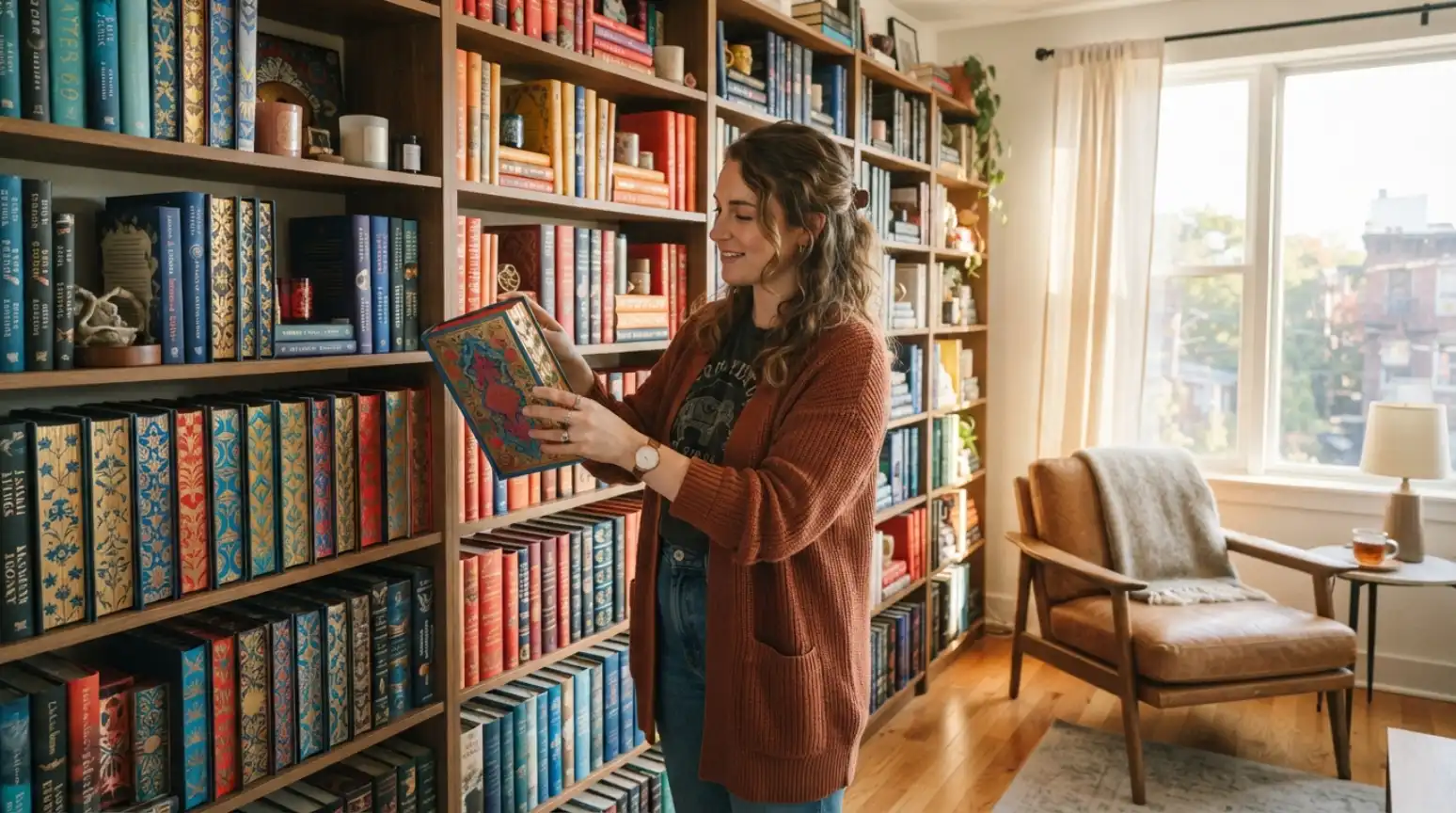
Collectors Want Exclusivity
Scarcity has always been an important part of collecting.
If every copy of a book were identical and permanently available, there would be less incentive to seek a particular version. Limited printings change that equation.
A retailer might offer one dust jacket while another has different sprayed edges. A subscription box might include exclusive artwork. A signed edition may be available only during a launch event.
For dedicated readers, choosing among those versions can become part of the hobby.
Some even purchase multiple copies of the same novel because each edition offers a different design.
That behavior may seem unusual to someone who sees a book primarily as a way to access text. But collectors often think differently. To them, the edition itself matters.
A baseball fan may own multiple jerseys representing the same team. A music collector may own several pressings of one album. A book enthusiast may similarly value different physical interpretations of the same story.
Collectible Editions Can Strengthen Reader Loyalty
Publishers have another reason to embrace special editions: they can deepen engagement with an author’s existing audience.
Imagine a reader discovering the first novel in a fantasy trilogy. If they love the story and also appreciate the physical design, they may want every subsequent volume in the same edition.
Matching designs create a sense of completion.
A reader who owns volumes one and two with coordinated sprayed edges may feel particularly motivated to purchase volume three in the same style. This turns a single purchase into an ongoing collector relationship.
Backlist books can benefit too.
Publishers can redesign older titles and introduce them to readers who already own another version. In July 2026, for example, Farrar, Straus and Giroux released special 80th-anniversary editions of several notable works with redesigned covers and coordinated sprayed edges.
That demonstrates how premium design can generate renewed attention for books that have been available for years or decades.
Bookstores Benefit From Display-Worthy Books
Collectible books also work especially well in physical retail environments.
A standard book usually displays its front cover or spine. A sprayed-edge edition adds another visual surface.
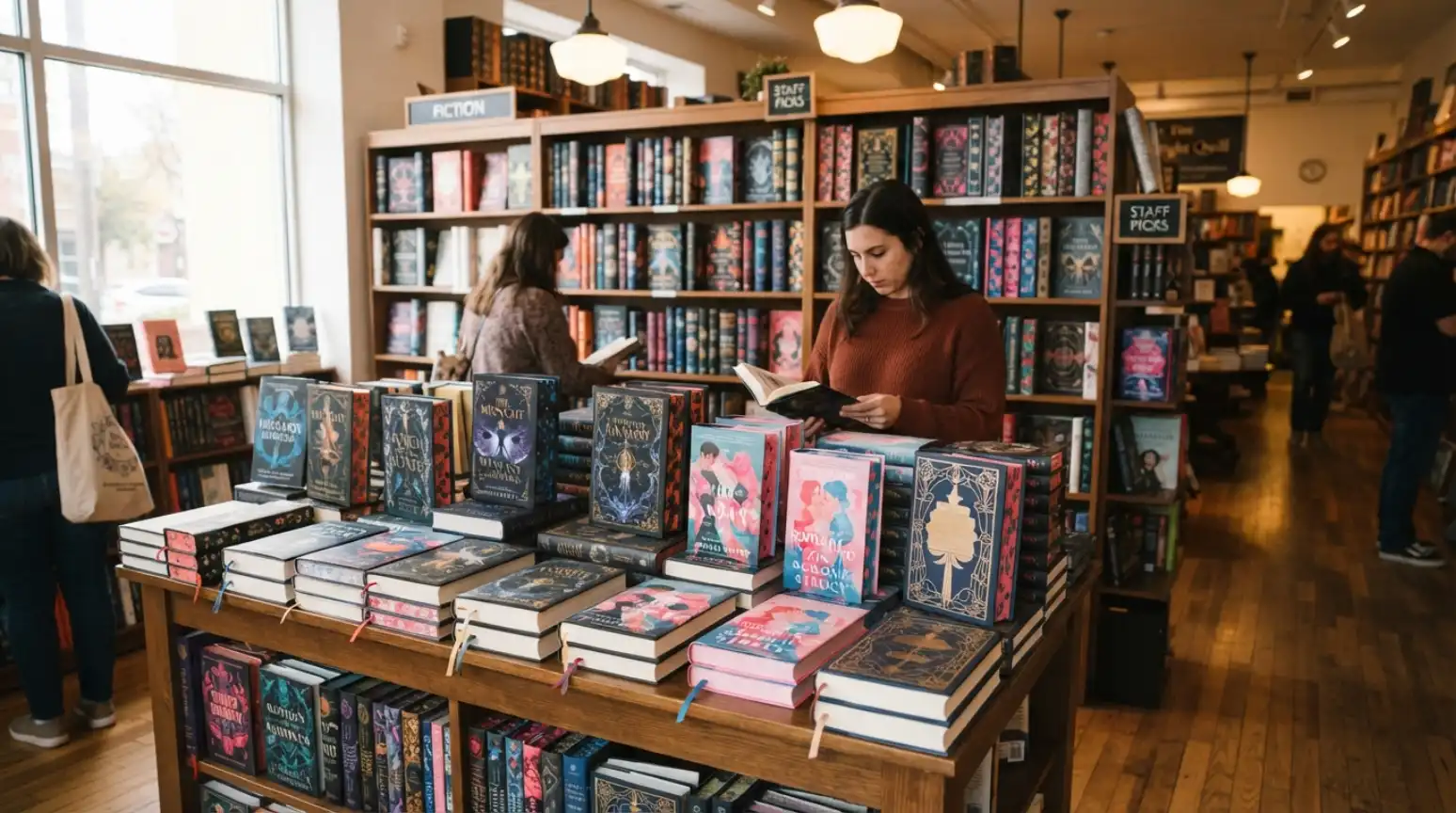
Bookstores can stack these books sideways, turn them outward, or create elaborate tables where the patterned edges become part of the display.
This gives physical bookstores an experience that online retail cannot completely duplicate.
A shopper can pick up the book, feel the material, inspect the binding, flip through the artwork, and compare different editions in person.
For readers who enjoy discovering books offline, this can make bookstore browsing feel more like treasure hunting.
It also reinforces the broader role of visual design in book discovery. Bookzee discusses additional ways readers find titles in How to Discover Your Next Favorite Book.
Special Editions Can Make Books Feel Like Gifts
Another factor supporting collectible books is gift buying.
A beautifully designed hardcover immediately feels more substantial as a present than a basic paperback or digital download.
That distinction can be particularly important during holidays, birthdays, graduations, anniversaries, and other occasions when someone wants to give a favorite reader something memorable.
Publishers can therefore market the same story to two overlapping audiences: readers who want the book for themselves and gift buyers who want something visually impressive.
Premium packaging can also help older titles return to gift tables during the holidays. A classic novel with new artwork and attractive binding may appeal to someone who would not otherwise consider purchasing another edition.
The Resale Market Adds Another Dimension
Not every collectible edition increases in value, and readers should be cautious about treating books as investments.
Still, secondary markets have added excitement to the hobby.
When a limited edition sells out, collectors may begin searching resale platforms. Signed editions, discontinued subscription-box versions, first printings, and unusual cover variants can sometimes trade at prices above their original retail cost.
This creates a feedback loop.
Readers see older limited editions becoming difficult to obtain, which can make them more likely to preorder future releases out of fear that they might miss one.
The effect resembles the psychology surrounding limited sneakers, vinyl records, and other collectibles.
However, scarcity does not guarantee long-term value. Trends change, authors fall in and out of popularity, and publishers sometimes release new editions that reduce demand for earlier versions.
Readers who buy collectible books primarily because they enjoy owning them are therefore likely to have a healthier relationship with the hobby than those expecting every edition to appreciate financially.
There Is Growing Concern About Oversaturation
The boom is not without criticism.
As more publishers and subscription companies produce special editions, some readers are beginning to feel overwhelmed.
A single popular novel may have several versions available almost simultaneously. Keeping up can become expensive, particularly for readers who feel pressure to complete matching collections.
A deluxe hardcover may cost around $30 to $40 or more, and multiple monthly subscription boxes can quickly turn book collecting into a significant household expense.
Industry observers have already questioned how many premium editions the market can sustain. Publishers Weekly‘s 2026 reporting included publishing professionals who wondered whether the current volume of special editions could eventually exceed reader demand.
That does not necessarily mean the trend will disappear. Instead, the market may become more selective.
Readers may reserve premium purchases for favorite authors, beloved series, or especially distinctive designs while purchasing ordinary editions of everything else.
Are Readers Collecting Books They Never Read?
The rise of highly visual books has also sparked a cultural debate: are some books becoming decorations rather than reading material?
This question fits into a broader conversation about reading as an online identity.
A beautifully organized bookshelf can look impressive on social media, but owning hundreds of books does not necessarily mean someone has read them all. Some collectors openly acknowledge that they purchase certain editions primarily because they enjoy the artwork or want to complete a set.
There is nothing inherently wrong with that. People collect many objects for aesthetic or emotional reasons.
Still, the trend does create an interesting tension between the book as literature and the book as lifestyle merchandise.
Bookzee has previously explored this broader issue in its coverage of reading culture and the rise of books as social-media objects.
Why Collectible Books Appeal to Younger Readers
Millennial and Gen Z consumers grew up in a world where customization and limited variants are common.
Video games offer collector’s editions. Sneakers appear in limited colorways. Vinyl albums come in multiple pressings. Beauty brands create exclusive packaging. Films and television franchises produce enormous ranges of merchandise.
Premium books fit naturally into that consumer environment.
The difference is that books also carry cultural and emotional meaning. A reader may associate a particular edition with the first fantasy series they loved, a favorite fictional relationship, a childhood classic, or a story that helped shape an important period of their life.
That emotional connection can make a collectible book feel more personal than many other consumer products.
Digital Reading May Actually Be Helping Premium Print
It may seem logical to assume digital formats and collectible print books compete directly, but they can also complement each other.
Some readers purchase a digital or audiobook edition for convenience and then buy a beautiful hardcover for their shelf.
Someone might listen to a fantasy novel during a commute, fall in love with the story, and later purchase a deluxe edition as a keepsake. Others may read an inexpensive e-book first and reserve premium physical purchases for books they already know they love.
This creates a separation between reading copy and collection copy.
Instead of replacing physical books, digital formats can sometimes help readers decide which stories deserve permanent space in their homes.
Collectible Editions Make Book Discovery More Emotional
Readers often imagine that they choose books only because of plot, author reputation, or reviews. In reality, discovery is emotional and visual too.
A striking edition can make someone stop at a bookstore table. A beautifully designed spine can spark curiosity. A set of coordinated books can encourage someone to investigate an unfamiliar series.
That visual appeal does not guarantee the reader will enjoy the story, but it can create the first moment of interest.
For publishers competing in a crowded market, that moment matters.
Thousands of new books are released in the United States every year. Digital stores place enormous numbers of titles only a search away. Anything that helps one book stand out can become a valuable marketing tool.
Premium packaging provides precisely that differentiation.
How Readers Can Collect Without Overspending
Collecting books can be rewarding without requiring every new release or every exclusive variant.
The simplest approach is to define what matters personally.
Some readers collect only signed editions. Others focus on one author, one series, classic literature, fantasy, specific publishers, or books featuring unusual artwork. Narrowing the collection makes individual purchases more meaningful and reduces the pressure to chase every release.
It can also help to wait before purchasing a deluxe edition of an unfamiliar book. A beautiful design can be tempting, but collecting books you genuinely enjoy may produce a more satisfying shelf over time.
Used bookstores and resale marketplaces can also be useful, particularly once the initial excitement surrounding a release fades.
Most importantly, a collectible library does not need to resemble anyone else’s.
Will Collectible Book Editions Remain Popular?
The exact features may change, but the broader desire for distinctive physical books appears unlikely to disappear entirely.
Sprayed edges may eventually become less novel. Another manufacturing technique may replace them as the next major design trend. Publishers may reduce the number of variants if consumers become tired of constant special releases.
Yet the underlying forces behind collectible books remain strong.
Readers still enjoy physical objects. Social media remains highly visual. Fandom continues to influence purchasing decisions. Publishers need ways to differentiate print from digital formats. Bookstores benefit from visually striking merchandise. Gift buyers appreciate premium presentation.
Perhaps most importantly, readers form emotional relationships with stories.
A special edition gives that relationship a physical form.
Final Thoughts
The popularity of collectible book editions represents a fascinating intersection between old-fashioned book collecting and modern digital culture.
Readers are discovering books through algorithms and social media, but many still want something tangible when a story becomes meaningful to them. Publishers have responded with increasingly elaborate editions featuring decorative edges, custom artwork, premium bindings, foil details, bonus content, and limited availability.
For some readers, these books are display pieces. For others, they are treasured reading copies. Many people see them as both.
The trend also demonstrates that physical books are not surviving merely because readers are nostalgic. Publishers are actively reinventing what a printed book can offer in a world where the text itself can be delivered instantly to a phone or e-reader.
A collectible edition offers something different: permanence, craftsmanship, personality, and a physical connection to a favorite story.
As long as readers enjoy surrounding themselves with the books they love, there will likely be room for editions that feel a little more special than the rest.