

Manga has become a major part of the American reading landscape. What was once considered a specialized category found mainly in comic shops and selected bookstore sections is now increasingly visible in public libraries, school libraries, major bookstores, online communities, and everyday reading lists.
In 2026, that growth is especially noticeable. Circana reported that manga was the strongest category in the total U.S. print book market during the first quarter of 2026, with unit sales increasing 45% compared with the same period a year earlier. Recent publishing-industry reporting has also found that manga sales in North America increased substantially between 2025 and 2026.
The growth raises an interesting question: Why are so many American readers embracing manga?
The answer is not simply anime. Anime has certainly played an important role, but manga’s growing popularity in the United States is connected to a much larger combination of factors. Streaming services have made Japanese animation easier to discover, social media has changed how readers find books, libraries are actively supporting manga collections, and younger readers have become increasingly comfortable with visual storytelling.
Manga also offers something that many readers are looking for in 2026: stories that are immersive, visually engaging, emotionally diverse, and available across a huge range of genres.
What Is Manga?
Manga is a broad term generally used for comics and graphic storytelling originating in Japan. It includes many different genres, audiences, artistic styles, and storytelling approaches.
That variety is important because manga is sometimes treated as though it represents one single type of story. In reality, manga can include romance, horror, fantasy, science fiction, mystery, comedy, sports, historical fiction, slice-of-life stories, action adventures, psychological drama, and much more.
Manga can also be created for different age groups and reading audiences.
Some series are designed primarily for children, while others are written for teenagers or adults. Some focus heavily on action and adventure, while others explore relationships, family, work, identity, grief, ambition, or everyday life.
The American Library Association has emphasized this variety in its resources for librarians, noting that manga encompasses Japanese comics with a wide range of genres and audiences.
That diversity is one reason manga has been able to reach such a broad audience in the United States.
Manga Has Become More Mainstream in the United States
The American manga market is not entirely new.
Manga publishers have been serving U.S. readers for decades, and the category experienced major growth during earlier periods of the 2000s. However, the current market is different because manga now exists inside a much larger entertainment ecosystem.
A reader may discover a story through an anime series, search for the original manga, watch videos about the characters, see recommendations on TikTok, visit a bookstore, borrow the series from a library, and then begin exploring other manga titles.
That journey can happen remarkably quickly.
Recent reporting from Publishers Weekly described manga as having moved into the mainstream and highlighted its growing presence in American libraries. Librarians interviewed by the publication described manga as a particularly effective way to attract teen readers, while also noting increasing interest from younger children and adults.
This means manga is no longer simply a niche interest shared by a small group of dedicated fans.
It has become part of the broader American reading culture.
Why Anime Is Helping Manga Grow
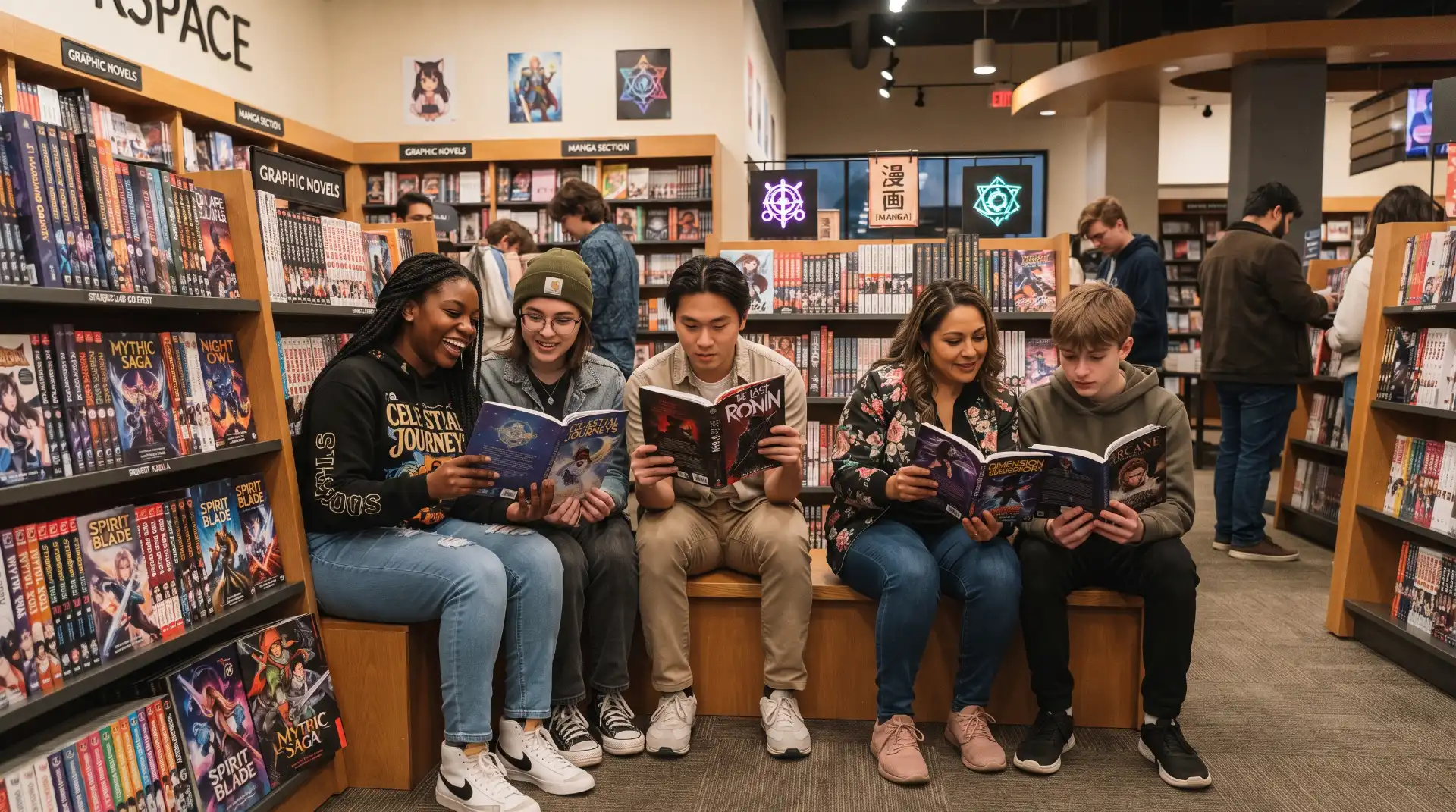
One of the biggest reasons for manga’s visibility in America is the continuing popularity of anime.
Streaming platforms have made Japanese animation available to audiences who might never have encountered it through traditional television programming. A person can watch an anime series at home and immediately become curious about the original manga.
This creates a natural relationship between the two formats.
Anime introduces characters and stories through animation, music, voice acting, and visual movement. Manga allows readers to explore the source material at their own pace.
For fans, owning or reading manga can also provide a deeper connection with a favorite story.
Readers may want to see what happens next instead of waiting for another anime season. They may want to compare differences between the manga and its screen adaptation. Others simply enjoy experiencing the story in its original comic format.
This connection between anime and manga creates a powerful discovery cycle.
A person does not necessarily have to consider themselves a comic reader before discovering manga. They can become interested through television or streaming and then transition naturally into reading.
Younger American Readers Are Driving Much of the Interest
Teenagers and young adults have played an important role in manga’s American growth.
For younger readers, visual storytelling is not necessarily a separate category from traditional reading. They have grown up in an environment where movies, games, animation, comics, short-form videos, and novels exist side by side.
Manga fits naturally into that environment.
A reader can enjoy a traditional novel one day and a manga series the next without seeing any contradiction between the two.
Libraries have recognized this behavior as well. According to Publishers Weekly’s 2026 reporting, librarians across the United States are seeing manga attract teens while also reaching younger children and adults.
That is important for the future of reading.
When young readers discover a format that genuinely interests them, it can create a pathway toward other forms of reading. Manga does not have to compete with traditional books. It can exist alongside novels, nonfiction, poetry, graphic novels, and audiobooks.
For some readers, manga may even be the format that gets them interested in books and libraries in the first place.
Manga and the Changing Role of Libraries
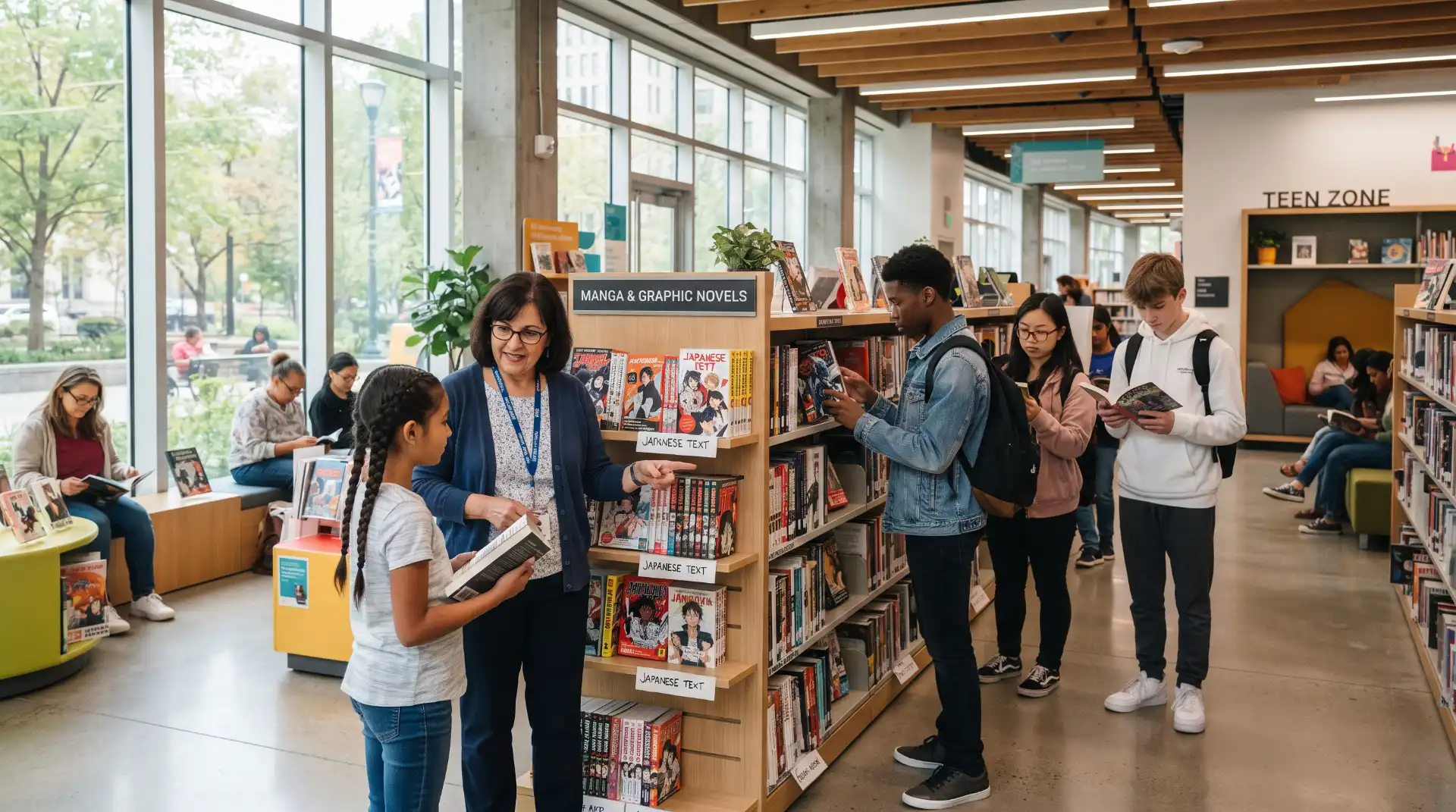
Public and school libraries have become an important part of manga’s American story.
Libraries are not simply places where readers borrow traditional novels. Modern library collections increasingly reflect the different ways people consume stories.
Manga has become especially useful because it can attract readers who may not regularly browse conventional fiction shelves.
The American Library Association’s Graphic Novels & Comics Round Table supports library staff with collection development, programming, and educational resources related to graphic novels and comics.
Libraries are also using manga as a foundation for community activities.
Manga and anime clubs can bring readers together to discuss favorite series, characters, artwork, cultural influences, and storytelling techniques. These programs can create a social environment around reading rather than treating reading as an isolated activity.
This matters in a time when many readers discover books through communities.
A person may hear about a manga title from a friend, see it recommended at a library, find a discussion group, and then become interested in other series.
The library becomes more than a place to borrow a book. It becomes part of the discovery process.

Social Media Has Changed How Americans Discover Manga
Book discovery has changed dramatically over the last several years.
TikTok, Instagram, YouTube, Reddit, podcasts, and online reading communities can turn a relatively unknown book into a widely discussed title.
Manga benefits from this environment because it is highly visual.
The artwork can immediately attract attention in a social-media post. A short video can show a bookshelf filled with manga volumes. A creator can recommend a series based on a specific trope, character type, genre, or emotional experience.
This fits directly into the larger reading trends already discussed on Bookzee.
Your article about BookTok’s influence on reading explains how social media has become an important discovery tool for American readers.
Read Bookzee’s article on BookTok and reading trends
Manga can perform particularly well in these communities because readers often become deeply invested in individual series.
Fans may collect physical volumes, create artwork, discuss theories, share favorite panels, recommend characters, and introduce new readers to series they love.
That creates a strong community effect.
The Visual Nature of Manga Is Part of Its Appeal
One obvious difference between manga and traditional novels is the visual experience.
Readers are not only interpreting written descriptions. They are also processing panel layouts, facial expressions, character movements, backgrounds, visual symbolism, pacing, and artwork.
A single page can communicate information that might require several paragraphs in a conventional novel.
This does not make manga less sophisticated than prose.
It simply means the storytelling language is different.
Readers learn to interpret the relationship between images and words. They understand how panel size can affect pacing, how facial expressions communicate emotion, and how silence can become part of a scene.
For many readers, this creates an especially immersive reading experience.
The artwork can establish atmosphere instantly.
A dark hallway, a crowded Tokyo street, a quiet bedroom, a supernatural creature, or an emotional close-up can communicate a tremendous amount of information without requiring lengthy description.
Manga Covers an Extraordinary Range of Genres
Another reason manga continues to attract new American readers is its enormous genre diversity.
A reader who does not enjoy action-oriented stories can still find manga focused on romance, mystery, comedy, food, sports, history, family, or everyday life.
A science fiction fan might discover futuristic technology and complex fictional societies.
A horror reader might find supernatural stories and psychological suspense.
A romance reader can explore stories focused on friendship, relationships, personal growth, or complicated emotional connections.
This variety makes manga increasingly similar to the broader American publishing industry.
Readers do not ask whether they “like books” in the abstract. They ask what kind of stories they enjoy.
Manga works the same way.
Someone might dislike one manga series and absolutely love another because the genres, themes, artwork, and intended audiences are completely different.
Manga Is Also Connecting With Adult Readers
Although manga has a strong association with teenagers and young adults, American adult readers are increasingly part of the market.
This is partly because readers who discovered manga when they were younger have continued reading as they have grown older.
It is also because publishers offer stories aimed at mature audiences.
Adult manga can explore relationships, careers, family responsibilities, social issues, crime, psychological experiences, history, and other subjects that are not limited to youth-oriented storytelling.
This growing age diversity is important because it changes the way bookstores and libraries present manga.
Instead of treating the entire category as children’s or teen entertainment, retailers and libraries can organize manga according to genre and audience.
That makes it easier for adults to discover titles that match their interests.
Manga and the Return of Physical Reading
Manga’s success is particularly interesting in the context of the renewed interest in physical books.
Bookzee has previously examined the rise of slow reading and the renewed popularity of physical books in 2026.
Read Bookzee’s article on the slow reading movement and physical books
Manga can be highly collectible in physical form.
Readers often purchase multiple volumes and arrange them on bookshelves. Special editions, box sets, cover artwork, and complete series can turn reading into a physical collecting experience.
For some fans, the physical object becomes part of the enjoyment.
The book is not simply something to consume and put away. It becomes part of a personal collection.
This can be especially appealing to readers who are trying to spend less time on screens.
Although many manga titles are available digitally, physical volumes offer an alternative way to experience stories without relying on a phone, tablet, or computer.
Manga and Japanese Culture
Manga can also introduce American readers to aspects of Japanese culture.
Readers may encounter Japanese food, school life, festivals, transportation, architecture, folklore, language, family structures, social customs, and everyday routines through fictional stories.
Of course, manga should not be treated as a complete representation of Japan.
A fictional story is not a textbook, and different manga creators present different perspectives.
However, stories can encourage curiosity.
A reader may encounter an unfamiliar tradition in a manga series and become interested enough to research it independently.
This can lead from entertainment into cultural learning.
Bookzee has also explored the broader popularity of Japanese-inspired fiction among American readers, including translated novels and stories influenced by Japanese storytelling traditions.
Read Bookzee’s article on Japanese-inspired fiction and American readers
Manga is an important part of that wider cultural exchange.
Why Manga Can Be an Accessible Starting Point for New Readers
Not everyone finds it easy to start reading long novels.
A 500-page book can look intimidating, particularly for someone who has not developed a regular reading habit.
Manga can provide a different entry point.
The combination of artwork and text creates visual breaks that may make a story feel more approachable.
That does not mean manga is always quick or easy to read. Some series contain hundreds of volumes or extremely complex plots.
But the visual structure can help new readers develop confidence.
Once someone becomes invested in a story, they may become more willing to explore other formats.
A manga reader might eventually pick up a prose novel based on a similar theme. An anime fan may discover translated literature. A library patron may move from manga to graphic novels or nonfiction.
Reading does not have to follow a single path.
Manga Is Becoming Part of America’s Broader Book Culture
The most significant change may be cultural rather than commercial.
Manga is increasingly treated as a normal part of reading.
Bookstores have dedicated manga sections. Libraries build collections around it. Schools discuss graphic storytelling. Online communities create recommendations and reading challenges. Publishers continue bringing Japanese titles to American audiences.
That normalization makes discovery easier.
When a category becomes visible, readers are more likely to try it.
And when more readers try it, bookstores and libraries have more reason to expand their collections.
This creates a cycle of accessibility and discovery.
What the 2026 Manga Market Says About American Reading
Current market data suggests that manga’s popularity in America is not simply a leftover from the pandemic-era entertainment boom.
Circana’s 2026 U.S. book-market analysis identified Japanese-influenced manga graphic novels as a strong area of adult fiction, with manga posting a 45% unit-sales gain in the first quarter of 2026.
Publishers Weekly’s September 2026 reporting also found that manga sales increased by about 40% from 2025 to 2026, while noting that the category remains below its post-pandemic peak.
Those numbers provide useful context.
Manga has experienced periods of rapid growth and decline before. The current market should therefore be viewed as part of a longer history rather than as a guaranteed straight line upward.
Still, the broader infrastructure surrounding manga is much stronger than it was when the category first entered the American mainstream.
Readers have more ways to discover titles. Anime is widely accessible. Libraries have established collections. Social media creates communities. Publishers offer more formats and genres.
These factors can help manga remain an important part of the U.S. reading ecosystem.
What American Readers Can Discover Through Manga
For readers who are new to manga, the most important thing to remember is that there is no single correct place to start.
A fan of mystery can begin with a mystery manga.
A romance reader can choose romance.
A horror fan can explore supernatural stories.
A science fiction enthusiast can find futuristic adventures.
Someone interested in everyday stories can explore slice-of-life manga.
The category is broad enough that almost every type of reader can find a potential entry point.
The best approach is to think about the kinds of stories you already enjoy.
Instead of asking, “Do I like manga?” ask, “What kind of story do I want to read?”
That small change can make the category feel much less intimidating.
The Future of Manga in America
The rise of manga in America reflects a larger transformation in how people discover and experience books.
Readers are no longer limited to traditional literary categories. They move between novels, comics, graphic novels, audiobooks, anime, games, podcasts, social media, and film.
Manga sits directly at the intersection of many of these forms of entertainment.
Its connection to anime gives it a built-in discovery pathway. Its visual storytelling works well on social media. Its physical volumes appeal to collectors and readers interested in screen-free entertainment. Its enormous range of genres gives it the ability to reach different age groups and interests.
Libraries are also helping make manga accessible to readers who may not want to purchase every volume.
Taken together, these factors help explain why manga has become increasingly prominent in the United States.
The story is bigger than one bestselling series or one generation of fans.
Manga represents a broader shift toward international storytelling and flexible definitions of what reading can look like.
Final Thoughts
The rise of manga in America is one of the most interesting developments in the U.S. book market.
Its growth has been supported by anime, streaming platforms, social media, bookstores, libraries, publishers, collectors, and generations of readers who have grown comfortable moving between different forms of storytelling.
Most importantly, manga offers variety.
It can be funny, emotional, frightening, romantic, adventurous, philosophical, educational, or completely unexpected.
For American readers, that variety makes manga more than a niche category. It has become another doorway into reading.
As the U.S. book market continues changing in 2026, manga is likely to remain an important part of the conversation about what Americans are reading, how they discover stories, and why visual storytelling continues to attract new generations of readers.
For anyone who has never explored manga, there may be no better time to look beyond the most familiar titles and discover how broad the medium really is.
Learn More About Manga in Libraries
For readers, educators, parents, and librarians who want additional information about manga and graphic storytelling, the American Library Association provides resources through its Graphic Novels & Comics Round Table.
American Library Association — Graphic Novels & Comics Round Table