
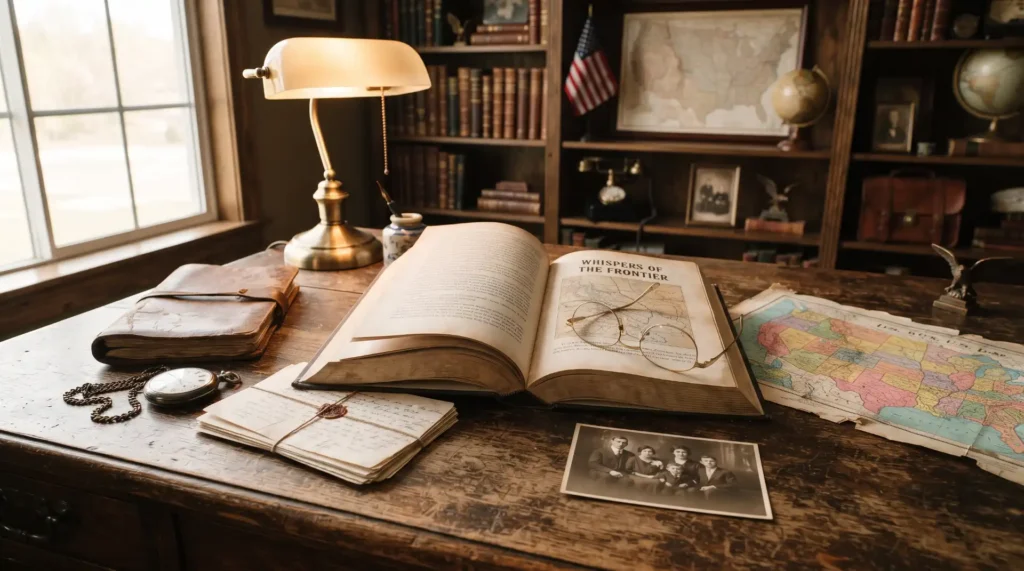
Historical fiction has maintained a special place in American reading culture because it allows readers to experience the past through stories rather than simply study it through dates and facts. A history textbook might explain when a war began, how an economic crisis developed, or how a major social movement changed the country, but a novel can place those developments inside the life of a fictional family, worker, student, immigrant, soldier, parent, or community. Readers can see how large events influence everyday decisions, relationships, opportunities, and fears. That combination of historical context and personal storytelling gives the genre an unusual ability to make distant periods feel emotionally close.
The growing popularity of historical fiction is also connected to how dramatically the genre has expanded. Historical fiction is no longer limited to stories about kings, queens, soldiers, aristocrats, or famous battles. Contemporary authors explore American cities and small towns, rural communities, immigrant neighborhoods, Indigenous histories, family businesses, industrial workplaces, schools, farms, military communities, and many other settings. Stories can take place during the Civil War, Reconstruction, the Great Depression, World War II, the 1950s, the Civil Rights era, the 1970s, the 1980s, the 1990s, or even the early 2000s. The genre can also overlap with romance, mystery, thriller, literary fiction, family drama, adventure, and young adult fiction, giving readers many different ways to approach stories about the past.
Why Historical Fiction Continues to Attract American Readers
One of the strongest attractions of historical fiction is its ability to turn a large historical period into a personal experience. People generally do not experience history as a list of dates. They experience it through ordinary decisions, relationships, work, family responsibilities, community life, and unexpected changes. A family living through the Great Depression does not experience the period as an economic statistic. They experience it through questions about employment, food, housing, transportation, education, and whether they can remain together. A family living during World War II may experience the period through letters, military service, rationing, factory work, uncertainty, and separation from loved ones.
Historical fiction gives authors room to explore these personal experiences while maintaining a recognizable historical setting. The Library of Congress explains that historical fiction can remain close to documented events while filling in dialogue, emotions, and interactions that historical records generally cannot preserve. That makes the genre particularly useful for readers interested in family and local history because it can help them imagine how people may have experienced circumstances that are only partially documented.
The distinction between fiction and nonfiction remains important. A historical novel is not a substitute for a primary source, academic history, archive, or biography. Writers create characters and conversations, and they may combine events or invent situations to serve the needs of the story. However, a well-researched novel can encourage readers to investigate the real history behind the fictional narrative. Someone who becomes fascinated by a novel about the Great Migration, World War II, the American West, or the Civil Rights Movement may continue reading biographies, historical studies, newspaper archives, photographs, oral histories, and museum collections.
That process is one of the reasons historical fiction can have a lasting effect beyond the final page. The novel creates curiosity, and curiosity can lead to research. Readers may begin by asking what happened to a fictional character and eventually find themselves asking what actually happened to the people who lived through the same historical period. The story becomes an entry point rather than the final destination.

The Emotional Power of Looking Back
Historical fiction also appeals to readers because it combines familiarity with distance. The past can feel completely different from the present, yet the emotions experienced by characters remain recognizable. People fall in love, lose family members, look for work, worry about their children, protect friendships, pursue ambitions, and struggle with uncertainty regardless of the century in which they live. When those familiar emotions are placed inside a different historical environment, readers can recognize themselves while simultaneously discovering how much everyday life has changed.
This balance creates an important emotional effect. A modern reader may understand what it feels like to worry about employment, but the employment options available to a fictional character in 1932 may be entirely different. A modern teenager understands friendship and social pressure, but a teenager living before the internet would communicate, socialize, and experience privacy differently. A parent today may worry about a child’s future, while a parent in an earlier period may face entirely different choices involving education, migration, military service, or economic survival.
Historical fiction makes those differences visible without requiring the reader to approach the subject like a classroom lesson. Instead of explaining every social condition directly, the author can show the consequences through the character’s daily life. A family might have to travel for hours because transportation is limited. A character may wait days for a letter because instant communication does not exist. Someone may discover news through a newspaper rather than a smartphone. These details make the historical environment part of the story rather than a separate explanation.
The emotional distance of historical fiction can also allow readers to approach difficult subjects in a thoughtful way. Stories can explore war, discrimination, poverty, displacement, social restrictions, political conflict, and economic hardship through individual characters. Because the genre can focus on personal experiences, it can demonstrate how historical circumstances affected people differently depending on where they lived, their economic position, their family circumstances, and their community.
Historical Fiction Is Broader Than the Traditional Period Novel
The modern historical fiction category is remarkably broad. Readers who picture historical fiction as a story set in medieval Europe may be surprised by how many contemporary novels use American settings and relatively recent periods. The genre can include stories about immigrants arriving at Ellis Island, families living through the Dust Bowl, workers entering wartime industries, communities rebuilding after natural disasters, teenagers growing up during the Cold War, or families adapting to technological changes at the end of the twentieth century.
This variety is important because it means that readers do not have to be interested in every type of history to enjoy the genre. Someone fascinated by American politics might prefer a historical political drama, while another reader interested in family relationships might choose a multigenerational saga. Readers who enjoy solving puzzles may prefer historical mysteries, while romance readers can explore relationships shaped by the social rules of earlier periods.
Historical fiction therefore functions less like a single narrow category and more like a large collection of connected storytelling styles. The historical setting provides a foundation, but the emotional and narrative experience can be completely different from one book to another. That flexibility makes it easier for the genre to attract readers with different interests.
The Growing Interest in Recent History
One of the most interesting developments in historical fiction is the gradual movement toward more recent periods. The definition of what feels historical changes with every generation. For readers born in the 2010s, the early 2000s are already part of a world they did not personally experience. Even the 1990s, which many adults remember clearly, can feel like a distant period to younger readers.
Technology makes this change particularly visible. A novel set in 2001 may feature desktop computers, landline phones, CDs, DVDs, printed photographs, early mobile phones, email, and developing internet communities. It will not contain the same smartphone-centered communication, streaming culture, social media environment, and always-connected lifestyle that define daily life for many people today. For older readers, these details can create nostalgia. For younger readers, they can create the feeling of entering a historical setting.
The same pattern can be seen with the 1980s and 1990s. Objects that once seemed ordinary are increasingly becoming cultural artifacts. Cassette tapes, VHS rentals, printed encyclopedias, pay phones, disposable cameras, video game cartridges, newspaper classifieds, and physical maps can all serve as storytelling details. Writers do not necessarily need to explain these objects because older readers recognize them immediately, while younger readers may discover them through the narrative.
This changing boundary between contemporary and historical fiction gives authors an expanding range of subjects. The past is not simply the distant past. Every decade eventually becomes history, and each generation creates new material for future writers to explore.
Nostalgia Gives Historical Fiction Another Layer
Nostalgia is particularly powerful when historical fiction explores a period that readers personally remember. A novel set in the 1970s may evoke memories of family road trips, television programs, record players, neighborhood life, or changing American cities. A story set in the 1980s may remind readers of arcades, video stores, cassette tapes, early personal computers, and different forms of communication. A novel set in the 1990s may bring back memories of school computer labs, dial-up internet, CDs, magazines, and the early growth of online communities.
However, nostalgia does not necessarily mean presenting the past as perfect. Strong historical fiction can allow readers to enjoy familiar cultural details while also examining the problems and limitations of the period. A story about the 1950s, for example, can include recognizable automobiles, music, television, and suburban life while also exploring the social inequalities and restrictions that affected different groups of Americans. This balance helps prevent the historical setting from becoming nothing more than decorative nostalgia.
For younger readers, recent historical fiction offers a different experience. They may encounter objects and customs that seem strange or inconvenient, such as waiting for photographs to be developed, using a phone attached to a wall, watching scheduled television programs, or looking up information in a physical encyclopedia. These details can make history feel surprisingly close while demonstrating how rapidly technology has changed everyday life.
Diverse Voices Are Changing Historical Fiction
Another major reason historical fiction continues to evolve is the increasing range of perspectives represented in stories about the past. American history contains countless communities and experiences, and contemporary authors have opportunities to explore perspectives that were not always prominent in mainstream popular fiction. Stories may focus on Black American communities, Indigenous communities, Asian American families, Latino communities, immigrants, working-class families, women, military families, rural communities, or other groups whose experiences form part of the country’s history.
This diversity matters because there was never a single American experience. People living through the same historical event could have completely different lives depending on geography, income, occupation, family circumstances, race, cultural background, gender, age, and community. A major economic crisis could affect a factory worker differently from a business owner. A war could be experienced differently by a soldier, a factory worker, a child, or a family waiting at home. Migration could represent opportunity for one person and painful separation for another.
Historical fiction gives writers the opportunity to explore those differences through individual characters. Instead of presenting a period as one uniform experience, the genre can reveal how complicated historical life actually was. Readers may encounter familiar events from perspectives they have not previously considered, which can encourage further interest in the historical record.
The National Endowment for the Arts has similarly emphasized the value of literature that presents a range of voices, genres, settings, perspectives, and experiences through its Big Read program. The program’s stated goals include encouraging meaningful conversations, celebrating local creativity, elevating different voices, and strengthening community connections.
The Connection Between Historical Fiction and Local History
Historical fiction does not have to take place in famous cities or around nationally recognized figures to be interesting. Some of the most compelling historical stories can emerge from small towns, rural communities, regional industries, local businesses, farms, schools, neighborhoods, and family properties. Local settings give readers an opportunity to connect large historical developments with places that may still exist today.
This is particularly relevant in a geographically diverse country such as the United States. The history of a California agricultural community can differ significantly from the history of a New England fishing town, a Southern farming community, a Midwestern industrial city, or a Western mining settlement. Even communities within the same state can develop very differently depending on transportation, geography, natural resources, immigration, industry, and economic conditions.
A historical novel set in a familiar region can therefore change how readers look at their surroundings. An old railroad line can become part of a story about migration and economic development. A historic school can become a reminder of changing educational systems. An old downtown building can represent several generations of businesses and families. A bridge can reveal how transportation changed the development of an entire community.
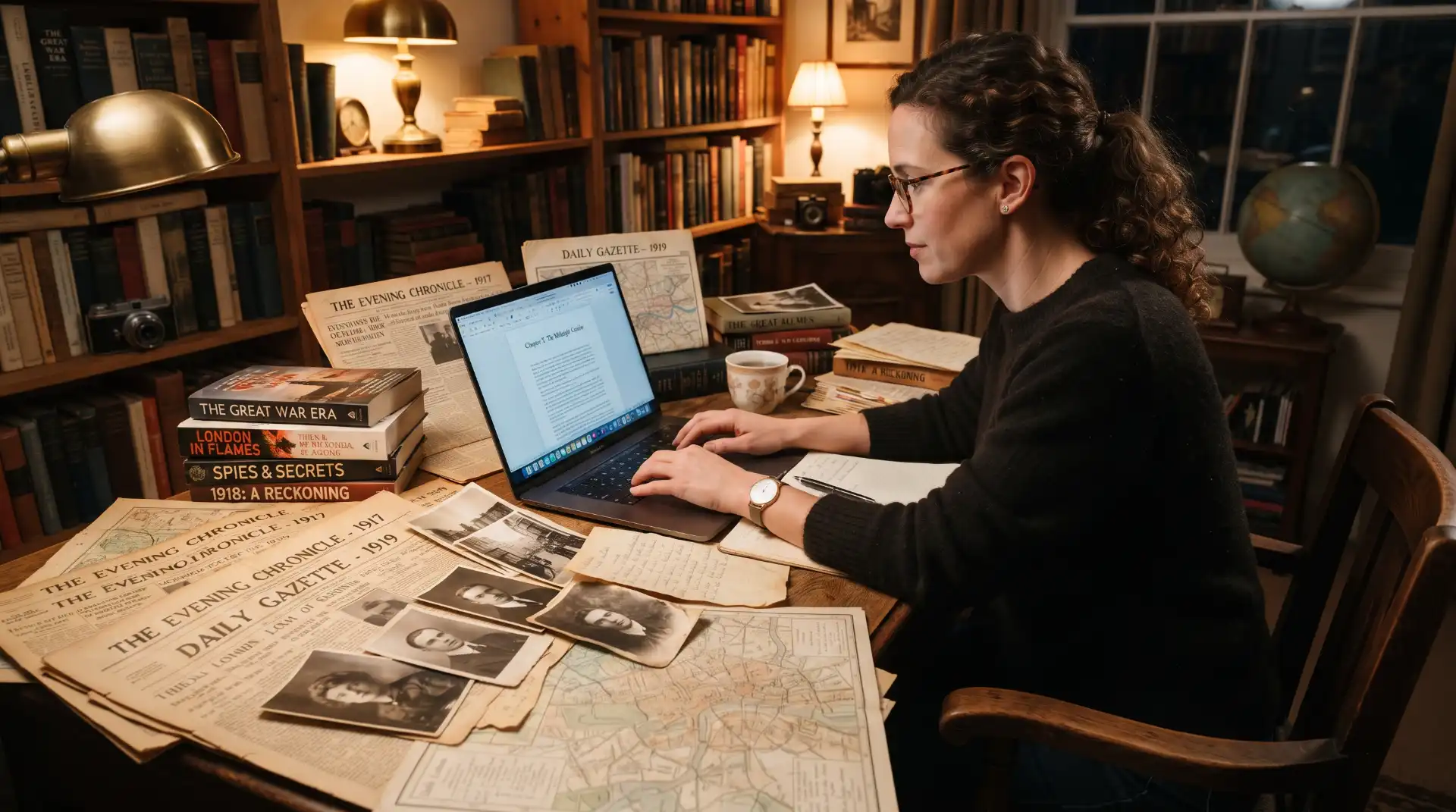
This relationship between fiction and local history can also encourage readers to explore archives and historical societies. Once a fictional story makes a particular period feel interesting, readers may want to find photographs, newspapers, maps, census records, letters, and other documents from the real community. The Library of Congress specifically notes that historical fiction can help bring family and local history to life and encourage further exploration.
Research Is One of the Genre’s Most Important Foundations
Research separates convincing historical fiction from a story that merely uses old-fashioned costumes and settings. Authors may spend considerable time studying newspapers, maps, photographs, advertisements, architecture, transportation, food, occupations, laws, technology, language, social customs, and everyday routines. These details do not always need to be explained directly, but they influence how characters behave and how believable the world becomes.
The Library of Congress has highlighted research, time and place, narrative pacing, and character development as important components in constructing historical fiction. Its discussion of the craft of historical fiction emphasizes that the historical backdrop has to be built carefully because the setting plays a particularly important role in this type of storytelling.
The smallest details can sometimes make the biggest difference. A character traveling between two cities needs to use transportation that existed at the time. A person cannot casually reference technology that had not yet been invented. A writer also needs to understand the social and economic conditions that shape the characters’ choices. These considerations help prevent historical fiction from feeling like modern characters simply wearing period clothing.
At the same time, writers need creative freedom. A novel is not a documentary, and readers should understand that fictional dialogue and invented characters are part of the form. The goal is generally to create a convincing fictional world that fits within a researched historical context. Readers interested in verifying particular details can then consult primary sources and authoritative historical resources.
Historical Romance Expands the Audience
Historical romance has played an important role in keeping historical settings accessible to readers who primarily choose books for character relationships. Romantic stories naturally depend on social circumstances, and those circumstances can change dramatically depending on the period. Expectations surrounding courtship, marriage, employment, inheritance, family responsibilities, and social reputation can create conflicts that would not exist in the same form today.
For readers, this creates an opportunity to explore history through relationships. The historical environment affects what characters can say, where they can go, whom they can marry, what work they can pursue, and how their families respond to their decisions. The setting therefore becomes part of the emotional conflict rather than simply a background.
Historical romance also demonstrates how the genre can be entertaining while introducing readers to unfamiliar customs and social structures. Someone may pick up a historical romance because they enjoy the relationship story and gradually become interested in the period itself. That interest can lead to other historical novels, nonfiction books, biographies, or documentaries.
Historical Mystery Creates a Different Kind of Immersion
Historical mysteries provide another strong entry point because the limitations of historical technology become part of the investigation. A detective operating in the early twentieth century cannot use a smartphone, internet search engine, modern DNA database, or digital surveillance system. Instead, the investigation may depend on newspapers, handwritten records, physical evidence, witnesses, telegrams, photographs, and careful observation.
Those limitations can increase suspense because characters have fewer ways to obtain information quickly. Readers must also understand the environment in which the mystery takes place. A missing person case, for example, might depend on transportation networks, neighborhood relationships, newspaper reporting, or local knowledge that would be less important in a modern investigation.
Historical mysteries therefore combine two forms of discovery. Readers want to know who committed the crime or what happened to a missing person, but they are also learning how investigations worked during another period. The historical setting becomes part of the puzzle.
Family Sagas Show History Across Generations
Family sagas provide another way historical fiction can demonstrate change. Instead of concentrating on a single year, a novel may follow a family across several decades. Children become adults, businesses grow or disappear, neighborhoods change, and new technologies transform everyday routines. The characters may not think of themselves as living through history, but readers can see the transformation because they have the benefit of looking at the entire timeline.
This structure can also demonstrate how decisions made by one generation influence another. A family migration can determine where children grow up. An economic decision can affect a business for decades. A marriage can connect two families. A war can reshape a household. A technological change can alter an occupation. Historical fiction becomes particularly powerful when these large developments are shown through relationships rather than explained as abstract trends.
For readers, family sagas can also create a sense of continuity. The story demonstrates that history is not simply a collection of separate periods. One generation inherits circumstances created by the previous generation and then makes decisions that influence those who follow. This makes the past feel connected to the present rather than completely separate from it.
Book Clubs Give Historical Fiction a Social Life
Historical fiction works particularly well in book clubs because it creates more discussion opportunities than plot alone. Readers can talk about the characters and story while also discussing whether the historical setting was convincing, which details were new to them, what historical events influenced the characters, and what they would like to research further.
A book club can even turn a historical novel into a broader community project. Members might compare the fictional story with historical documents, visit a local museum, research the history of the setting, invite a local historian to speak, or discuss how the same historical period affected different communities.
The National Endowment for the Arts Big Read provides a strong example of the community role that reading can play. According to the NEA, the program has funded more than 1,800 community reading programs since 2006, with participation reaching communities across the country. The 2026–2027 cycle includes 71 nonprofit organizations in 47 states and Puerto Rico, with programming connected to America’s 250th anniversary.
The program’s current selections include books connected to American history, identity, culture, and different perspectives. That demonstrates how shared reading can provide a foundation for conversations about the past while bringing people together in local settings.

Physical Books Still Matter to Historical Fiction Readers
The popularity of historical fiction also exists within a larger reading environment in which people can choose among hardcover books, paperbacks, ebooks, and audiobooks. Each format provides a different experience, and historical fiction can benefit from all of them. A long family saga may be easier to finish as an audiobook during a commute, while a reader who enjoys collecting books may prefer a hardcover edition with an attractive historical design.
Physical books can be particularly appealing for historical fiction because the object itself can contribute to the reading experience. A beautifully designed cover, map, author’s note, timeline, photographs, or historical appendix can make the book feel like something worth keeping. Readers who become deeply interested in a particular period may also build collections around specific authors, historical eras, or themes.
Audiobooks provide another form of immersion. A narrator can influence the atmosphere through pacing, character voices, pronunciation, and emotional delivery. This can be especially useful for lengthy historical novels because readers can continue the story while commuting, exercising, traveling, or doing household tasks.
Ebooks provide convenience and portability. Someone researching a particular historical period may carry several novels and reference books on one device. This flexibility means that the growth of historical fiction cannot be understood only through traditional bookstore shelves. Readers discover and experience the genre across multiple formats.
Social Media Has Changed How Readers Discover Books
Digital platforms have also changed the way people discover historical fiction. Readers can encounter recommendations through short videos, reading challenges, online book clubs, review posts, author interviews, virtual events, and photographs of bookshelves. Historical fiction is especially suited to visual discovery because its settings can be communicated through clothing, architecture, old photographs, maps, objects, and period-inspired design.
This environment can help lesser-known historical subjects reach readers who already have an interest in a particular period. Someone fascinated by the 1920s can follow discussions about books from that era. Another reader interested in World War II can find recommendations focused on civilian life, military families, resistance movements, or different geographic regions. Readers interested in American local history can also discover novels connected to particular states and communities.
However, online popularity does not automatically establish historical accuracy. Readers can benefit from treating social media recommendations as starting points rather than final judgments. Author notes, reviews from reputable publications, library catalogs, historical references, and primary-source material can help readers understand the relationship between the fictional story and the documented history.
Screen Adaptations Can Bring Historical Stories to New Audiences
Historical fiction also benefits from its relationship with film and television. A screen adaptation can introduce a novel to viewers who might never have encountered it in a bookstore or library. Historical settings can be particularly effective visually because costumes, architecture, transportation, landscapes, and period technology help establish the world immediately.
Adaptations can also lead viewers back to books. Someone may watch a historical drama and become interested in the original novel, while an existing reader may watch an adaptation to see how familiar characters and settings have been interpreted visually. This creates a relationship between reading and screen entertainment that can expand the audience for historical stories.
The two formats do, however, provide different experiences. A novel can spend considerable time inside a character’s thoughts, explain historical context through narration, and develop relationships gradually. A television series can use visual storytelling, music, sets, and performances to communicate information quickly. The differences can encourage readers to return to the original novel even after seeing an adaptation.
Historical Fiction Can Encourage Curiosity About Primary Sources
One of the most valuable aspects of historical fiction is its ability to encourage readers to look beyond the story. After finishing a novel, readers may want to know which characters were fictional, which events were real, what the actual setting looked like, and how people living during the period documented their experiences.
This is where libraries, archives, museums, and digital collections become particularly useful. The Library of Congress, for example, provides extensive access to historical materials, including photographs, newspapers, manuscripts, maps, books, recordings, and other primary sources. These collections allow readers to move from imaginative storytelling toward documented evidence.
That movement from fiction to research can be particularly valuable for students and younger readers. Instead of encountering history only as an assignment, they may approach it because a story made them curious. A novel can provide the emotional motivation to investigate a subject more deeply.
Historical fiction therefore has an unusual educational potential without needing to function as a textbook. Its role can be to create interest. Once interest exists, readers can seek out authoritative information and develop a more detailed understanding of the historical period.
Why Historical Fiction Remains Relevant in Modern America
The continued appeal of historical fiction reflects a broader human interest in understanding how people lived before us. Modern life is changing quickly, particularly as technology influences communication, employment, entertainment, transportation, and relationships. Looking backward can provide perspective on how much has changed within a relatively short period.
Historical fiction also reminds readers that people in earlier generations did not know how their own stories would turn out. Someone living in 1940 did not know what the next decade would bring. A teenager in 1960 could not know how dramatically American culture would change. A family in 1995 could not fully predict how the internet would transform work, entertainment, communication, and social life.
This uncertainty is one of the reasons historical characters can feel surprisingly modern. They make decisions without knowing the future, just as people do today. They respond to circumstances with incomplete information and attempt to protect the people they care about. The technologies and social conditions may change, but the basic human experience remains recognizable.
That connection gives historical fiction a lasting quality. Readers are looking backward, but they are also seeing themselves reflected in people who faced uncertainty in another period.
The Future of Historical Fiction
The future of historical fiction is likely to remain diverse because the past contains an enormous number of stories that have not yet been explored. Writers can revisit familiar events from different perspectives, explore lesser-known communities, examine local history, or use relatively recent decades as settings. The growing distance from the 1980s, 1990s, and early 2000s will also provide new opportunities for authors to explore the everyday details of those periods.
Technology will probably influence how readers discover and experience these stories as well. Audiobooks, ebooks, online communities, digital archives, virtual events, and screen adaptations can all help historical fiction reach audiences beyond traditional bookstores. At the same time, physical books and libraries continue to provide important spaces where readers can encounter the genre.
Historical fiction is also likely to remain connected to conversations about identity, family, community, and memory. As authors explore more perspectives on American history, readers gain opportunities to understand how different communities experienced the same periods in different ways. This does not make every historical novel a factual account, but it can encourage readers to become more curious about the evidence behind the story.
Ultimately, the growing popularity of historical fiction comes from the genre’s ability to combine the emotional appeal of a good story with the curiosity created by the past. Readers can follow a romance, solve a mystery, experience a family drama, or become immersed in an adventure while simultaneously discovering how people lived during another period. The historical setting gives the story additional depth without requiring every reader to approach it as an academic exercise.
For American readers, the possibilities are especially broad. The country’s history includes centuries of migration, regional development, cultural change, economic transformation, technological innovation, conflict, community building, and personal stories. Every state and region contains settings that can support historical narratives, from major cities and industrial centers to agricultural communities, coastal towns, mountain settlements, and rapidly developing suburbs.
The most compelling historical fiction does not simply place modern characters in old clothing and buildings. It asks readers to understand how the circumstances of a particular period shaped people’s choices. It shows how transportation, technology, economics, family structures, social expectations, geography, and major events influenced everyday life. At the same time, it reminds readers that the people living through those periods had hopes and fears just as real as those experienced today.
That combination is what gives historical fiction its enduring appeal. A novel can transport readers into another period while still allowing them to recognize familiar emotions and human relationships. It can encourage nostalgia without ignoring historical complexity, introduce unfamiliar perspectives without reducing them to stereotypes, and inspire curiosity without pretending that fiction is a substitute for documented history.
As new generations discover old decades and new authors revisit familiar periods, the boundaries of historical fiction will continue to change. Stories set in the early twenty-first century will eventually become as historically distant to future readers as the 1950s or 1960s can seem today. Objects that currently appear ordinary may become historical details in future novels, just as typewriters, pay phones, vinyl records, VHS tapes, and early computers have become recognizable markers of earlier eras.
The growing popularity of historical fiction ultimately reflects the continuing desire to understand where people came from and how the past shaped the world they live in today. Whether a reader chooses a sweeping family saga, a historical mystery, a romance, a wartime story, or a novel about a small American community, the experience can provide more than entertainment. It can open a door to another period, another community, and another way of seeing the world.
For that reason, historical fiction remains an important part of American reading culture. It gives readers a reason to look backward while encouraging them to think more carefully about the present. Most importantly, it demonstrates that history is not only made up of famous names and major events. It is also made up of ordinary people, personal choices, family memories, local communities, and everyday moments that collectively shape the story of a country.