
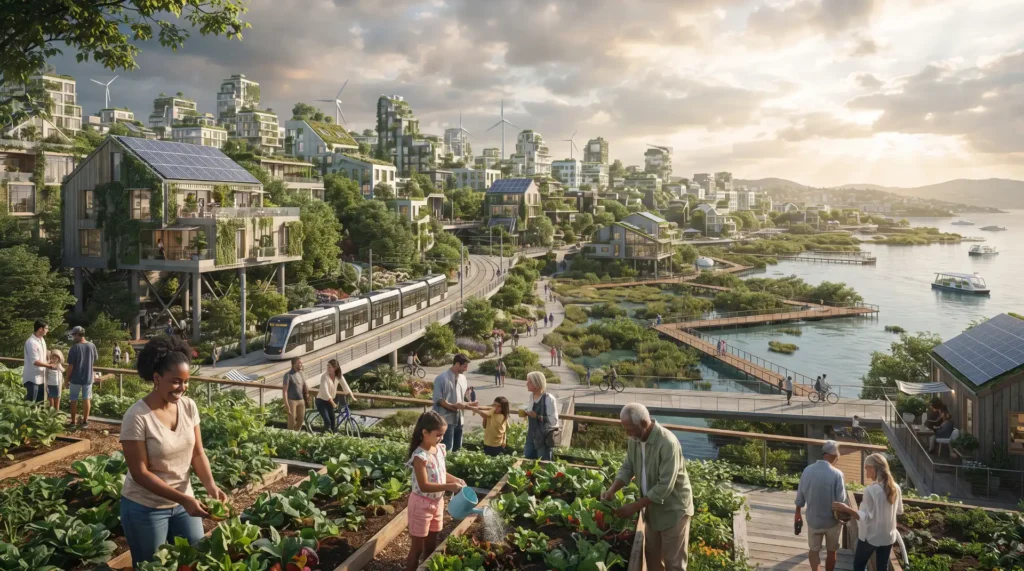
Climate fiction has entered a new stage. For years, books about climate change were frequently associated with flooded cities, devastating storms, burning landscapes, food shortages, mass migration, political instability, and societies struggling to survive after environmental collapse. Those stories remain an important part of speculative literature, but they no longer represent the full range of climate fiction.
Today, more climate-focused stories are asking a different question: What happens when the world does not end?
That question is becoming increasingly important to writers and readers because climate change is not simply a future catastrophe waiting to arrive. Scientific evidence shows that Earth’s climate is already changing, with rising temperatures, melting ice, rising sea levels, shifting ecosystems, and changes in extreme weather patterns among the documented effects. NASA describes the current warming trend as primarily driven by human activity and points to multiple independent lines of evidence supporting the conclusion that the planet is warming. NASA’s climate evidence research provides a useful scientific foundation for understanding the real-world conditions that inspire many contemporary climate stories.
Fiction, however, does something science cannot do by itself. It gives readers characters, relationships, places, memories, conflicts, and imagined futures. A scientific report can explain changing temperatures or sea levels, while a novel can show what those changes might mean to a family deciding whether to remain in its hometown, a farmer adapting to new growing conditions, a coastal community redesigning its infrastructure, or a teenager wondering whether the landscape they know will still exist when they are an adult.
This is why climate fiction is moving beyond the traditional dystopian formula. The genre is becoming less concerned with simply showing humanity at its breaking point and more interested in adaptation, resilience, community, technology, environmental restoration, social inequality, cultural memory, and the complicated choices people may face in a changing world.
For American readers, this expansion is particularly significant. Climate change does not affect every region of the United States in exactly the same way. A story set along the Gulf Coast can explore hurricanes and coastal development, while a novel set in California might examine drought, wildfire, water management, agriculture, or extreme heat. A story in the Southwest could focus on water scarcity, while a Midwestern novel might examine agriculture and changing weather patterns.
Climate fiction therefore has the potential to become one of the most geographically diverse forms of contemporary storytelling.
Climate Fiction Is No Longer Synonymous With Dystopia
The term “climate fiction,” commonly shortened to “cli-fi,” describes fiction in which climate change, environmental transformation, ecological disruption, or adaptation plays a meaningful role in the story. Although the category has frequently overlapped with science fiction and dystopian literature, climate fiction is much broader than either category.
Early discussions of climate fiction often centered on catastrophic scenarios. These stories could be deliberately frightening because they asked readers to imagine the consequences of environmental breakdown. Flooded cities, collapsing governments, disappearing food supplies, and extreme weather created dramatic settings in which characters struggled to survive.
Those narratives remain valuable because they can function as warnings. However, relying exclusively on catastrophe can create limitations. If every climate novel depicts the same ruined cities and desperate survivors, readers may begin to see climate fiction as a narrow literary formula rather than a flexible way of exploring contemporary life.
The genre is now becoming more imaginative.
A climate novel can be a family drama in which environmental change influences decisions across several generations. It can be a mystery about contamination or land development. It can be a romance involving people working on a coastal restoration project. It can be a literary novel about grief and the loss of a familiar landscape. It can be a young adult story about friendship and activism. It can even be a hopeful speculative story about a future community that has successfully adapted to a warmer world.
The climate element does not have to consume the entire narrative. It can simply provide the circumstances in which the characters live.
From End-of-the-World Stories to Stories About Everyday Life
One of the most important developments in climate fiction is the movement from spectacular disaster toward everyday consequences.
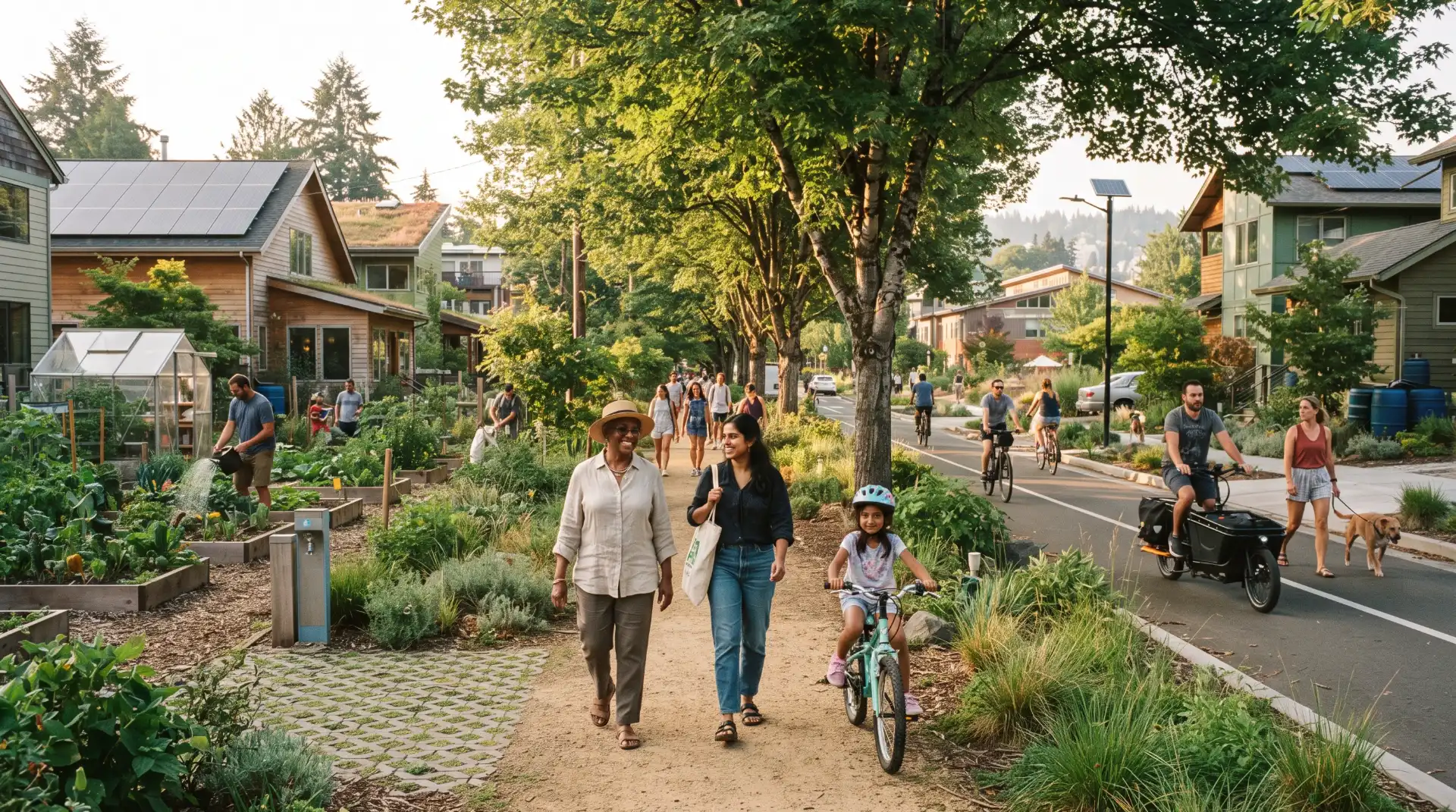
Imagine a future American city where summer temperatures have become significantly more difficult to manage. The city still has schools, restaurants, public transportation, businesses, libraries, parks, and neighborhoods. People still go to work, form relationships, raise children, celebrate holidays, and argue about politics.
The city has not collapsed.
Instead, its definition of normal life has changed.
That scenario can create a different type of literary tension. Writers can explore how buildings are redesigned, how public spaces change, how working hours are adjusted, how neighborhoods receive investment, and how residents disagree over the best response.
A story like this may feel less dramatic than an apocalypse, but it can actually provide a more intimate examination of climate change. Instead of showing an extraordinary event, it shows how environmental conditions become part of ordinary life.
That makes climate fiction more recognizable to contemporary readers.
People do not necessarily experience climate change as one enormous event. They may experience it through repeated heat waves, changing landscapes, wildfire smoke, water restrictions, insurance concerns, changing agricultural conditions, coastal flooding, or altered seasonal patterns.
These details can become powerful elements of fiction because they interact with decisions people already understand.
Why Adaptation Has Become a Powerful Theme
Adaptation is one of the most promising themes in modern climate fiction because it gives characters agency.
A dystopian story often emphasizes what people have lost. An adaptation story can ask what people decide to do next.
That distinction opens up a much larger range of possibilities.
A coastal community might restore wetlands to reduce flooding. A city might redesign streets to provide more shade. Farmers might experiment with different crops. Architects might develop buildings designed for hotter conditions. Residents might create community gardens or neighborhood cooling centers.
None of these developments automatically produces a utopian future. In fact, adaptation creates new conflicts.
Who pays for the changes?
Which neighborhoods receive investment first?
Who is forced to move?
Who owns newly valuable land?
Should governments protect every community or encourage relocation from particularly vulnerable areas?
What happens when environmental priorities conflict with economic interests?
These questions can give climate fiction a political and social dimension without turning every novel into a political manifesto.
Characters can disagree naturally because they have different experiences and priorities.
The American Landscape Gives Climate Fiction Endless Possibilities
The United States is particularly well suited to geographically diverse climate storytelling.
Consider the differences between Miami, Phoenix, New Orleans, Seattle, Los Angeles, Minneapolis, Houston, Charleston, Denver, and rural agricultural communities across the Midwest. Each location has different geography, infrastructure, industries, cultural traditions, and environmental pressures.
That means there is no single American climate story.
A novel set in South Florida could examine sea-level rise, hurricanes, insurance, tourism, housing, and coastal development. A story in the American Southwest could focus on water supplies, extreme heat, agriculture, and urban growth. A California novel might explore wildfire, drought, energy systems, agriculture, or the relationship between growing cities and surrounding ecosystems.
In the Pacific Northwest, a writer could explore wildfire smoke, forests, fisheries, and changing ecosystems. A Midwestern story could examine farming communities and the economic consequences of shifting environmental conditions.
The setting itself can therefore become a character.
Readers recognize places through weather, architecture, food, landscapes, traditions, and local culture. When those elements change, the reader can feel the transformation personally.
Climate Fiction and the Emotional Reality of Environmental Change
One of literature’s greatest strengths is its ability to explore emotions that are difficult to communicate through statistics alone.
Climate science can measure temperature, precipitation, sea-level rise, ice loss, and other physical changes. Fiction can explore what those changes mean to human beings.
Consider an elderly character who remembers a coastline from childhood and realizes that the landscape has changed dramatically. Consider a young person who wonders whether their hometown will remain affordable and habitable. Consider a farmer who inherits land from a parent but discovers that traditional practices are becoming increasingly difficult.
None of these stories requires an apocalyptic event.
The emotional impact comes from change.
This is one reason climate fiction can be useful for readers experiencing environmental anxiety. Instead of presenting climate change solely as an enormous abstract problem, a novel can give the issue a human scale.
Readers can experience uncertainty through characters.
They can explore difficult choices through fictional communities.
They can imagine possible futures without being told exactly what they are supposed to think.
Hope Does Not Mean Pretending Climate Change Is Not Serious
As climate fiction evolves, hopeful storytelling has become increasingly important. However, hopeful climate fiction should not be confused with stories that ignore environmental realities.
Hope is most convincing when it exists alongside difficulty.
A community can experience serious losses and still rebuild. A family can leave a home and still preserve its traditions. A damaged ecosystem can begin recovering without returning exactly to its previous condition. A city can make meaningful improvements while still facing difficult choices.
Bookzee has previously explored the connection between climate fiction and hopepunk, a trend that emphasizes resilience, cooperation, and the possibility of creating better futures rather than focusing entirely on despair. Read more about climate fiction and hopepunk on Bookzee.
That approach is particularly interesting because it allows writers to acknowledge climate risks while refusing to assume that humanity has no agency.
A hopeful story does not have to say that everything will work out.
It can simply say that choices still matter.

Why Readers May Want Alternatives to Traditional Climate Dystopias
Dystopian fiction remains popular because it provides high stakes and dramatic conflicts. However, readers can become tired when every environmental story follows the same narrative pattern.
If every story begins with catastrophe and ends with civilization collapsing, the genre risks becoming predictable.
Climate fiction can avoid this problem by exploring different scales of change.
One novel might focus on a single family. Another could follow a group of neighbors. A third could examine a political debate over infrastructure. Another could explore a scientist, artist, teacher, farmer, or entrepreneur trying to navigate a changing environment.
The genre becomes much more interesting when climate change is not always the villain.
Sometimes it can simply be the condition in which the characters live.
This approach also makes climate fiction more accessible to readers who do not normally read dystopian literature.
Climate Fiction Can Work Across Almost Every Genre
One reason climate fiction has such a strong future is its ability to cross genre boundaries.
Readers rarely want to read only one type of story. Someone who enjoys mystery novels may not search for climate fiction, but they may enjoy a mystery involving environmental corruption or land development.
A romance reader might enjoy a story about two characters whose relationship develops while they work on a restoration project.
A historical fiction reader might enjoy a story examining an earlier environmental transformation and its effect on a community.
A fantasy reader might be interested in an imagined ecosystem where humans and nature interact in unexpected ways.
A thriller writer could explore conflicts over water, energy, technology, or environmental resources.
This cross-genre approach gives climate fiction an advantage. The environmental theme does not have to be the reason readers pick up the book. It can be the element that makes an otherwise familiar genre feel new.
The Growing Role of Solarpunk in Climate Storytelling
Solarpunk offers another important direction for climate literature.
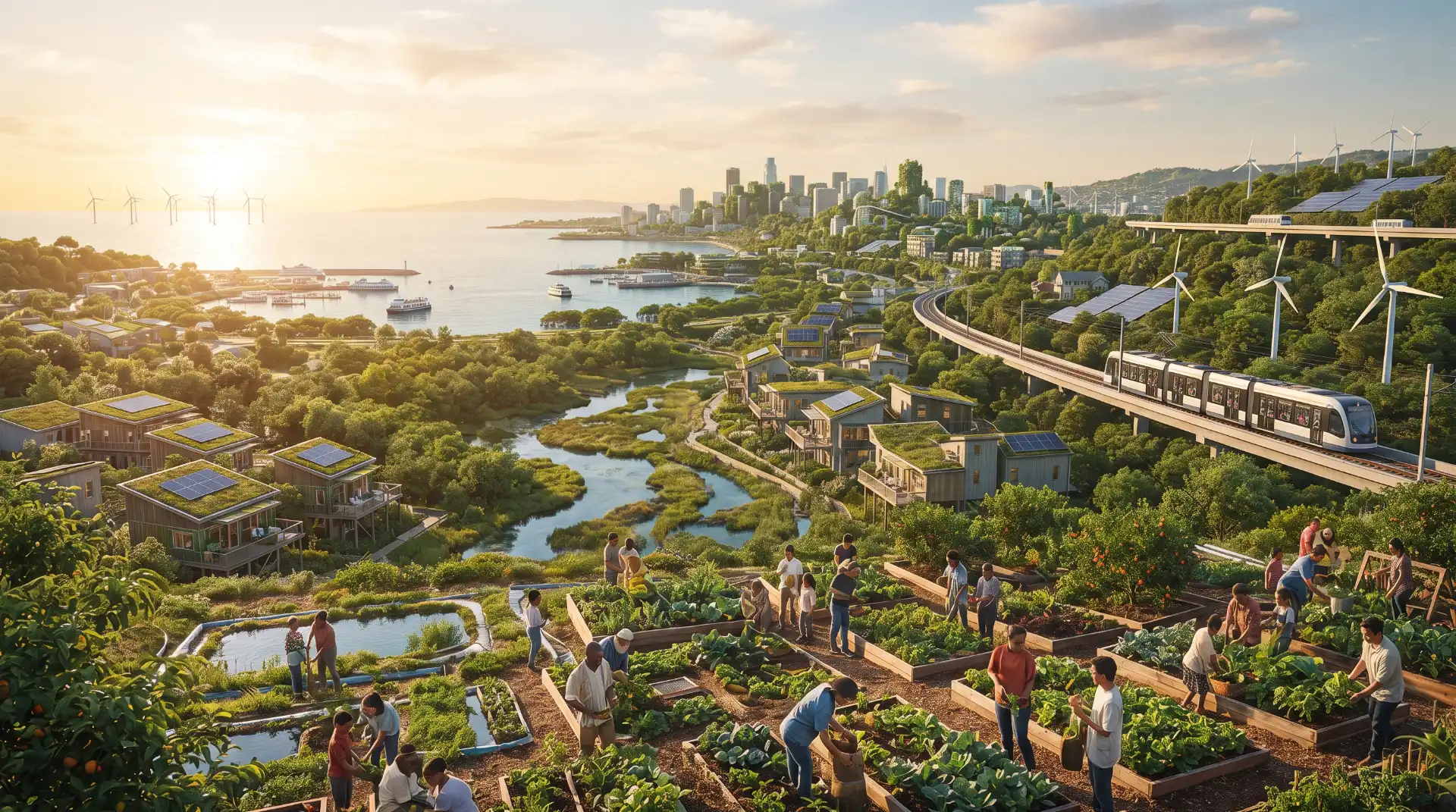
Rather than imagining a future defined primarily by collapse, solarpunk tends to imagine communities using renewable energy, ecological design, technology, local cooperation, and sustainable infrastructure.
These stories can feature cities filled with trees, green buildings, community gardens, renewable energy systems, pedestrian-friendly neighborhoods, public transportation, and restored natural spaces.
The appeal of solarpunk is not simply visual.
It challenges the assumption that technological progress and environmental sustainability must always be opposites.
Traditional dystopian fiction often asks what happens when technology fails or becomes dangerous. Solarpunk asks what might happen when technology is deliberately designed around ecological and social goals.
This gives writers another way to imagine the future.
Instead of asking only what society needs to stop doing, literature can ask what society might build.
Climate Fiction and the Importance of Community
Community is another theme becoming increasingly important in climate storytelling.
Traditional survival narratives often place individuals or small groups against overwhelming environmental conditions. Modern climate fiction can instead explore cooperation.
Libraries, schools, community gardens, neighborhood associations, local businesses, environmental organizations, public agencies, and volunteer groups can all become important settings.
These spaces allow authors to explore relationships and disagreements at the same time.
Communities rarely agree completely about the future.
A homeowner might oppose relocation because their family has lived in the neighborhood for generations. A younger resident might support moving because they believe adaptation is too expensive. A business owner might worry about economic consequences. An environmental advocate might want land restored instead of developed.
These disagreements create realistic drama.
The climate challenge becomes the background for debates about identity, money, property, family, responsibility, and belonging.
Climate Change and Generational Storytelling
Climate fiction is particularly well suited to stories involving multiple generations.
Environmental change happens over time, which means different generations can experience the same place differently.
A grandparent might remember a coastline before major development. Their child may remember the first major flooding event. Their grandchild may grow up considering flood-resistant buildings completely normal.
Three generations can therefore inhabit the same location while holding entirely different ideas about what is normal.
This creates powerful opportunities for writers.
The environment can become a record of family history.
A house can represent stability, memory, and loss. A farm can represent inheritance and responsibility. A coastline can represent childhood memories. A forest can symbolize both environmental change and family identity.
Climate fiction can use these physical spaces to explore emotional change.
The Role of Young Adult Climate Fiction
Young adult literature has an especially important role in the development of climate fiction.
Many younger readers have grown up hearing about climate change throughout their education and through digital media. For them, environmental change is not necessarily an unfamiliar scientific concept.
Young adult writers can therefore move beyond explaining the existence of climate change and focus on how young people respond to it.
A young protagonist might struggle with whether to remain in their community or leave. They might disagree with their parents about environmental priorities. They might become involved in a local restoration project or confront the emotional pressure of imagining adulthood in a changing world.
These stories can make climate issues personal without becoming educational lectures.
The key is character.
Readers care about environmental issues because they care about the people experiencing them.
Climate Fiction and Environmental History
Modern climate fiction can also encourage readers to think about the environmental history of the United States.
Landscapes have never been completely static. Rivers change course. Forests grow and disappear. Wetlands are drained and restored. Agricultural practices evolve. Cities expand. Coastlines shift.
Human beings have always influenced their environments, although the scale and speed of modern climate change present unprecedented challenges.
This historical perspective can add depth to climate storytelling.
A novel does not have to portray the future as a completely unfamiliar world. Instead, it can show how today’s decisions become tomorrow’s history.
That creates a powerful narrative structure.
Characters living in the present may not realize the significance of their decisions. Future generations may look back on those choices very differently.
Climate fiction can therefore become a form of imagined historical fiction about the future.
How Social Media Is Changing Climate Book Discovery
Book discovery has changed significantly in the digital age. Readers increasingly encounter books through social media, online communities, podcasts, newsletters, recommendation platforms, and creator-driven conversations.
This matters for climate fiction because environmental books can generate discussion beyond the traditional publishing ecosystem.
A reader might discover a novel through a short video discussing its imagined future. Another might find it through an online book club. A third might encounter it through a podcast about speculative fiction.
Bookzee has explored this broader transformation in how BookTok and social media are reshaping what people read.
Climate fiction is particularly suitable for online discussion because readers naturally have questions about the futures presented in these stories.
Would the fictional adaptation strategy work?
Would people actually behave that way?
What would happen in a real American city?
Could the technology exist?
Would the community cooperate?
These questions can turn a book into the beginning of a larger conversation.
Why Scientific Accuracy Still Matters in Climate Fiction
Although climate fiction is ultimately storytelling, scientific credibility can make these stories much more convincing.
Writers do not need to transform novels into scientific textbooks, but understanding the underlying environmental realities helps authors create believable worlds.
NASA’s climate research identifies multiple observable indicators of climate change, including rising global temperatures, ocean warming, shrinking ice sheets, retreating glaciers, decreasing snow cover, and rising sea levels. NASA’s climate evidence resource provides readers and writers with a reliable starting point for understanding these changes.
Scientific accuracy can be especially important when writers create near-future settings.
A speculative world feels more convincing when its changes develop logically from present conditions.
At the same time, authors have creative freedom. Fiction can explore possibilities that scientists may not predict with certainty. The important distinction is that the story should establish its own internal logic.
Climate Fiction Can Explore Inequality Without Becoming Predictable
Climate change does not affect every person equally, and this creates another important area for contemporary fiction.
Wealthier communities may have more resources to adapt to environmental risks. Some households may be able to relocate, upgrade their homes, purchase backup power systems, or move to less vulnerable neighborhoods. Other families may have far fewer options.
This difference can create compelling fictional conflicts.
A city might build an expensive flood-control project that protects one neighborhood while another remains vulnerable. A new climate-resilient development might increase property values and make the area unaffordable for longtime residents.
These stories demonstrate that adaptation is not simply an engineering problem.
It is also a social question.
Who gets protected?
Who gets displaced?
Who gets heard?
Who pays?
Who benefits?
These questions can turn climate fiction into a broader exploration of American society.
Why Restoration Stories Are Becoming More Interesting
Environmental restoration offers another alternative to the traditional dystopian narrative.
Instead of watching an ecosystem disappear, readers can follow characters attempting to repair damaged environments.
A novel might focus on wetland restoration, forest recovery, urban tree planting, river rehabilitation, regenerative agriculture, or coastal ecosystem projects.
Restoration creates natural opportunities for conflict and hope.
Projects can take years. People can disagree about methods. Funding can disappear. Political leadership can change. Natural systems can respond unpredictably.
Yet progress can still happen.
This makes restoration an excellent metaphor for climate fiction because it reflects the complexity of real environmental work.
There may not be a perfect return to the past, but there can be meaningful movement toward a healthier future.
The Future of Climate Fiction May Be More Personal
The next generation of climate fiction may become increasingly intimate.
Rather than asking only what happens to governments or entire civilizations, writers may ask what happens to marriages, friendships, careers, neighborhoods, schools, farms, businesses, and families.
This is where climate fiction can become especially powerful.
The future is not experienced as a statistic.
It is experienced through daily life.
A person experiences a hotter summer while walking to work. A family experiences a changing housing market. A farmer experiences an unfamiliar growing season. A child experiences a different landscape from the one remembered by a grandparent.
These small experiences can create stories that are both speculative and deeply realistic.
What Readers Should Look For in Modern Climate Fiction
Readers exploring climate fiction today should not limit themselves to books labeled strictly as cli-fi.
Some of the most interesting environmental stories may be categorized as literary fiction, science fiction, fantasy, mystery, thriller, romance, historical fiction, or young adult fiction.
Look for books that explore how environmental changes affect characters rather than simply using climate change as a backdrop.
Look for stories that consider adaptation as well as disaster.
Look for different geographical settings and perspectives.
Look for authors who explore questions about community, technology, environmental justice, culture, and human resilience.
Most importantly, look for stories that make you think about the future without reducing that future to a simple prediction.
Why Climate Fiction Matters to the Future of Publishing
The growing diversity of climate fiction also reflects a broader evolution in publishing.
Publishers and independent authors are increasingly interested in stories that respond to major cultural concerns while still delivering compelling entertainment.
Climate fiction fits naturally into that environment because it combines a real-world issue with the imaginative freedom of fiction.
The genre can also appeal to different audiences simultaneously.
A reader interested in environmental issues may approach a climate novel for its ecological themes. A science fiction reader may be interested in its speculative technology. A romance reader may be interested in its relationships. A literary reader may appreciate its exploration of memory and identity.
That flexibility makes climate fiction commercially and creatively interesting.
It is not simply one genre.
It is increasingly becoming a storytelling framework that can operate across multiple genres.
The Difference Between Hopeful Climate Fiction and Utopian Fiction
It is important to distinguish hopeful climate fiction from purely utopian fiction.
A utopian story may imagine a society in which major problems have already been solved. A hopeful climate story can be much messier.
People may still make mistakes.
Communities may disagree.
Environmental damage may remain.
Some losses may be permanent.
The difference is that the characters still believe their choices can matter.
That makes hope more credible.
It also reflects the reality of adaptation. Real communities rarely solve complex problems instantly. Progress is usually uneven and incomplete.
Climate fiction that acknowledges this complexity can avoid both extremes of total despair and unrealistic optimism.
Climate Fiction as a Way to Imagine Possibility
Perhaps the most important role of climate fiction is not predicting exactly what will happen.
Novels are not crystal balls.
Their value lies elsewhere.
They allow readers to practice imagining.
They can show how a decision might affect a community. They can explore the consequences of technological choices. They can illustrate how environmental changes influence relationships. They can make unfamiliar possibilities emotionally understandable.
That imaginative exercise matters because societies are built partly through the futures people are able to imagine.
If every fictional future is a wasteland, readers may struggle to envision alternatives.
If every fictional future is perfect, readers may fail to appreciate the difficulty of getting there.
The most interesting climate fiction can occupy the space between those extremes.
It can show a difficult future that still contains possibilities.
The Future of Climate Fiction Is Bigger Than the Apocalypse
The evolution of climate fiction represents one of the most interesting changes taking place in contemporary literature.
The genre is moving beyond the idea that climate change must lead directly to dystopian collapse. Writers are exploring adaptation, restoration, technology, family, community, inequality, cultural memory, environmental justice, and hope.
That does not mean dystopian climate fiction is disappearing.
There will always be value in stories that warn readers about dangerous possibilities. Dark speculative fiction can challenge assumptions, create urgency, and force audiences to consider consequences.
But it is no longer the only way to tell environmental stories.
Climate fiction can be intimate rather than epic.
It can be hopeful rather than despairing.
It can be local rather than global.
It can be about adaptation rather than collapse.
It can be about rebuilding rather than survival.
And it can be about ordinary people living extraordinary circumstances rather than heroic survivors fighting at the end of civilization.
Conclusion: A New Generation of Climate Stories
The rise of climate fiction beyond dystopian end-of-the-world stories reflects a broader change in how readers and writers think about environmental futures.
Climate change is a serious scientific and social challenge, but literature does not have to respond to that challenge with only stories of destruction. Writers can explore what happens when communities adapt, when families make difficult decisions, when ecosystems are restored, when cities are redesigned, and when people attempt to preserve a sense of belonging in a changing environment.
For American readers, the possibilities are particularly broad. The United States contains coastal cities, desert communities, farming regions, forests, mountain towns, industrial centers, and rapidly growing metropolitan areas. Each setting provides different questions and different stories.
The most compelling climate fiction may therefore be the fiction that understands environmental change as part of human life rather than simply as the moment when human life ends.
That shift allows the genre to become more personal, more diverse, and more imaginative.
Instead of asking only, “What happens when the world ends?” contemporary climate fiction can ask much more interesting questions.
What happens when people stay?
What happens when they rebuild?
What happens when they disagree?
What happens when they adapt?
What happens when one generation leaves a changed world to the next?
And perhaps most importantly, what happens when people decide that a difficult future is still worth imagining?
Those questions give climate fiction a future that extends far beyond dystopia. The genre can become a literature of adaptation, resilience, memory, responsibility, and possibility, offering readers not a simple prediction of what will happen but a richer way to think about the futures humanity might create.