
Why Literary Festivals Continue to Bring American Readers Together
Books have always played an important role in American culture. They entertain, educate, challenge established ideas, preserve history, and introduce readers to experiences beyond their everyday surroundings. Although technology has transformed how people discover and purchase books, the excitement of meeting authors, browsing physical bookshelves, listening to live discussions, and sharing reading recommendations with other enthusiasts remains difficult to replace. One of the best places to experience this connection is a literary festival.
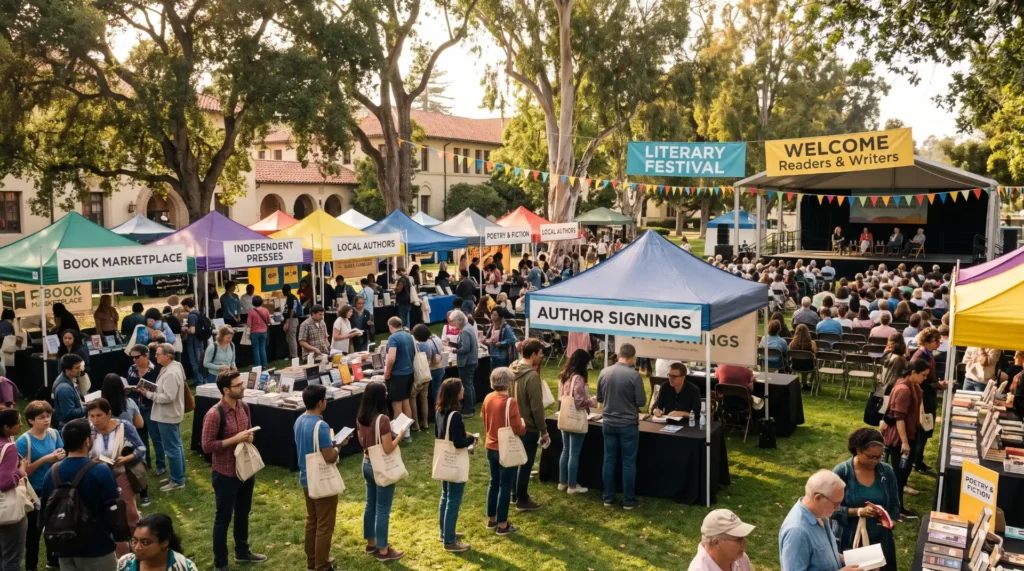
Literary festivals in America bring together authors, publishers, independent booksellers, librarians, educators, aspiring writers, students, and everyday readers. These events turn books into shared experiences by creating opportunities for conversations, live readings, panel discussions, workshops, book signings, and community activities. Some festivals attract nationally recognized authors and tens of thousands of visitors, while smaller regional gatherings focus on local writers, independent publishing, poetry, and neighborhood literary traditions.
For readers, attending a book festival can be an opportunity to discover authors they might never encounter through traditional bookstore displays or online recommendations. For writers, these gatherings provide opportunities to learn about the publishing industry, improve creative skills, connect with literary professionals, and introduce their work to potential readers. Publishers and booksellers also benefit by presenting new releases, building relationships, and discovering emerging voices.
The appeal of these events extends beyond the books themselves. Literary festivals create environments where people can discuss important subjects, explore different perspectives, celebrate cultural heritage, and develop friendships through shared interests. Whether someone attends a large national festival in Washington, D.C., explores an independent book fair in Brooklyn, or participates in a small-town poetry gathering, the experience can create lasting connections.
As the American literary community continues to evolve, literary festivals remain important meeting places for storytelling, creativity, education, and cultural exchange.
What Are Literary Festivals and What Makes Them Special?
A literary festival is an organized event dedicated to books, writing, reading, publishing, and storytelling. Depending on its size and purpose, a festival may last one day, an entire weekend, or several weeks. Some events are organized by universities, nonprofit organizations, libraries, publishers, cultural institutions, and local governments. Others are coordinated by independent bookstores and community organizations.
Unlike ordinary bookstore events, literary festivals often feature multiple activities happening simultaneously. Visitors might attend a discussion about contemporary American fiction in the morning, participate in a poetry reading after lunch, meet a bestselling novelist in the afternoon, and finish the day browsing independent publishers and literary merchandise.
The diversity of programming is one of the main reasons these festivals appeal to different audiences. Someone interested in historical nonfiction can attend a discussion about American history, while a young adult fiction enthusiast can discover emerging writers in a completely different part of the event. Families may enjoy children’s storytelling sessions, and aspiring authors can participate in workshops covering character development, editing, and publishing.
A Meeting Place for Authors and Readers
One of the most valuable aspects of literary festivals is the opportunity to interact directly with authors. Readers usually experience writers through their published work, interviews, podcasts, or social media accounts. At a literary festival, however, they can hear authors discuss their creative decisions, personal experiences, research methods, and inspirations.
These conversations can change how readers understand a particular book. A novelist might explain how a fictional setting was inspired by a real American town, while a historian could describe the archival research behind a nonfiction publication. Readers also have opportunities to ask questions and hear perspectives that may not appear in interviews or book reviews.
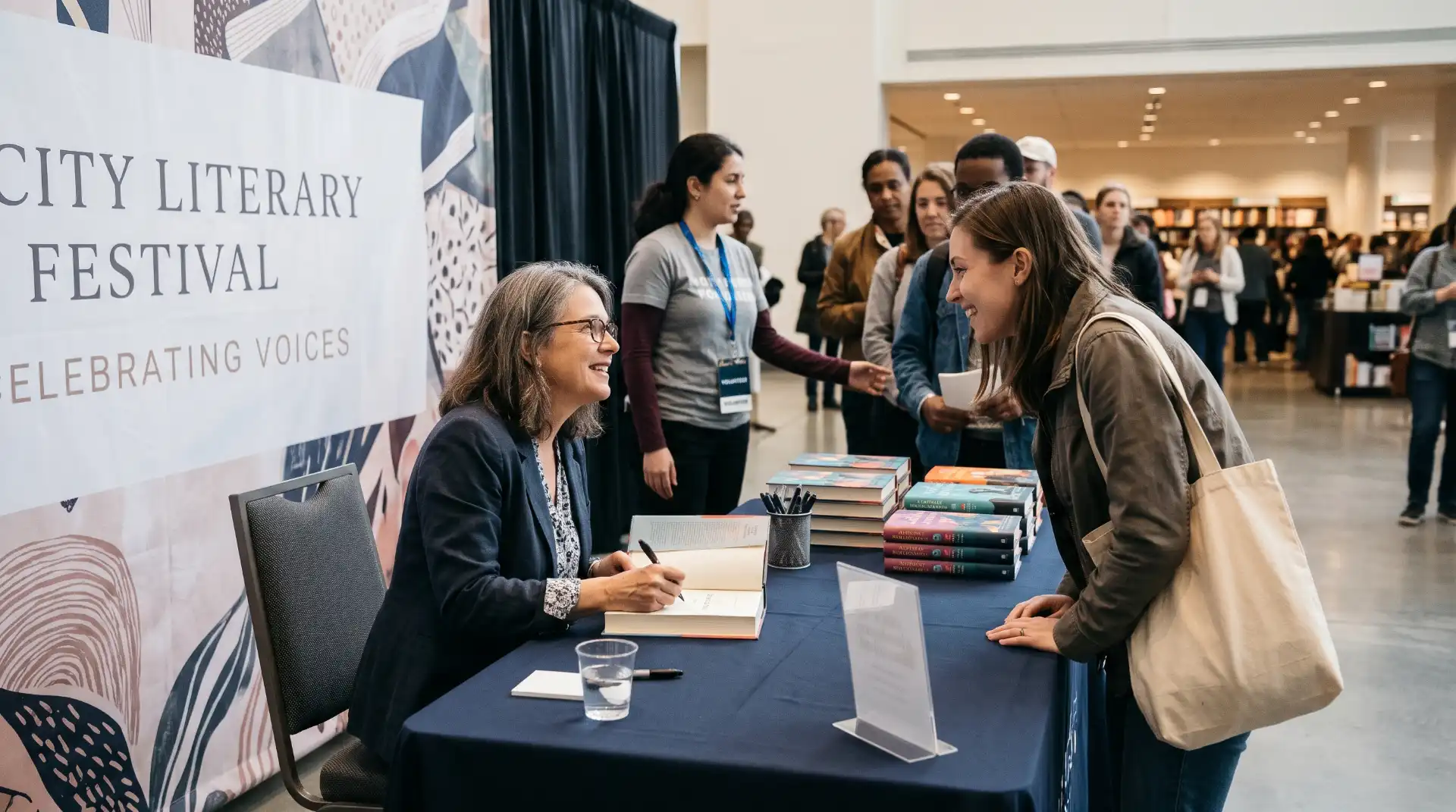
Author meet-and-greets create another level of interaction. Depending on the festival, visitors may have books signed, take photographs, exchange brief comments, and learn about upcoming projects. These experiences are particularly meaningful for readers who have followed an author’s career for years.
Celebrating Different Literary Traditions
American literary festivals also celebrate the country’s cultural and regional diversity. Events may highlight African American literature, Native American storytelling, Hispanic and Latino authors, Asian American writing, immigrant experiences, regional history, contemporary poetry, and independent publishing.
These programs allow readers to discover literary traditions outside their usual reading preferences. They also provide platforms for writers whose work may receive less attention in mainstream publishing discussions.
For communities, celebrating local authors and regional storytelling can strengthen cultural identity. A festival in New Mexico, for example, may highlight Southwestern history and borderland experiences, while a gathering in New England might focus on regional fiction, maritime history, or the area’s literary heritage.
Major Literary Festivals in the United States
The United States hosts literary festivals throughout the year. Some have national reputations and attract internationally recognized authors, while others are especially important to regional publishing and independent literary communities.
Understanding the differences between these events can help readers choose festivals that match their interests, budgets, and travel plans.
Library of Congress National Book Festival in Washington, D.C.
The Library of Congress National Book Festival is one of America’s most prominent literary celebrations. Organized by the Library of Congress, the festival brings authors, readers, educators, publishers, and cultural organizations together for a major public event in the nation’s capital.
The festival traditionally features conversations with authors, panel discussions, book signings, family activities, and programs covering numerous literary subjects. Visitors can encounter writers working in fiction, nonfiction, poetry, children’s literature, history, science, biography, and other areas.
Its connection to the Library of Congress gives the event a particularly important cultural dimension. The institution is responsible for preserving an extraordinary collection of American and international materials, and the festival provides an opportunity to celebrate the role books and storytelling play in preserving knowledge.
The 2026 National Book Festival took place on August 22 at the Walter E. Washington Convention Center. The event featured more than 80 authors and expanded programming connected to the nation’s 250th anniversary. The 2027 festival is scheduled for August 21, 2027, making it an event worth watching for readers planning ahead.
One advantage of the National Book Festival is its accessibility. The 2026 edition offered free general admission, although festival entry required tickets. Some presentations were also made available through livestreams and recordings, allowing readers outside Washington to participate in selected programs.
Visitors interested in American history, literature, education, and contemporary publishing will find this festival particularly worthwhile.
Los Angeles Times Festival of Books in California
The Los Angeles Times Festival of Books is one of the country’s largest literary gatherings. Hosted at the University of Southern California, this annual event brings together authors, publishers, booksellers, entertainment personalities, educators, and readers from across the United States.
The festival began in 1996 with the goal of connecting the people who create books with the people who enjoy reading them. Over time, it developed into a major cultural celebration featuring hundreds of authors, exhibitors, discussions, performances, and family activities.
The 2026 festival attracted approximately 168,000 attendees and featured more than 550 authors and 350 exhibitors. Its programming included author conversations, poetry, audiobook discussions, food demonstrations, children’s activities, and presentations exploring connections between literature and film.
One particularly interesting feature is the way the event combines traditional literary programming with entertainment and popular culture. Visitors might attend a discussion about a new memoir, explore an independent publisher’s booth, and then watch a conversation about adapting books for television.
For readers interested in discovering new authors and browsing a wide range of publications, the Los Angeles Times Festival of Books offers an extensive experience.
The festival also demonstrates how literary events can support independent bookstores and publishers. Visitors can purchase books directly from participating booksellers, explore smaller publishing companies, and discover authors whose work may not receive the same exposure as major commercial releases.
Brooklyn Book Festival in New York
New York City has long been one of America’s most influential literary centers, and the Brooklyn Book Festival reflects the city’s diverse publishing and reading culture.
The festival brings together established writers, emerging authors, independent publishers, booksellers, poets, journalists, and readers. Its programming includes author conversations, literary panels, readings, family activities, and a marketplace where visitors can explore books from independent publishers.
One of its most appealing characteristics is its community-centered approach. Rather than focusing exclusively on bestselling authors, the event creates space for emerging voices, international writers, independent publishing, and discussions about contemporary culture.
The 2026 edition included a Festival Day and Literary Marketplace, Children’s Day, virtual programming, and Bookend events throughout New York City’s five boroughs. This structure allowed the celebration to extend beyond a single location.
Brooklyn’s literary identity also contributes to the festival’s atmosphere. The borough has a long history of independent bookstores, creative communities, writers, artists, and neighborhood cultural institutions. Festival activities connect these elements while encouraging visitors to explore different parts of the city.
For readers who enjoy literary fiction, independent publishing, poetry, contemporary cultural discussions, and discovering lesser-known authors, Brooklyn’s festival is an excellent event to follow.
Regional and Independent Literary Festivals
Not every worthwhile literary festival needs to attract tens of thousands of visitors. Smaller gatherings throughout the United States often provide more intimate opportunities to meet authors and participate in discussions.
Regional festivals may focus on local history, environmental writing, children’s literature, poetry, mystery fiction, science writing, or regional storytelling. Some are organized around specific communities, while others highlight the literary traditions of an entire state.
These events can be especially valuable for readers who want meaningful conversations rather than crowded schedules and long signing lines.
Independent bookstores frequently participate in regional festivals by hosting author readings, book launches, and discussions. Local libraries may organize workshops, writing competitions, and storytelling programs. Universities also contribute through literary conferences and public lectures.
For aspiring writers, these smaller events can provide opportunities to speak with authors and editors in a more relaxed environment.
Author Meet-and-Greets: Connecting Readers With the People Behind the Books
For many festival attendees, meeting an author is one of the most memorable parts of the experience. Reading creates a personal relationship between an individual and a book, but meeting its creator can provide a different understanding of the work.
An author meet-and-greet may take place after a panel discussion, during a scheduled book-signing session, or at a designated festival booth. Some events are informal, while others require reservations or special tickets.
What Happens During an Author Signing?
A typical signing session begins after an author finishes a presentation or discussion. Readers line up with purchased copies of the author’s books, and festival staff help manage the process.
Authors may sign books, write personalized messages, take photographs, or briefly answer questions. The amount of time available depends on the event’s attendance and schedule.
Popular authors can attract long lines, so visitors should check the festival program before deciding which sessions to attend.
It is also helpful to prepare a book or question in advance. A short, specific comment about a character, theme, or memorable passage can create a more meaningful interaction than simply asking for a photograph.
Visitors should also respect signing limits. Some festivals restrict the number of books each person can bring, especially when an author is meeting hundreds of readers.
How to Make the Most of an Author Meet-and-Greet
Preparation can improve the experience considerably. Before attending, research the participating authors and identify those whose work genuinely interests you.
Read at least one book by an author you hope to meet. This makes it easier to ask thoughtful questions and have a more engaging conversation.
If the author has published several books, consider bringing the title that had the greatest impact on you. A personal connection to a particular story can create a memorable exchange.
Visitors should also understand that authors have limited time. Avoid lengthy conversations when a large line is waiting. A brief, respectful interaction is usually appreciated.
For aspiring writers, meeting authors can be especially inspiring. Asking about research, writing routines, revisions, or career development may provide useful insight into the realities of professional writing.
Writing Workshops: Learning the Craft of Storytelling
Literary festivals are not only designed for people who enjoy reading. They also provide educational opportunities for individuals interested in creating their own books, essays, poems, and stories.
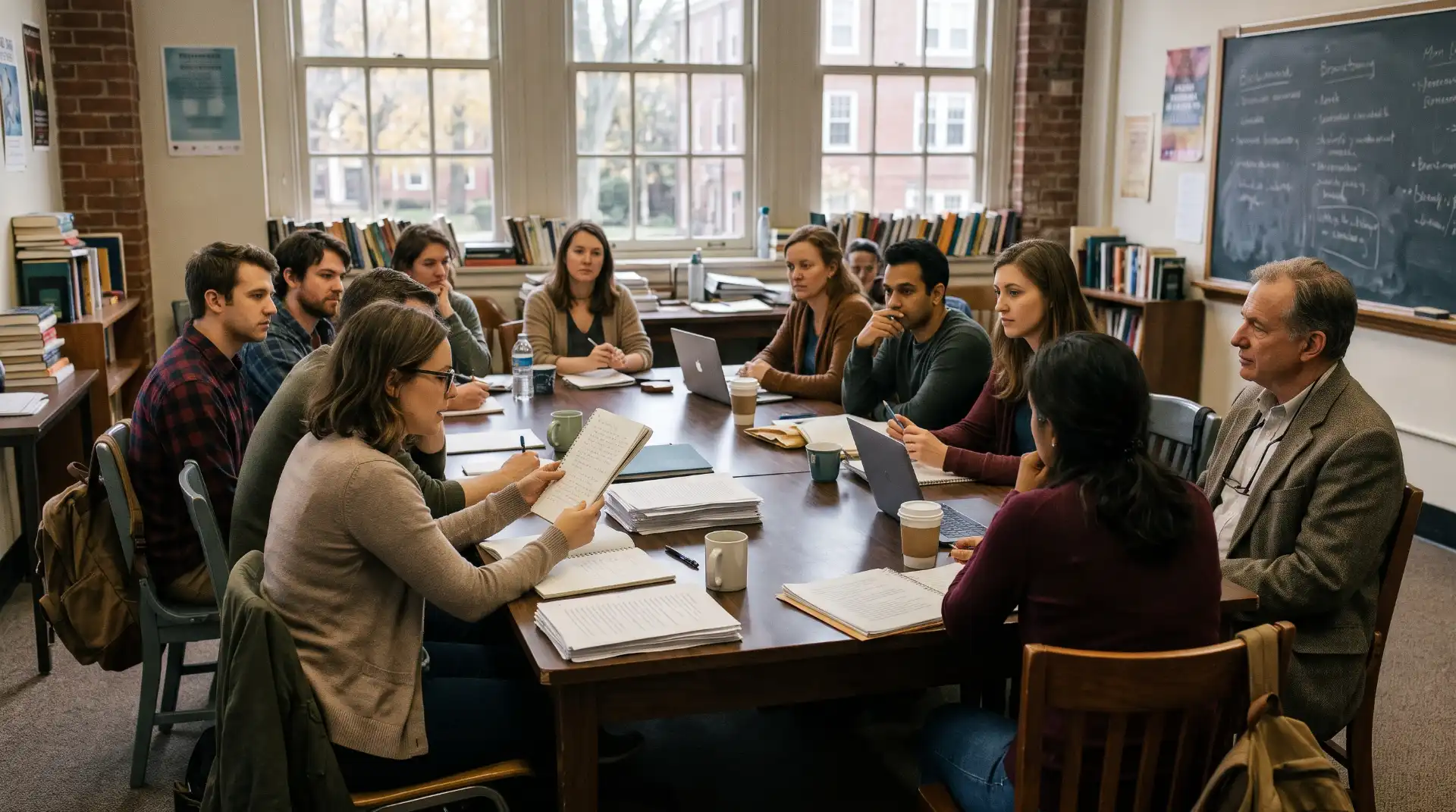
Writing workshops allow participants to develop practical skills through instruction, exercises, discussions, and feedback. Depending on the event, workshops may be led by published authors, editors, journalists, poets, professors, or experienced writing instructors.
Creative Writing Workshops
Creative writing workshops generally focus on developing the skills needed to produce engaging stories. Participants may explore character development, plot structure, dialogue, pacing, point of view, setting, and narrative voice.
For example, a workshop on character development might ask participants to create a fictional character with a clear motivation, personal conflict, and meaningful background. The instructor could then explain how those elements influence the decisions characters make throughout a story.
Another workshop might examine how to create believable dialogue. Participants could practice writing conversations that reveal personality, advance the plot, and communicate emotion without relying on excessive explanation.
These exercises are useful for beginners and experienced writers alike. Even established authors benefit from examining their writing habits and experimenting with unfamiliar approaches.
Poetry and Personal Essay Workshops
Poetry workshops often explore imagery, rhythm, sound, structure, metaphor, and emotional expression. Participants may study examples from established poets before creating original work.
Personal essay workshops take a different approach. They help writers transform personal experiences into meaningful narratives that communicate broader ideas.
These sessions can cover memory, identity, family history, travel, personal challenges, and cultural experiences. Instructors may explain how to organize an essay, establish a central theme, and balance personal storytelling with reflection.
Workshops on Editing and Revision
Writing a first draft is only one stage of producing a successful book. Editing and revision are essential parts of the process.
Some literary festivals offer sessions covering sentence structure, clarity, consistency, grammar, pacing, and manuscript organization.
Participants may learn how to recognize unnecessary passages, strengthen introductions, improve transitions, and remove repetitive language.
Revision workshops can be particularly helpful for writers who have completed manuscripts but are unsure how to improve them.
Publishing and Literary Career Workshops
Another important category involves the business side of writing. These sessions introduce participants to traditional publishing, independent publishing, literary agents, book proposals, contracts, royalties, and marketing.
A workshop on traditional publishing might explain how writers prepare query letters, research literary agents, and submit manuscripts.
A self-publishing session could examine editing, cover design, formatting, distribution, pricing, and promotional strategies.
These discussions help aspiring authors understand that publishing involves more than writing a good manuscript. Writers must also make informed decisions about production, rights, marketing, and professional relationships.
How to Choose the Right Literary Festival
With so many literary events taking place across the country, selecting the right festival depends on what someone hopes to experience. A casual reader looking for new books may have different priorities from an aspiring novelist interested in professional development.
Choosing a Festival Based on Reading Interests
Readers should begin by identifying the subjects and genres they enjoy. Large festivals generally offer a broad selection of programming, making them suitable for people who want to explore different literary interests.
However, specialized festivals can provide more focused experiences. A poetry enthusiast might prefer a gathering dedicated to contemporary poetry, while someone interested in American history may benefit more from a festival featuring historians, biographers, and nonfiction writers.
Readers who enjoy independent publishing should look for events with literary marketplaces and small-press exhibitors. These areas frequently feature books that are difficult to find in major retail bookstores.
Families should investigate festivals with children’s literature programs, interactive storytelling, educational activities, and age-appropriate author presentations.
Considering Location, Budget, and Accessibility
Travel expenses can significantly affect the overall cost of attending a literary festival. Visitors traveling from another state should consider transportation, accommodations, meals, parking, and admission fees.
Fortunately, many American literary festivals offer free outdoor programming or free general admission. However, certain indoor discussions, special author appearances, workshops, and premium activities may require separate reservations or paid tickets.
Accessibility should also be considered. Large festivals can involve extensive walking, crowded indoor spaces, long lines, and multiple event locations. Visitors with mobility requirements should review the festival’s accessibility information before traveling.
Checking public transportation options can also make attendance easier. Major events in cities such as Washington, D.C., New York, Boston, and Los Angeles may be accessible through subway, bus, or regional rail services.
Reviewing the Festival Schedule
A festival schedule can include dozens or even hundreds of individual activities. Reviewing it beforehand helps visitors avoid missing important presentations.
Create a shortlist of priority sessions, allowing enough time to travel between venues. It is also wise to leave some free time for unexpected discoveries.
A visitor might arrive intending to attend a discussion about historical fiction but discover an interesting presentation about memoir writing nearby. Leaving room for spontaneous activities can make the experience more enjoyable.
Book Exhibitions and Literary Marketplaces: Discovering Books Beyond Bestseller Lists
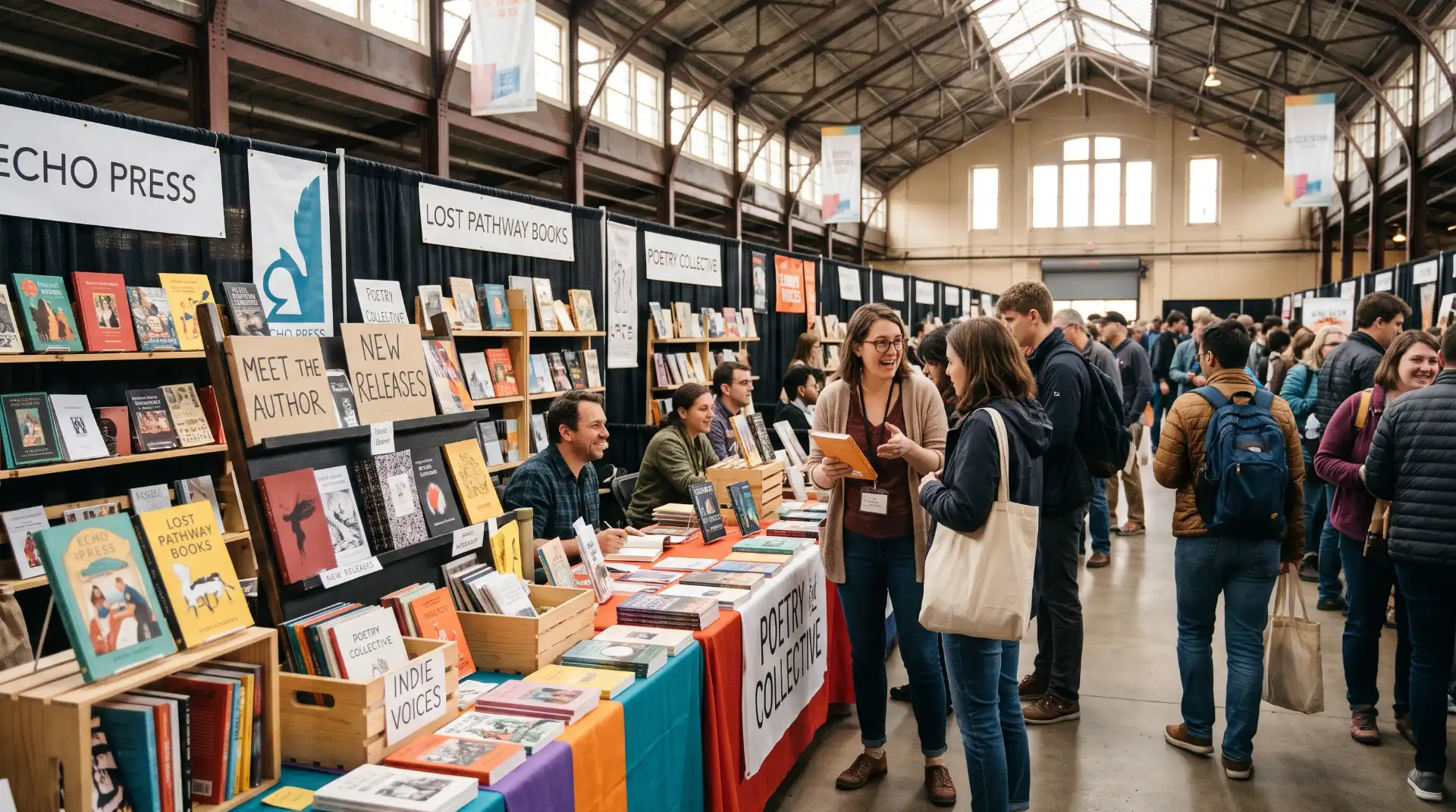
Book exhibitions and literary marketplaces are among the most exciting parts of many American literary festivals. These areas bring together publishers, independent booksellers, authors, literary organizations, and book-related businesses.
For visitors, they offer opportunities to discover publications that may not receive extensive attention through mainstream advertising.
Independent Publishers and Small Presses
Independent publishers play an important role in American literary culture. They frequently publish experimental fiction, poetry, translated literature, regional histories, specialized nonfiction, and works from emerging writers.
Unlike large publishing companies that may concentrate heavily on commercial opportunities, smaller publishers can focus on distinctive editorial interests and specialized audiences.
At literary festivals, visitors can speak directly with representatives from these publishing companies. They may learn how a particular book was selected, what makes its subject important, or how an independent publisher supports its authors.
These conversations can introduce readers to books they would otherwise overlook.
For aspiring writers, independent publishing booths can also provide insight into different publishing opportunities. Visitors can learn about submission requirements, editorial interests, and the types of manuscripts smaller presses are seeking.
Meeting Independent Booksellers
Independent bookstores contribute considerably to the literary festival experience. Their representatives often bring carefully selected books, staff recommendations, signed editions, and titles from local authors.
Shopping at these booths also provides direct support to businesses that help sustain literary communities.
Independent booksellers frequently understand their customers’ interests and can recommend books based on themes, writing styles, and reading preferences.
A visitor searching for a thoughtful historical novel might discover an unfamiliar author through a bookseller’s recommendation. Someone interested in nonfiction may find a small-press publication that is not prominently displayed in major retail stores.
Finding Rare Editions and Literary Merchandise
Some festivals also feature collectible books, limited editions, illustrated publications, literary prints, journals, bookmarks, reading accessories, and author merchandise.
Collectors may find signed copies or special editions, although availability varies considerably.
Visitors should establish a spending budget before browsing. With so many interesting publications and products available, it is easy to purchase more than originally intended.
It is also useful to ask sellers about book condition, edition information, and whether an item is signed or numbered before making a purchase.
Literary Festivals as Communities for Readers
One of the most important contributions of literary festivals is their ability to create communities around reading.
Reading is often a solitary activity. A person chooses a book, spends hours exploring its pages, and develops personal interpretations of its characters and ideas. Literary festivals transform this individual experience into a shared activity.
People meet others who enjoy similar genres, discuss favorite authors, exchange recommendations, and discover different interpretations of familiar stories.
Meeting Readers With Similar Interests
A large festival naturally attracts people with different reading preferences. Some visitors may be passionate about contemporary fiction, while others prefer biographies, poetry, science, historical research, or children’s literature.
These shared interests provide natural opportunities for conversation.
A visitor waiting in line for an author presentation might discover that another attendee has read the same series. Someone browsing an independent publisher’s booth could meet a local book club organizer searching for new members.
These interactions can develop into friendships and ongoing literary relationships.
How Festivals Help Book Clubs Grow
Book clubs benefit from literary festivals because they provide access to new reading material and opportunities to hear directly from authors.
Club members can attend a presentation together, purchase books for future discussions, and compare their impressions afterward.
Some festivals also organize dedicated book-club sessions. These may include discussions about reading themes, questions for authors, or conversations about how literature relates to contemporary social issues.
Readers who want to establish their own groups can also use festivals to connect with other enthusiasts.
Bookzee’s guide, How to Start a Book Club That Lasts: Tips for Success, provides additional ideas for organizing meetings, selecting books, maintaining participation, and building a lasting reading community.
The Growth of Silent Reading Communities
Not every reading community requires formal discussions. Silent reading gatherings have become another way for people to enjoy books together without the pressure of participating in structured conversations.
These events typically allow participants to bring their own books, spend a designated period reading quietly, and socialize before or after the session.
Literary festivals can introduce visitors to these alternative reading communities through discussions, informal gatherings, and related activities.
Bookzee has also explored this development in How Silent Book Clubs Are Changing Social Reading in 2026.
The popularity of these gatherings illustrates an important point: people do not always need organized discussions to feel connected through literature. Sometimes, simply sharing a comfortable space with other readers is enough.
Literary Festivals and the Influence of Digital Reading Communities
The relationship between digital reading communities and traditional literary festivals has become increasingly important.
Online platforms allow readers to discover books, discuss authors, publish reviews, and participate in conversations regardless of geographic location. Literary festivals provide an opportunity to take those digital connections into physical spaces.
How Social Media Helps Readers Discover Festivals
Social media platforms make it easier for readers to learn about literary events and participating authors.
Festival organizers use Instagram, Facebook, YouTube, TikTok, and other platforms to announce schedules, introduce speakers, share interviews, and promote ticket information.
Readers can also follow authors and publishers to learn about upcoming appearances.
Book-related communities frequently share photographs, short videos, reading recommendations, and event experiences. These posts can encourage people who have never attended a literary festival to participate.
Social media also helps smaller events reach audiences beyond their immediate communities.
A regional book festival might attract visitors from neighboring states because its authors and programming have gained attention online.
Virtual Literary Festivals and Livestreamed Discussions
Virtual programming has expanded access to literary events.
Some festivals now provide livestreamed presentations, recorded discussions, online workshops, and digital author interviews.
These options are especially useful for people who cannot travel because of distance, financial limitations, work schedules, or personal responsibilities.
Virtual attendance also allows readers to explore festivals taking place in different parts of the country without paying for transportation and accommodation.
However, online participation cannot completely reproduce the atmosphere of attending in person. Visitors miss spontaneous conversations, physical book exhibitions, informal networking, and the experience of meeting authors directly.
For this reason, hybrid programming is particularly valuable. It allows festivals to reach broader audiences while preserving the benefits of physical gatherings.
Literary Festivals for Aspiring Authors and Emerging Writers
For people interested in becoming published authors, literary festivals can offer more than inspiration. They can provide valuable professional connections and practical information about the publishing industry.
Writing a manuscript is often a long and isolated process. Festivals help writers connect with others who understand the challenges of developing, editing, and publishing creative work.
Networking With Authors, Editors, and Publishers
Networking opportunities may develop during panel discussions, workshops, book exhibitions, and informal conversations.
Aspiring authors can meet independent publishers, literary agents, editors, writing instructors, and established writers.
These interactions can help participants understand what different publishing professionals do and how manuscripts move through the publishing process.
Writers should approach networking with realistic expectations. Meeting an editor at a festival does not guarantee a publishing agreement, and an informal conversation is not a substitute for following an established submission process.
Instead, the objective should be to build professional relationships, ask thoughtful questions, and learn about the industry.
Learning How to Approach Literary Agents
Many aspiring authors are interested in traditional publishing but do not understand how literary agents evaluate manuscripts.
Some festivals organize sessions explaining query letters, book proposals, manuscript preparation, genre expectations, and the process of finding representation.
Participants may learn why a strong opening matters, how to describe a book’s intended audience, and what information agents generally expect in a professional submission.
Writers can also learn to research agents carefully rather than sending identical messages to every representative they find online.
Building Confidence Through Public Readings
Public readings give writers an opportunity to present their work to an audience.
These activities can be particularly helpful for people who are uncomfortable speaking about their writing.
Reading original material aloud teaches participants how spoken rhythm, pacing, and audience reactions affect storytelling.
Writers can observe which passages attract attention and whether certain sections are difficult to follow.
Some festivals offer open-mic poetry sessions, emerging-writer showcases, and community reading programs.
Participating in these events can help writers develop confidence while introducing their work to new audiences.
Literary Festivals and Children’s Education
Children’s programming is another important component of American literary festivals.
These activities introduce young readers to books in ways that are interactive, educational, and entertaining.
Parents and teachers can use literary festivals to encourage reading outside traditional classroom environments.
Children’s Author Presentations
Children’s authors frequently participate in storytelling sessions, illustrated book presentations, and interactive discussions.
These activities allow young readers to hear directly from the people who create their favorite stories.
Authors may explain how they develop characters, create illustrations, research subjects, or turn simple ideas into complete books.
For children interested in drawing, some presentations also demonstrate the relationship between writing and illustration.
Meeting a children’s author can make books feel more personal and exciting. A child who has listened to an author describe the process of creating a story may become more interested in writing one independently.
Encouraging Young Writers
Some literary festivals offer writing activities designed for students and teenagers.
These sessions may include poetry exercises, storytelling challenges, character-building activities, and introductory creative writing lessons.
Young participants can experiment with different forms of writing while receiving encouragement from instructors.
Teachers can also use literary festivals to support classroom learning. A presentation about historical fiction, for example, can complement lessons about American history, while a poetry workshop may encourage students to explore language and creative expression.
Family Activities and Reading Programs
Family-oriented festivals often include reading corners, storytelling stages, educational games, book giveaways, and interactive activities.
These programs make literary events more welcoming to families with different age groups.
Parents can explore new books for their children while participating in activities together.
Families should review age recommendations and schedules before attending, particularly when events are expected to attract large crowds.
Planning around children’s interests, meal times, and rest breaks can make the experience more enjoyable.
How Literary Festivals Support Local Economies and Cultural Institutions
Literary festivals provide cultural benefits, but they also contribute to local economic activity.
Large events attract visitors who spend money on hotels, restaurants, transportation, shopping, and other services. Smaller community festivals can also support neighborhood businesses by bringing additional visitors to local areas.
Supporting Independent Bookstores and Publishers
Bookstores and independent publishers frequently use festivals to reach new audiences.
A well-organized literary marketplace can introduce visitors to businesses they might not otherwise encounter.
Purchases made at festival booths help support publishers, booksellers, authors, and other professionals involved in producing and distributing books.
These events also provide opportunities for smaller businesses to build recognition without depending entirely on expensive advertising campaigns.
Creating Opportunities for Local Authors
Regional festivals can be particularly valuable for writers who are building their audiences.
Local authors may participate in panels, sell books, conduct workshops, or meet readers from their communities.
These opportunities can help writers develop professional experience and establish connections with bookstores, libraries, schools, and cultural organizations.
For emerging authors, even a small local festival can provide meaningful exposure.
Strengthening Libraries and Educational Institutions
Public libraries and universities frequently contribute to literary festivals through educational programs, research presentations, author discussions, and community partnerships.
Libraries are especially important because they provide access to books and educational resources regardless of a person’s ability to purchase publications.
Festival partnerships can encourage residents to explore library services, attend future programs, and participate in local reading initiatives.
Universities can also use literary events to connect academic research with the general public.
A professor studying American literature, for example, might lead a public discussion about a classic novel or explain how historical documents influence contemporary writing.
These activities make educational resources more accessible to people outside academic institutions.
Planning a Successful Literary Festival Visit
Attending a literary festival for the first time can feel overwhelming, especially when the event includes multiple stages, signing areas, workshops, and hundreds of participating authors. A little preparation can help visitors enjoy more activities without feeling rushed.
Registering Early and Understanding Ticket Requirements
The first step is checking the official festival website. Registration requirements vary considerably between events.
Some festivals offer free admission without advance registration, while others require visitors to reserve tickets. Certain author discussions may have separate seating reservations, even when admission to the main festival grounds is free.
Workshops can have limited capacity, particularly when participants receive individual instruction or feedback. Visitors interested in these sessions should register as early as possible.
It is also important to review cancellation policies and event updates. Festival schedules can change because of author availability, venue restrictions, and other organizational considerations.
Creating a Personal Festival Schedule
Rather than attempting to attend every presentation, visitors should prioritize activities that offer the greatest value.
A practical approach is to choose two or three major presentations, identify one or two book-signing opportunities, and leave additional time for browsing and informal conversations.
For example, someone attending a weekend literary festival might organize the first morning around a discussion with a favorite novelist, spend the afternoon visiting independent publishers, and reserve the following morning for a creative writing workshop.
This approach creates a balanced experience without making the schedule unnecessarily stressful.
What to Bring to a Literary Festival
Visitors should prepare for several hours of walking, standing, and moving between venues.
Comfortable footwear is essential, especially at large outdoor festivals. A reusable water bottle, phone charger, notebook, pen, and small bag can also be useful.
Readers planning to meet authors should consider bringing books they want signed. However, checking the festival’s signing policies beforehand is important because some events limit the number of books allowed.
A notebook is particularly useful for aspiring writers. It provides a place to record advice from workshops, questions for authors, publishing information, and recommendations from other readers.
Visitors should also bring payment options for book purchases and food. Some vendors may accept cash, cards, or mobile payments, but payment methods can vary.
Budgeting for Books, Food, and Travel
Although many literary festivals offer free admission, attending can still involve significant expenses.
Traveling to another city may require hotel reservations, transportation, restaurant meals, and parking fees. Even local visitors can spend more than expected when purchasing books and merchandise.
Setting a spending limit before arriving helps prevent unnecessary expenses.
Readers can also prioritize purchases by making a list of authors and books they are most interested in discovering.
Another useful strategy is to check whether participating bookstores offer discounts or special festival editions. Some exhibitors provide promotional prices, signed copies, or bundled book collections.
Literary Festival Etiquette: How to Be a Respectful Attendee
Literary festivals bring together large numbers of people with different interests, backgrounds, and expectations. Good event etiquette helps create a comfortable environment for everyone.
Respecting Authors and Other Attendees
Author appearances can attract large crowds, and signing sessions may involve considerable waiting times.
Visitors should respect organizers’ instructions, follow designated queues, and avoid interrupting presentations.
During question-and-answer sessions, questions should be concise and relevant to the discussion. Long personal speeches or unrelated comments can prevent other attendees from participating.
Photographs and recordings should only be taken when permitted. Some authors and venues have restrictions on photography, particularly during private or ticketed sessions.
Respectful behavior is especially important when discussions involve controversial subjects, political issues, cultural identity, or personal experiences.
Literary events should encourage meaningful conversation without turning disagreement into personal conflict.
Supporting Authors and Booksellers
Attending a free author presentation is valuable, but purchasing a book when financially possible can provide additional support.
Visitors can also support authors by following their official pages, recommending their books, writing honest reviews, and sharing information about future appearances.
Independent booksellers and small publishers deserve similar consideration. Buying directly from their festival booths helps sustain businesses that contribute to the wider literary community.
However, attendees should never feel pressured to purchase every book they encounter. Thoughtful recommendations and respectful engagement are also valuable forms of support.
The Role of Libraries in America’s Literary Festival Culture
Public libraries are among the most important institutions supporting reading and literary education in the United States.
They provide free access to books, digital resources, research materials, educational programs, and community activities. Their involvement in literary festivals helps extend these services to broader audiences.
Libraries as Festival Organizers and Partners
Many local libraries organize their own literary celebrations or participate in larger community festivals.
Their activities may include author talks, children’s storytelling, poetry readings, writing workshops, book discussions, and educational presentations.
Library partnerships can also help festivals reach audiences who might not normally attend commercial book events.
For example, a public library may organize transportation for student groups, invite local authors to participate in community discussions, or provide information about free reading resources.
These activities make literary celebrations more inclusive.
Discovering Free Literary Resources
Visitors can use festivals as an opportunity to learn about library services available in their communities.
Many public libraries provide access to e-books, audiobooks, newspapers, research databases, reading clubs, and educational workshops.
Some also organize author appearances throughout the year.
For people who cannot afford to purchase large numbers of books, library programs provide an important alternative.
Libraries also help readers explore subjects that may not be widely represented in commercial bookstores.
By combining literary festivals with year-round library participation, readers can develop stronger and more consistent reading habits.
Literary Festivals Across Different American Regions
The United States has a diverse literary landscape, and festivals often reflect the cultural characteristics of their locations.
Exploring different regional events can help readers understand how geography, history, and local communities influence American writing.
Literary Events on the East Coast
The East Coast has a long association with American publishing, journalism, universities, and literary institutions.
New York City remains an important center for authors, publishers, literary agents, independent bookstores, and cultural organizations.
Brooklyn, Manhattan, and other parts of the metropolitan area regularly host author appearances, readings, book fairs, and literary discussions.
Washington, D.C., offers a different experience through its connection to national history, government institutions, museums, and the Library of Congress.
Boston also has a strong literary identity, supported by universities, historic libraries, independent bookstores, and educational organizations.
Visitors interested in American history and literary heritage can find numerous opportunities to explore the relationship between books and the country’s cultural development.
Literary Festivals in the Midwest
The Midwest contributes significantly to American literature through its regional storytelling traditions, universities, independent publishers, and community reading programs.
Cities such as Chicago, Minneapolis, Ann Arbor, and Kansas City have active literary communities.
Regional events often highlight contemporary fiction, poetry, local history, children’s literature, and emerging writers.
These festivals can provide a welcoming environment for readers who prefer smaller gatherings and more direct interaction with authors.
The Midwest’s literary programs also reflect the importance of community institutions, particularly public libraries, colleges, and independent bookstores.
Literary Celebrations on the West Coast
California and other Western states offer a particularly diverse literary environment.
Los Angeles combines publishing, entertainment, journalism, and popular culture, making it a natural setting for large literary celebrations.
San Francisco has a long association with independent bookstores, poetry, alternative publishing, and experimental writing.
Other Western communities frequently organize events highlighting environmental writing, regional history, Native American literature, and the experiences of immigrant communities.
These festivals demonstrate that American literature is not limited to a small number of major publishing centers.
Southern Literary Traditions
The American South has a rich literary history shaped by regional identity, music, family traditions, social history, and cultural change.
Literary festivals throughout the region often feature Southern fiction, historical nonfiction, memoirs, poetry, and discussions about regional heritage.
Events may also highlight contemporary writers exploring rural communities, urban development, race, identity, and changing social conditions.
For readers interested in understanding the relationship between literature and American history, Southern literary gatherings can offer especially meaningful discussions.
The Future of Literary Festivals in America
Literary festivals are continuing to adapt to changes in publishing, technology, audience expectations, and reading habits.
While traditional author talks and book signings remain important, organizers are experimenting with new ways to engage audiences.
More Hybrid and Online Programming
Virtual participation is likely to remain an important part of literary festival planning.
Livestreamed author interviews, online writing workshops, recorded panels, and digital exhibitions allow events to reach readers who cannot attend physically.
Hybrid programming can also help festivals maintain relationships with international audiences and readers in smaller American communities.
The challenge is finding the right balance between digital convenience and in-person interaction.
Festivals must ensure that online programs offer meaningful participation rather than simply reproducing a camera view of a stage.
Greater Attention to Independent and Emerging Authors
Readers are increasingly interested in discovering books outside mainstream bestseller lists.
Independent publishers, self-published writers, small presses, and emerging authors can benefit from festival programs that introduce their work to new audiences.
Future events may place greater emphasis on debut-author showcases, independent publishing exhibitions, regional writing competitions, and community-based literary projects.
This approach can help diversify the books and voices represented at major literary gatherings.
More Interactive Literary Experiences
Traditional author discussions remain valuable, but interactive programming can make festivals more engaging.
Future events may include collaborative storytelling, live manuscript demonstrations, book illustration sessions, creative writing challenges, and discussions connecting literature with film, music, science, and visual art.
These activities can attract people who enjoy books but may not normally attend conventional literary presentations.
Interactive programming can also encourage younger audiences to become more involved in reading and creative writing.
Expanding Accessibility and Inclusion
Literary festivals have an opportunity to become more accessible to people with different physical, financial, linguistic, and educational needs.
Organizers can improve accessibility by providing wheelchair-friendly venues, captioned presentations, sign-language interpretation, affordable admission options, multilingual programming, and online participation.
Family-friendly activities and free community events can also help remove barriers to participation.
The long-term success of literary festivals depends partly on their ability to welcome readers from different backgrounds and experiences.
A literary celebration becomes more meaningful when people feel that their interests, stories, and perspectives have a place within the community.
How to Get Involved Beyond Attending a Festival
Literary festivals offer opportunities for people who want to become active participants rather than simply visitors. Readers, writers, educators, volunteers, and local businesses can all contribute to the success of these events.
Volunteering at Literary Festivals
Volunteers help manage registration, guide visitors, organize seating, distribute programs, assist authors, and support festival operations.
Large festivals often need volunteers to coordinate activities across multiple venues. Smaller community events may depend heavily on local residents who help organize everything from book displays to children’s activities.
Volunteering is an excellent way to learn how literary events operate behind the scenes. Participants can meet other book enthusiasts, interact with organizers, and gain experience in event coordination.
For students interested in publishing, communications, journalism, or arts management, volunteering may also provide useful professional experience.
Becoming an Exhibitor or Participating Author
Authors, publishers, independent booksellers, and literary organizations can explore opportunities to participate directly in festivals.
Exhibitors may operate booths, sell books, distribute promotional materials, and introduce their services to visitors.
Authors can research application procedures for panel discussions, readings, workshops, and independent author showcases.
It is important to remember that participation requirements differ between festivals. Some events accept open submissions, while others select speakers through invitations or established programming committees.
Writers should use official festival websites to identify legitimate application procedures and deadlines.
Organizing a Community Literary Event
People who cannot travel to major festivals can still create literary experiences within their own communities.
A neighborhood bookstore, public library, school, or community organization can organize a small book celebration featuring local authors, reading sessions, poetry presentations, and book exchanges.
Even a one-day event can introduce residents to new writers and encourage greater interest in reading.
Community organizers should begin with a clear purpose, a realistic budget, and a suitable venue. Partnering with local businesses, libraries, schools, and independent publishers can help attract participants and provide additional resources.
Over time, a successful local event may develop into an annual literary tradition.
Frequently Asked Questions About Literary Festivals in America
What is the biggest literary festival in the United States?
The Los Angeles Times Festival of Books is widely recognized as one of the largest literary festivals in the country. Its 2026 event attracted approximately 168,000 attendees and featured more than 550 authors and 350 exhibitors. The Library of Congress National Book Festival is another major national literary event.
Are literary festivals free to attend?
Many American literary festivals offer free general admission, although some workshops, special author appearances, indoor presentations, and premium activities require paid tickets or advance reservations. Visitors should always review the official event website before attending.
Can visitors meet famous authors at literary festivals?
Yes. Many festivals organize author meet-and-greets, book signings, panel discussions, and public interviews. However, appearances vary each year, and some sessions have limited capacity or separate reservation requirements.
Are literary festivals suitable for aspiring writers?
Absolutely. Literary festivals often offer creative writing workshops, publishing discussions, editing sessions, poetry readings, and networking opportunities. These activities can help aspiring writers improve their skills and understand the publishing industry.
How can I find literary festivals near me?
A good starting point is searching online for book festivals in your city or state. Public libraries, independent bookstores, universities, and local arts organizations frequently publish information about upcoming literary events.
You can also follow major festival organizations on social media and subscribe to their newsletters for announcements.
What should I bring to a book festival?
Useful items include comfortable shoes, a reusable water bottle, a notebook, a pen, a phone charger, payment methods, and books you would like signed. Check the festival’s policies regarding bags, outside books, photography, and food before arriving.
Can children attend literary festivals?
Many American literary festivals offer children’s programming, family storytelling, illustrated book presentations, educational workshops, and activities for young readers. Parents should check age recommendations and schedules to find appropriate events.
Do literary festivals offer opportunities for independent authors?
Yes. Some festivals provide exhibitor booths, author showcases, book-signing opportunities, and open applications for literary programming. Independent authors should check participation requirements and application deadlines through official festival websites.
Conclusion: Celebrating America’s Love of Books and Storytelling
Literary festivals remain an important part of America’s reading and publishing culture. They bring together the people who write books, the professionals who publish them, and the readers who give stories their lasting significance.
From the large-scale celebrations in Washington, D.C., and Los Angeles to the community-focused gatherings of Brooklyn and smaller regional events, these festivals provide opportunities to discover new books, meet authors, develop writing skills, and build relationships with fellow readers.
Their importance extends beyond entertainment. Literary festivals support independent bookstores, encourage educational participation, promote emerging writers, strengthen public libraries, and provide platforms for conversations about history, culture, identity, and contemporary society.
For aspiring authors, they offer valuable opportunities to learn about publishing and creative development. For families, they make reading more engaging through interactive programs and children’s activities. For casual readers, they provide an enjoyable way to explore new genres, discover independent publishers, and meet people who share similar interests.
Technology may continue to change how Americans purchase, read, and discuss books, but the experience of gathering with other people to celebrate storytelling remains meaningful.
Whether attending a major national festival, joining a writing workshop, volunteering at a local book fair, or organizing a neighborhood reading event, there are many ways to participate in America’s literary community.
Ultimately, literary festivals remind us that books are more than printed pages. They are opportunities for connection, learning, creativity, and cultural exchange. As long as people continue to value stories and the experiences they create, literary festivals will have an important place in American culture.