
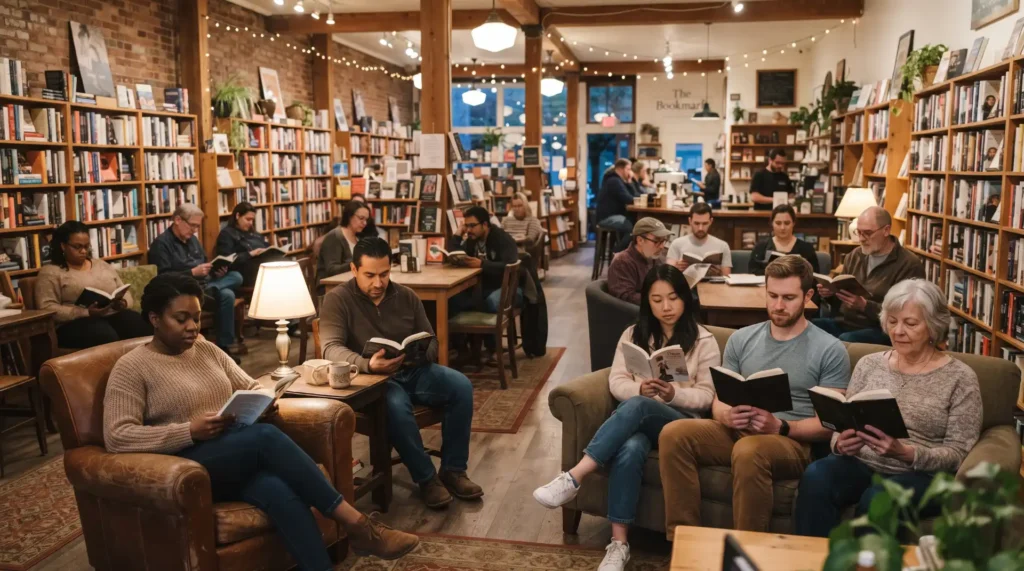
Reading has traditionally been described as one of the most solitary forms of entertainment. A reader opens a book, disappears into another world, and enjoys the experience largely alone. Traditional book clubs added a social element, but they usually came with another expectation: everyone had to read the same book and be ready to discuss it.
A different kind of reading community is challenging both assumptions.
Silent book clubs are bringing Americans together not primarily to discuss books, but simply to read in the company of other readers. Participants may arrive with completely different novels, memoirs, graphic novels, e-books, textbooks, or audiobooks. After a short period of conversation, everyone settles down and reads independently. Conversation afterward is usually optional.
The concept sounds almost too simple to become a movement. Yet that simplicity appears to be exactly why it works.
Silent Book Club, the organization most closely associated with the format, began in San Francisco in 2012. What started with two friends reading together has grown into an international network with thousands of chapters. The organization now describes itself as a global community where people meet in person and online for what it calls quiet camaraderie.
In the United States, the trend is part of a broader shift toward making reading social without turning it into homework. From bookstores and libraries to cafés, breweries and parks, readers are discovering that spending an hour silently reading beside strangers can create a surprisingly strong sense of community.
What Exactly Is a Silent Book Club?
A silent book club is different from the traditional image of a book club gathered around a table discussing one selected novel.
There is generally no assigned book.
Readers bring whatever they are currently interested in. One person might be halfway through a fantasy novel while the person beside them reads a biography. Someone else may have a Kindle, a graphic novel or even an audiobook playing quietly through headphones.
The official Silent Book Club format is intentionally flexible, but a typical meeting begins with around 30 minutes for arrivals and casual conversation. Participants then read quietly for approximately an hour. Afterward, people can stay and socialize, exchange recommendations or simply leave.
The official Silent Book Club organization provides information for readers who want to find or establish local chapters and explains that gatherings may take place in bookstores, coffee shops, libraries, bars, breweries or public parks.
This flexible format removes one of the biggest barriers associated with traditional book clubs: preparation.
No one needs to finish 400 pages before Thursday night. There are no discussion questions to prepare. Participants do not need to defend their interpretation of a novel or worry that everyone else understood something they missed.
They simply need to bring something they want to read.

Why Silent Reading Became Social
At first, gathering in public only to remain quiet might seem contradictory. If everyone wants to read silently, why not stay home?
The answer lies in the difference between being alone and enjoying solitude alongside other people.
Americans already participate in versions of this behavior in many areas of life. People work independently in coworking spaces. Friends sit together while using separate laptops. Students study quietly in libraries. People exercise individually in the same gym.
Silent reading applies the same idea to books.
A room filled with other readers can create gentle accountability. Once someone sits down with twenty people who are all reading, reaching for a phone every two minutes suddenly becomes less tempting. The surrounding activity reinforces the intention to read.
At the same time, participants know they are surrounded by people who share at least one interest: books.
The result is a rare social environment where participation does not depend on constant conversation.
A Book Club Without the Homework
Traditional book clubs can be wonderful. They encourage readers to explore unfamiliar books, think critically about stories and hear interpretations they might never have considered.
But the format does not work for everyone.
Busy adults may struggle to finish an assigned novel by a specific date. Falling behind once can make someone hesitant to attend the meeting. After missing several books, it becomes easy to stop attending altogether.
There is also the question of taste. A reader who loves science fiction may have little enthusiasm for the historical novel selected that month. Another member may want to spend several weeks with an enormous fantasy book instead of switching titles to remain on the group’s schedule.
Silent clubs eliminate that conflict.
Readers decide what to read, how quickly to read it and whether they want to discuss it.
That freedom is especially compatible with today’s highly personalized reading culture. Readers increasingly discover books through social media, library apps, podcasts, online recommendations and niche communities rather than following one universal bestseller list.
Bookzee has explored this shift in How BookTok & Social Media Influence Are Reshaping What We Read, where social platforms are shown to be changing how readers find new titles and build communities around specific genres.
Silent reading clubs take that personalized discovery offline. Everyone brings a different reading life into the same physical space.
The Growth of Silent Book Clubs in the United States
The idea began modestly in San Francisco when friends Guinevere de la Mare and Laura Gluhanich wanted to enjoy reading together without the obligations associated with traditional book clubs.
The concept eventually expanded beyond informal gatherings. According to the official Silent Book Club organization, its community now includes more than 2,000 chapters spanning dozens of countries.
American chapters can be found in major metropolitan areas as well as smaller communities, and the concept has spread beyond officially registered groups. Libraries, bookstores and independent organizers increasingly host their own quiet reading nights, silent reading parties and similar events.
That spread matters because the appeal does not appear confined to one type of reader.
College students may appreciate a low-cost evening activity. Remote workers may want more offline interaction. New residents can use a reading gathering as an easy way to meet people. Parents may value uninterrupted personal reading time. Introverts may enjoy being part of a social gathering where conversation is optional rather than mandatory.
It is social reading with a remarkably low barrier to entry.

Why the Trend Fits American Reading Habits
The popularity of quiet book gatherings makes more sense when viewed alongside broader U.S. reading habits.
A 2026 Pew Research Center analysis found that 75 percent of U.S. adults reported reading all or part of at least one book during the previous 12 months. Print remained the most commonly used format, while e-books and audiobooks also maintained substantial audiences.
At the same time, relatively few Americans reported belonging to conventional book clubs.
That creates an interesting gap. A large population reads, but only a small portion participates in organized discussion groups.
Silent book clubs offer a format that may appeal to readers who like community but dislike the commitments of traditional membership.
Readers interested in the broader data can explore the latest U.S. book-reading findings from Pew Research Center, a nonpartisan research organization that regularly tracks American media and reading habits.
Quiet Socializing Appeals to Introverts
Silent book clubs are frequently described as ideal events for introverts, and it is easy to understand why.
Many conventional social gatherings depend almost entirely on conversation. Participants are expected to introduce themselves, maintain small talk and continuously interact. For people who find that environment tiring, attending an event alone can feel intimidating.
A reading gathering changes the rules.
The book gives everyone an immediate purpose. There is nothing strange about sitting quietly because sitting quietly is the activity.
If someone wants to talk before reading, they can. If they want to exchange recommendations afterward, they can. If they simply want to read for an hour and go home, that is also acceptable.
That optionality can make the event easier for people who want community without intense social demands.
It also creates natural conversation starters. Instead of asking a stranger a vague question such as “What do you do?”, participants can ask, “What are you reading?”
For book lovers, that is often much easier.
Silent Book Clubs Are Also for Extroverts
Despite the nickname “introvert happy hour” sometimes associated with the movement, silent book clubs are not necessarily antisocial.
Many gatherings include substantial conversation before or after the quiet portion. Participants exchange recommendations, discuss authors, compare bookstores and share what they plan to read next.
The difference is that conversation does not consume the entire event.
Extroverted readers may appreciate having a built-in community of people with similar interests, while quieter readers can participate at their own comfort level.
This mixture can create a more inclusive social structure than a discussion group where every member is expected to contribute equally.
The Appeal of Being Alone Together
One of the most interesting ideas behind silent reading groups is sometimes described as being “alone together.”
Participants retain the privacy of their own books while benefiting from shared presence.
There is no requirement for everyone to react to the same story. The reader of a mystery can be completely absorbed in solving a fictional crime while someone three feet away is exploring an American history book. Their experiences remain independent, but the act of reading becomes communal.
This mirrors the atmosphere readers often love in libraries and independent bookstores. Part of the pleasure comes from being surrounded by other people who are also quietly browsing, thinking or reading.
A silent club makes that feeling intentional.
Why Screen Fatigue Is Helping Quiet Reading Events
Another factor behind the trend is the amount of time Americans spend interacting through screens.
Work meetings happen on laptops. Friends communicate through group chats. Entertainment streams through televisions and phones. Social discovery happens through apps. Even book discussion increasingly takes place through social platforms.
Silent reading events offer an unusually simple alternative.
A participant can place a phone in a bag, open a printed book and spend an hour focused on one activity while surrounded by real people.
This connection between intentional focus and physical books also relates closely to Bookzee’s article Why the Slow Reading Movement Is Making Physical Books Popular Again in 2026.
Slow reading encourages people to move away from constant digital stimulation and give sustained attention to longer texts. Silent book clubs provide a social structure that makes that habit easier to practice.
The goal is not necessarily to reject technology. Some participants use e-readers, and others listen to audiobooks. Instead, the appeal comes from creating a defined period in which reading receives priority.
They Can Help Readers Protect Time for Books
Many people say they want to read more but struggle to make it happen.
The problem is not always lack of interest. Reading competes with work, household responsibilities, streaming services, social media and everyday interruptions.
A scheduled reading event transforms a vague intention into an appointment.
Someone who repeatedly tells themselves, “I’ll read tonight,” may find that the evening disappears. Someone who has agreed to meet a reading group at 7 p.m. has created a specific block of time.
The community reinforces the habit without requiring anyone to track pages or complete assignments.
In that sense, silent book clubs combine two effective ideas: personal choice and social accountability.
Independent Bookstores Can Benefit From the Movement
Silent reading events also make sense for independent bookstores.
A bookstore already has the right atmosphere, and a recurring gathering can bring local readers through the door on a regular basis. Participants may browse before the session, purchase the next book in a series or ask staff for recommendations.
The event does not require an author appearance or complicated programming. A store primarily needs comfortable space, adequate lighting and an environment where sustained reading is possible.
More importantly, recurring gatherings can turn a bookstore into a community destination rather than simply a retail location.
A reader may initially visit for the event and later return to shop. Friendships formed during the meetings can strengthen connections to the store itself.
This reflects a larger change in physical bookselling: stores increasingly differentiate themselves from online retailers through experiences, curation and local community.
Libraries Are Natural Homes for Social Reading
Public libraries are another particularly good fit.
Libraries have always provided spaces where people can read independently in the presence of others. A scheduled quiet-reading gathering simply formalizes something that libraries already encourage.
The model can also be highly accessible because participants do not necessarily need to purchase anything. They can borrow a book from the library and immediately join the event.
Libraries can use the gathering to introduce readers to displays, staff recommendations, reading challenges or lesser-known parts of their collections without forcing everyone to read the same title.
For patrons who feel uncertain about joining a discussion-based club, a silent reading event can provide an easier first step into library programming.
Cafés, Breweries and Parks Create Different Experiences
One reason silent book clubs have spread easily is that the format can adapt to many environments.
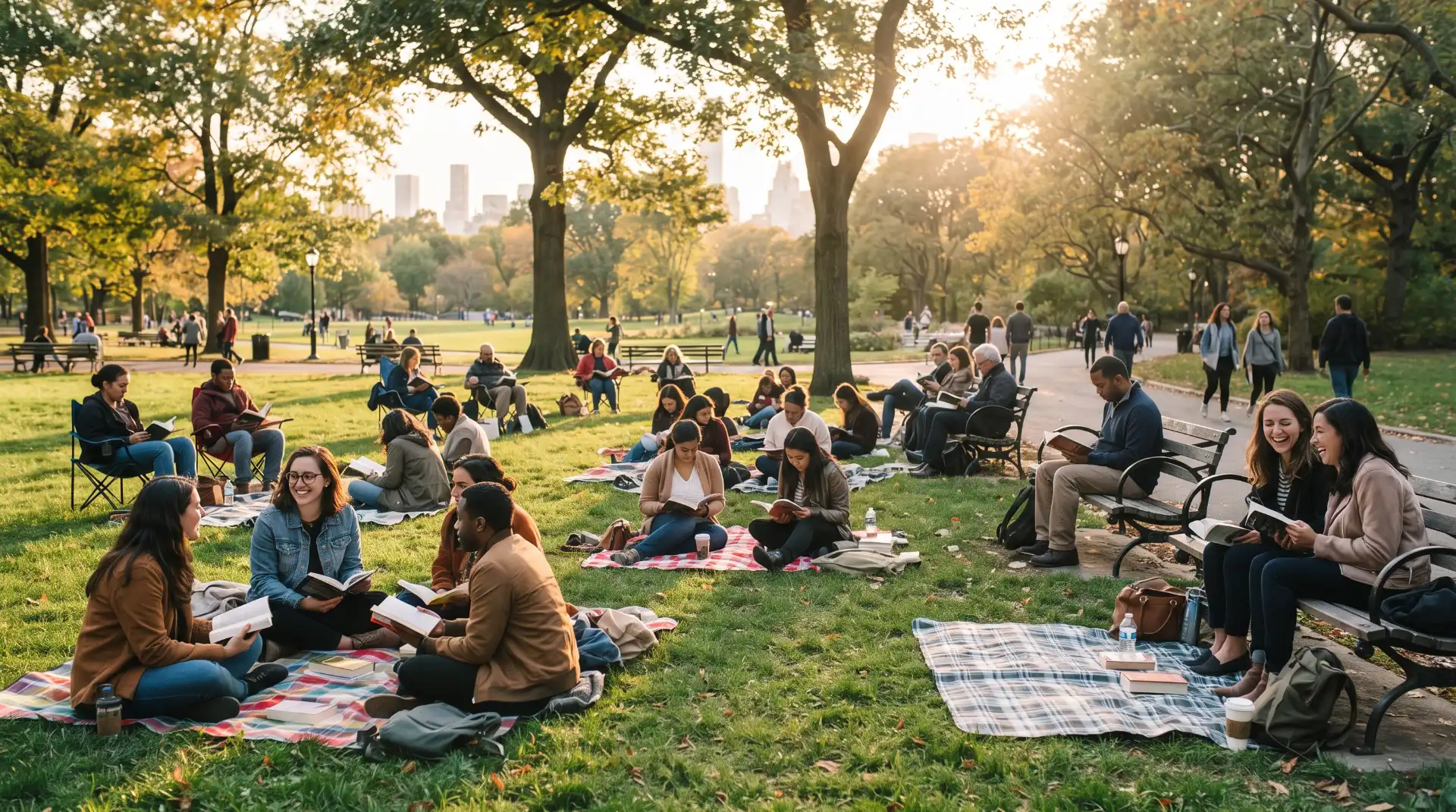
A coffee shop may offer a cozy weekday evening gathering. A brewery can host an adults-only version where readers enjoy a drink with their books. During warmer months, groups can meet at public parks and read on blankets beneath trees.
Each setting changes the atmosphere without changing the core activity.
This versatility also makes silent reading groups easier to establish in communities without large independent bookstores. Organizers need a comfortable gathering place rather than a specialized literary venue.
The official Silent Book Club’s guidance to organizers reflects that flexibility, noting that chapters operate in locations ranging from cafés and bars to libraries and outdoor spaces.
No Assigned Book Means More Diverse Reading
Traditional clubs often have to choose books broad enough to interest most members. This can unintentionally narrow the range of titles discussed.
Silent groups work in the opposite direction.
Because everyone brings their own book, the room may contain a much wider mix of genres than any one reading list could provide.
A fantasy reader may sit beside someone reading literary fiction. A romance enthusiast might meet a nonfiction reader. Someone reading a graphic novel could begin talking afterward with a person who has never considered the format.
Recommendations emerge organically.
When another participant asks what someone is reading, the answer may introduce a title that would never have appeared on a traditional club’s voting list.
This makes quiet reading gatherings surprisingly effective spaces for book discovery.
Social Media Helps People Find Offline Reading Communities
There is an interesting irony in the growth of silent reading clubs: online platforms are helping people find intentionally offline experiences.
Instagram, TikTok, Facebook groups and event platforms allow organizers to announce gatherings quickly. Photos of rooms filled with people quietly reading can themselves become shareable social content.
A person may discover a local reading group through a BookTok creator and then spend the event with their phone put away.
This reflects the increasingly complicated relationship between digital and physical reading culture.
Social media does not necessarily replace in-person literary communities. It can help assemble them.
Bookzee’s coverage of BookTok’s Revolutionary Impact on Reading Culture and Book Selection explores how online communities influence what readers choose. Silent clubs demonstrate the next step: digital discovery can lead directly to real-world community.
Gen Z Is Redefining What Social Reading Looks Like
Younger readers are particularly comfortable blending personal reading with community identity.
For many Gen Z readers, books are discussed through videos, group chats, fan communities, reading trackers and themed events. Reading may happen individually, but the culture surrounding it is highly social.
Recent discussion of Gen Z reading habits has highlighted the growth of silent reading parties as an example of this shift. Younger readers do not necessarily see a contradiction between solitary concentration and community participation.
A person can spend an hour immersed in a book and still consider the experience a night out with friends.
That mindset could help explain why silent reading feels less unusual today than it might have twenty years ago.
Silent Clubs Remove the Pressure to Perform Intelligence
Another overlooked advantage is the absence of formal literary discussion.
Traditional book clubs occasionally make participants feel they need to produce an insightful interpretation. Readers may worry about missing symbolism, forgetting characters or having an opinion that differs from everyone else’s.
That pressure can be particularly intimidating for someone returning to reading after many years away.
A silent group asks for nothing of the kind.
No one needs to prove that they read “serious” literature. A bestselling romance, comic book, classic novel and celebrity memoir can all occupy the same room.
The emphasis is on enjoying reading rather than demonstrating expertise.
That can make book culture feel much more welcoming.
Quiet Reading Can Make Meeting New People Easier
Adult friendship is often difficult to build because there are relatively few recurring environments where strangers can meet naturally.
Schools and universities provide those environments when people are younger. Later, social networks may become centered on workplaces or existing friends.
Interest-based gatherings offer another pathway.
A silent book club creates repeated exposure to the same local readers without requiring instant friendship. Someone may recognize a familiar face during several meetings before eventually starting a conversation.
That slower pace can feel more natural than a networking event designed specifically around meeting strangers.
Friendships develop around repeated shared presence rather than forced introductions.
Silent Reading Events Can Support Local Community
Although the participants are reading independently, the surrounding event can have wider community benefits.
A recurring club may support the bookstore, café or other local business providing the space. Groups can partner with libraries or literacy organizations. Some chapters organize book swaps, charity drives or special themed gatherings.
The central activity remains simple, but the community around it can become increasingly active.
This is one reason silent book clubs should not be mistaken for gatherings where nobody connects. Silence occupies only part of the event. Relationships can grow around that shared hour.
How Silent Book Clubs Differ From Reading Retreats
Silent book clubs share some qualities with another modern literary trend: reading retreats.
Both create intentional time to focus on books while surrounded by people who value reading. The difference is mainly scale and commitment.
A reading retreat may involve traveling for a weekend or longer. A silent club can take place for ninety minutes at a neighborhood café.
Readers interested in the more immersive version can explore Bookzee’s Reading Retreats: The Hottest Travel Trend for Book Lovers.
The popularity of both formats points toward the same desire: readers want protected time to concentrate on books, but many also want that experience to feel communal.
Can Audiobook Listeners Join?
One of the strengths of the format is that reading does not have to mean holding a printed novel.
The official Silent Book Club model welcomes different formats, including e-books and audiobooks.
An audiobook listener can put on headphones and enjoy the same quiet hour as someone reading a hardcover. An e-reader user can bring hundreds of books without changing the social experience.
This inclusive approach reflects modern U.S. reading habits. Pew Research Center’s 2026 data shows that while print remains the most widely used book format, e-books and audiobooks are established parts of American reading as well.
A contemporary reading community therefore benefits from defining “reader” broadly.
What Makes a Good Silent Reading Gathering?
The best gatherings generally keep the format uncomplicated.
A comfortable venue matters. Readers need enough light to see their books, enough seating to remain comfortable and a noise level that allows concentration. Organizers also benefit from making expectations clear so newcomers understand that they may socialize as much or as little as they want.
Beyond that, the appeal is freedom.
People should be able to bring their preferred format, select their own title and read at their own pace. Optional conversation before and after the quiet period gives participants an opportunity to connect without making interaction mandatory.
The official organization recommends a similar approach for chapters: arrival and conversation, a sustained reading period and optional socializing afterward.
The Future of Social Reading May Be Less Structured
Silent book clubs reveal something important about the future of reading communities.
People still want connection, but they do not necessarily want every social activity to demand constant participation.
The success of quiet reading gatherings suggests that low-pressure communities can be powerful. They allow people to show up regularly without assignments, preparation or performance.
That philosophy may influence other forms of literary programming as well. Bookstores and libraries could offer drop-in reading evenings, themed reading hours, outdoor sessions or gatherings organized by broad genre rather than one required title.
The traditional book club is unlikely to disappear. Deep discussion remains valuable for readers who enjoy analyzing a shared text.
Silent reading simply adds another option.
Why Silent Book Clubs Matter in 2026
The continuing rise of silent book clubs is about more than finding another way to spend an evening.
It reflects larger changes in the way Americans socialize, read and build communities.
Readers increasingly move between online discovery and offline experiences. They value flexibility and personalization. Many want meaningful connections without the pressure associated with highly structured social activities. At the same time, physical books and intentional, screen-light experiences retain strong appeal.
A silent book club brings all of those ideas together.
There is a time to talk, a time to read and permission to decide how much of either feels right.
Final Thoughts
Silent book clubs are changing social reading by challenging the idea that book communities need assigned titles and lengthy discussions.
Instead, they create space for something simpler: readers gathering in the same place, choosing their own books and enjoying uninterrupted reading together.
The concept began with friends in San Francisco and has expanded into thousands of communities around the world. Its continued U.S. popularity suggests that the format is filling a genuine need.
People want reasons to leave the house. They want opportunities to meet others with shared interests. They want relief from screens and constant notifications. And, importantly, they want more time to read.
Silent book clubs offer all four without demanding that participants finish a particular novel or prepare something intelligent to say about it.
In an era when so much social activity competes for attention, there is something refreshing about an event built around doing less.
Bring a book. Find a chair. Read beside other people.
Sometimes that is enough to turn a solitary hobby into a community.