

What if one small decision could lead to an entirely different life? What if another version of you lived in a world where you chose a different career, married someone else, moved to another city, or never made a decision that changed everything? And what if those alternative lives were not merely possibilities in your imagination, but realities unfolding somewhere beyond your own?
These questions lie at the heart of some of the most fascinating science fiction books about parallel universes. By imagining multiple versions of reality, authors can explore the consequences of human choices, the limits of scientific knowledge, and the mysteries of identity. A parallel universe might resemble our own almost perfectly, except for one historical event. It might contain a version of Earth with different political systems, unfamiliar physical laws, or entirely different possibilities for human civilization.
The best books about parallel universes use these ideas for more than spectacular science fiction. They turn abstract questions about reality into personal stories about love, regret, ambition, family, power, and belonging. A character may encounter another version of themselves and discover that success has come at a terrible cost. Another may travel between worlds and realize that a seemingly better reality carries its own inequalities. Others may discover that the past they remember is only one version of a much larger story.
For American readers who enjoy science fiction thrillers, speculative fiction, literary novels, and imaginative fantasy, the multiverse offers an unusually broad reading experience. Some books are fast-paced adventures filled with danger and unexpected discoveries. Others are thoughtful explorations of how history shapes individuals and societies.
This guide highlights ten memorable books about parallel universes and alternate realities, explains what makes each one distinctive, and helps you decide which novel belongs on your reading list. The recommendations include direct multiverse stories as well as closely related fiction involving branching timelines, alternate histories, and the possibility of different versions of reality.
What Are Parallel Universes in Fiction?
Parallel universes are hypothetical realities that exist alongside, or in some sense separately from, the universe we experience. In fiction, they provide authors with a way to imagine worlds in which events unfold differently from those in our own reality.
The concept can take several forms. One novel might imagine an alternate Earth where a major war ended differently. Another might feature a device that allows a character to enter a universe in which a personal decision produced a completely different outcome. A fantasy story might describe multiple worlds connected by mysterious gateways, while a science fiction thriller might build its entire plot around the consequences of moving between alternate realities.
Although these concepts overlap, they are not identical. Parallel-universe fiction often imagines distinct realities existing simultaneously. Alternate-history fiction asks what the world might look like if a historical event had changed. Time-travel stories explore movement through time, while branching-timeline stories suggest that different decisions or events can produce different versions of history.
A single novel can combine all these ideas. However, understanding the distinction helps readers select books that match their interests.
Why the Multiverse Makes Such Compelling Fiction
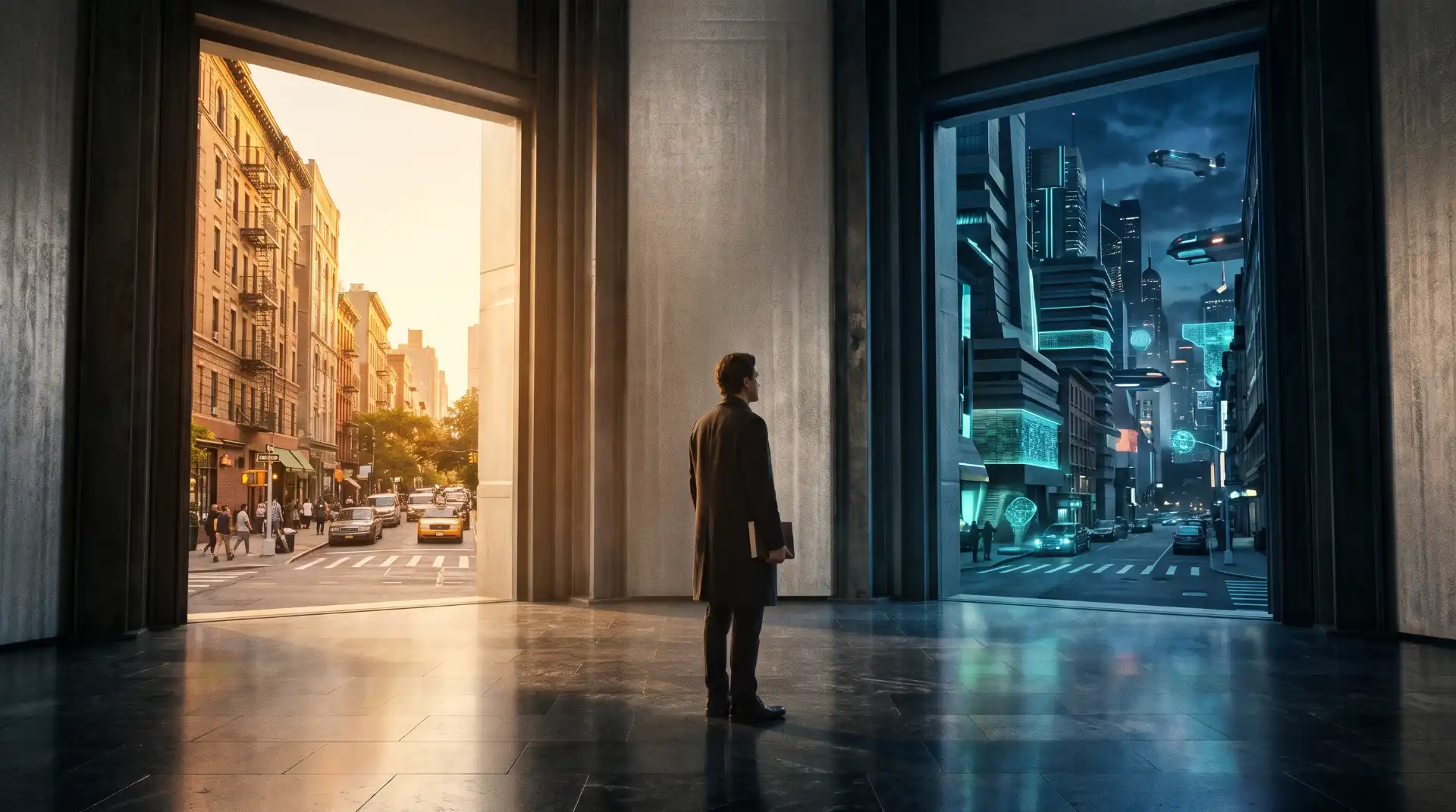
The multiverse is a powerful storytelling device because it transforms abstract possibilities into concrete experiences. Instead of asking whether a different choice might have changed your life, a character can encounter the consequences directly.
Imagine a scientist who discovers a universe in which a failed experiment never happened. In that world, the scientist might be celebrated rather than blamed. Yet the discovery could also reveal that the original mistake prevented an even worse disaster. The alternate reality becomes a way to examine responsibility, memory, and the difficulty of knowing whether a different decision would truly have been better.
Parallel universes also allow writers to challenge familiar assumptions. A character might enter a society where wealth is distributed differently, where a famous historical figure never existed, or where a personal relationship developed under entirely different circumstances. Such worlds can make ordinary social arrangements seem less inevitable by showing that other outcomes are imaginable.
For readers, this creates two sources of enjoyment. The first is the excitement of discovering an unfamiliar world. The second is the opportunity to compare that world with the one the characters originally knew.
Are Parallel Universes Scientifically Proven?
No. Parallel universes remain a speculative idea rather than an established fact. Some theoretical approaches to cosmology and quantum mechanics raise questions that resemble multiverse concepts, but different hypotheses describe different possibilities, and their scientific status varies.
NASA’s educational discussion, Multiverses: Do Other Universes Exist?, explains that multiverse proposals raise fascinating questions while also noting the difficulty of testing some versions of the idea. This distinction matters because science fiction often uses real scientific vocabulary while extending it into imaginative territory.
A novel does not need to offer a scientifically verified mechanism to be worthwhile. Its purpose may be to entertain, explore philosophical questions, or imagine consequences that current science cannot demonstrate. The best approach is to enjoy the creativity of the premise while recognizing where established knowledge ends and speculation begins.
The Best Books About Parallel Universes and Alternate Realities
1. Dark Matter by Blake Crouch
Best for: Readers who want a fast-paced science fiction thriller about life-changing choices and alternate versions of reality.
Blake Crouch’s Dark Matter is one of the strongest starting points for readers interested in modern parallel-universe fiction. The novel follows Jason Dessen, a physics professor whose ordinary life with his wife and son is suddenly disrupted. After a frightening encounter, Jason awakens in a world that appears familiar in some ways but differs dramatically from the life he remembers.
In this alternate reality, Jason has achieved extraordinary scientific success, but the personal life he values has changed. The central conflict becomes a desperate attempt to understand what happened and find his way back to the people he loves.
Crouch combines a high-concept scientific premise with the urgency of a thriller. Jason cannot simply study the multiverse from a safe distance. His discovery has immediate consequences, and every attempt to recover his former life creates new questions about identity, choice, and the nature of home.
One of the novel’s most compelling ideas is that people often imagine alternative lives without considering how complicated those lives might become. It is easy to wonder what would have happened if you had accepted a different job, pursued another relationship, or made a different decision years ago. Dark Matter takes that familiar habit of reflection and turns it into an unsettling physical reality.
The book also examines whether a successful life is necessarily a better life. Professional achievement, personal fulfillment, and family relationships do not always develop together. By placing its protagonist in a world that looks desirable from one perspective but feels deeply wrong from another, the novel challenges the assumption that there is one obvious measure of success.
Crouch’s accessible writing and rapid pacing make the story suitable for readers who do not usually read hard science fiction. The novel includes enough scientific ideas to create an intriguing framework, but the emotional stakes remain central.
If you want one book that captures the appeal of alternate realities while remaining suspenseful and accessible, start with Dark Matter. You can also explore the author’s official book page for more information about the novel.
2. The Space Between Worlds by Micaiah Johnson
Best for: Readers interested in multiverse travel, social inequality, identity, and the consequences of crossing between worlds.
Micaiah Johnson’s The Space Between Worlds offers a more socially focused approach to parallel universes. Its protagonist, Cara, works for a powerful organization that sends travelers between alternate versions of Earth. The process has a significant limitation: a person cannot travel to a world where their counterpart is still alive.
That rule creates a fascinating foundation for the novel. Travel between worlds is not equally available to everyone, and Cara’s unusual circumstances make her valuable to the organization. Her position gives her access to alternate realities, but it also exposes the inequalities built into the system that controls this technology.
Rather than treating parallel universes simply as a collection of exciting destinations, Johnson uses them to examine class, opportunity, privilege, and belonging. Different worlds may contain different versions of the same people, but those similarities do not guarantee that every version enjoys the same freedom or social position.
Cara’s journey becomes an exploration of her own history and the circumstances that have shaped her. The existence of alternate versions of familiar people raises difficult questions about individuality. If another version of you has different experiences, relationships, and opportunities, how much can the two of you reasonably be said to share?
The novel’s world-building is especially effective because the multiverse has consequences for everyday life. It is not merely a theoretical possibility or a device for introducing surprising scenes. It influences economics, social hierarchies, and the ways people understand their own importance.
Readers who appreciate science fiction with meaningful social commentary will find this book especially rewarding. It combines an inventive premise with a protagonist whose choices matter beyond the immediate adventure.
For a deeper look at the novel’s premise, visit the publisher’s official book page for The Space Between Worlds.
3. The Long Earth by Terry Pratchett and Stephen Baxter
Best for: Readers who enjoy expansive world-building, scientific speculation, and stories about humanity’s relationship with new frontiers.
The Long Earth, written by Terry Pratchett and Stephen Baxter, imagines a world in which people discover a way to move between an enormous sequence of parallel Earths. These worlds share broad similarities with our own, but their histories and environments differ in ways that create new opportunities and unexpected dangers.
The premise transforms the familiar idea of exploration. Instead of traveling across an ocean or moving to another continent, people can cross into another version of Earth. A world that appears similar from a distance may have a different environment, a different pattern of development, or no human civilization at all.
The discovery quickly affects society. Exploration creates possibilities for settlement and scientific investigation, but it also raises questions about ownership, resources, migration, and the consequences of expanding into places that were previously inaccessible.
The novel’s strength lies in the scale of its imagination. The authors consider how people might respond if the boundaries of their world suddenly expanded. Some would see new opportunities, others would search for resources, and still others would question whether unlimited access to new territory would solve humanity’s problems or simply reproduce them somewhere else.
The book also benefits from the different strengths of its coauthors. Pratchett’s experience with imaginative, often satirical storytelling complements Baxter’s interest in scientific possibilities and large-scale speculation. The result is a novel that can be read as an adventure while also inviting reflection on civilization and exploration.
Readers who prefer intimate psychological thrillers may find the scope broader and the pacing less urgent than in Dark Matter. However, anyone who enjoys contemplating the long-term consequences of a scientific discovery will find plenty to appreciate.
Choose The Long Earth if you want a multiverse story that focuses on exploration and society rather than concentrating entirely on one person’s alternate life.
4. The Man in the High Castle by Philip K. Dick
Best for: Readers interested in alternate history, political speculation, and the unsettling possibility that the modern world could have developed differently.
Philip K. Dick’s The Man in the High Castle is a landmark of alternate-history fiction. Rather than depicting characters traveling through a device into another universe, it imagines a world in which the Axis powers won World War II and the United States was divided between competing foreign powers.
This premise changes the political and cultural landscape of America. Familiar places and institutions remain recognizable, but their meaning has been transformed by a different historical outcome. The result is a world that feels both familiar and deeply alien.
The novel explores how people live under political systems shaped by an event that occurred differently from the history readers know. Its characters navigate questions of identity, power, loyalty, and resistance while confronting uncertainty about the reality surrounding them.
Although the book is not a straightforward parallel-universe adventure, it belongs on a reading list about alternate realities because it demonstrates how a changed historical event can transform an entire society. The imagined world functions as a mirror, encouraging readers to consider how much of the present depends on circumstances that might have unfolded differently.
The book’s approach is also more philosophical than that of a conventional thriller. It raises questions about historical truth and the stability of the reality people accept. Its alternate history does not merely change political borders; it complicates the characters’ understanding of their place in the world.
For American readers, the setting offers a particularly direct way to explore speculative history. Familiar national symbols, institutions, and geographic locations become part of an unfamiliar political order.
Choose The Man in the High Castle if you prefer thought-provoking alternate history to a story about physically traveling between parallel worlds.
5. Recursion by Blake Crouch
Best for: Readers who enjoy high-concept thrillers involving memory, time, and reality-altering scientific discoveries.
In Recursion, Blake Crouch builds a suspenseful story around a phenomenon involving memories of lives people believe they never experienced. What begins as a disturbing psychological mystery develops into a much larger problem involving time, identity, and the stability of reality.
The novel follows characters whose investigations bring them into contact with a technology capable of changing how the past is experienced. As the consequences grow, familiar distinctions between memory, history, and possible futures become increasingly difficult to maintain.
Unlike a straightforward multiverse story in which characters simply enter different worlds, Recursion focuses heavily on how changes to time can alter the world people believe they know. Its relationship to parallel-universe fiction comes through the way different versions of events and lives become entangled.
This approach makes the book especially interesting for readers who enjoy speculative science with emotional consequences. Memories help people understand who they are, how they relate to others, and what they believe has happened. If those memories become unreliable, a person’s entire understanding of identity may be affected.
Crouch also gives the scientific premise a strong thriller structure. Characters must make decisions while facing uncertainty about the consequences of their actions. The result is a story that combines a conceptual puzzle with urgency and emotional pressure.
Readers who enjoy Dark Matter will likely appreciate the author’s ability to take an abstract idea and build an accessible, high-stakes narrative around it. However, the two novels approach alternate realities differently, making them complementary rather than interchangeable reading experiences.
Choose Recursion if you want a fast-moving science fiction thriller that explores the connections between memory, time, and the many ways a life can unfold.
6. The Midnight Library by Matt Haig
Best for: Readers who prefer an emotional, accessible exploration of regret, second chances, and alternative lives.
Matt Haig’s The Midnight Library offers a more intimate and philosophical approach to the idea of alternate realities. The story follows Nora Seed, a woman who finds herself in a mysterious library between life and death. Its books allow her to explore versions of her life that might have developed if she had made different choices.
The premise draws on a familiar human experience. Many people wonder what would have happened if they had pursued a different career, stayed in a relationship, moved to another city, or followed an ambition they eventually abandoned. The novel transforms those questions into a series of imagined lives.
As Nora explores these alternatives, the book examines the difference between idealized possibilities and lived experience. A life that looks perfect from the outside may contain difficulties that are invisible to an observer. A path that seems disappointing may also contain relationships and experiences that would be impossible to replace.
The novel is not primarily concerned with scientific explanations for parallel universes. Instead, it uses the structure of alternate lives to examine regret, self-worth, and the difficulty of evaluating a life through a small number of decisions.
This makes it a good recommendation for readers who want speculative fiction without complicated technical explanations. Its central questions are emotional and recognizable, even for people who rarely read science fiction.
The book can also prompt useful conversations about how people judge their own lives. It encourages readers to consider whether happiness depends on discovering a perfect alternative or learning to understand the possibilities already present in their current circumstances.
Because the novel addresses serious emotional themes, it may feel more reflective than adventurous. Readers seeking a technical multiverse thriller may prefer Dark Matter, while those interested in personal growth and philosophical fiction may find The Midnight Library more satisfying.
7. The First Fifteen Lives of Harry August by Claire North
Best for: Readers who enjoy speculative fiction involving repeated lives, historical changes, and the consequences of accumulated knowledge.
Claire North’s The First Fifteen Lives of Harry August follows a protagonist who repeatedly lives his life from the beginning, retaining memories of earlier experiences. Although the book focuses on a repeating life rather than conventional travel between parallel universes, it belongs in a broader reading list about alternate realities and the consequences of different timelines.
Harry’s unusual condition allows him to experience history more than once. Events that seem inevitable to other people may look different to someone who remembers what happened before. The accumulation of knowledge also changes the meaning of his choices: he is not simply reacting to the present but comparing it with earlier versions of his life.
The novel explores what happens when an individual gains a perspective that ordinary human experience cannot provide. Knowledge can be valuable, but it also creates responsibility. If someone knows that a future disaster is coming, how much should they attempt to change? What happens when one person’s intervention affects countless other lives?
These questions connect the book to alternate-reality fiction even though its mechanism differs from a multiverse in which many versions of Earth exist simultaneously. It is especially useful for readers who enjoy stories that challenge the assumption that a person’s life must unfold in only one way.
The historical scope also gives the novel a distinctive character. Instead of focusing on a single alternate world, it considers how repeated experiences change a person’s relationship with time, memory, and human progress.
Choose this book if you enjoy thoughtful speculative fiction that combines a compelling central idea with questions about power, responsibility, and the limits of personal knowledge.
8. The Gone World by Tom Sweterlitsch
Best for: Readers who like dark science fiction, investigative thrillers, and alternate futures with high stakes.
Tom Sweterlitsch’s The Gone World blends a murder investigation with speculative ideas about time and possible futures. The story follows a special agent whose work leads her into a case connected to events that threaten much more than the outcome of a single investigation.
The novel’s atmosphere is darker than that of many accessible multiverse adventures. Its speculative elements are tied to danger, uncertainty, and the possibility that the future may contain catastrophic consequences. As the investigation develops, the protagonist must consider how events across time relate to the crime she is trying to solve.
This structure appeals to readers who like their science fiction combined with procedural elements. Investigative stories are built around the careful examination of evidence, conflicting accounts, and hidden connections. Introducing possible futures complicates those familiar techniques, because information from another point in time can change the meaning of what appears to be happening in the present.
The book also explores the psychological cost of confronting possibilities that ordinary people cannot easily understand. Knowledge of a potential future does not necessarily make it easier to prevent, especially when the evidence is incomplete and the stakes are enormous.
Because the novel includes disturbing material and a bleak atmosphere, it may not be suitable for readers seeking light or comforting speculative fiction. However, fans of darker thrillers and complex temporal mysteries may find it especially rewarding.
Although The Gone World is more closely associated with time travel and alternate futures than with a simple parallel-universe premise, it expands the reading list by showing how related speculative ideas can create an entirely different kind of suspense.
9. Sea of Tranquility by Emily St. John Mandel
Best for: Readers who enjoy literary science fiction, interconnected timelines, and reflective stories about reality.
Emily St. John Mandel’s Sea of Tranquility is a thoughtful science fiction novel that connects characters and events across different historical periods. Its story moves between locations and eras, including the early twentieth century and a future lunar settlement, while examining the relationship between art, time, memory, and the possibility that reality may not be what it appears to be.
The novel is less focused on a character deliberately exploring multiple parallel Earths. Instead, it approaches related questions through temporal connections and the possibility of unusual patterns across seemingly separate lives.
This makes it an appealing option for readers who want literary depth alongside speculative ideas. The book’s structure encourages readers to consider how individual experiences can become connected across long stretches of time and how people interpret events when they lack the full picture.
Mandel’s writing places considerable emphasis on atmosphere and human relationships. Scientific speculation provides a framework, but the characters’ emotions, ambitions, and uncertainties remain central to the story.
Readers who prefer fast-paced action may find the book more contemplative than a conventional multiverse thriller. Its rewards come from observing connections, reflecting on the characters’ experiences, and gradually developing a broader understanding of the narrative.
Sea of Tranquility is particularly suitable for book clubs because it offers several points of discussion. Readers can explore how the novel treats time, whether its characters can fully understand the forces affecting them, and how speculative fiction can address the uncertainties of ordinary life.
Choose it if you enjoy science fiction that asks philosophical questions without sacrificing its interest in character and literary style.
10. The Space Between Worlds Companion: Those Beyond the Wall by Micaiah Johnson
Best for: Readers who want another perspective on a world shaped by parallel realities, social divisions, and dangerous political systems.
Micaiah Johnson’s Those Beyond the Wall expands the broader world associated with The Space Between Worlds. It follows a different protagonist and explores a society marked by violence, inequality, and the consequences of decisions made by people with power.
The novel is worth considering for readers who appreciate multiverse fiction that examines more than the mechanics of travel between worlds. Johnson uses speculative settings to explore how people become shaped by their environments and how the structures of a society affect individual freedom.
Rather than relying solely on the wonder of encountering an alternate Earth, the book investigates the costs of living in a world where access to safety and opportunity is uneven. Its concerns include identity, social position, and the difficulty of challenging systems that appear to determine a person’s future.
The connection to parallel-universe fiction is thematic as well as speculative. Different circumstances can produce different experiences, and the world a person inhabits affects what they believe is possible. The story encourages readers to consider how much of a person’s life is determined by individual decisions and how much is shaped by conditions beyond their control.
Readers who enjoyed The Space Between Worlds should consider continuing with this novel, particularly if they appreciated its combination of science fiction and social commentary. It also offers a useful reminder that a speculative series can explore different aspects of its imagined world through new characters and conflicts.
If you are looking for multiverse-related fiction with a strong interest in inequality, identity, and the consequences of power, this is a worthwhile addition to your reading list.

How to Choose the Best Parallel-Universe Book for Your Reading Style
With so many different approaches to alternate realities, choosing the right novel depends on what you want from the experience. Some readers want a thrilling adventure that explores the consequences of one decision. Others prefer elaborate fictional worlds, philosophical questions, or stories that use alternate history to examine society.
Choose a Fast-Paced Multiverse Thriller
If you enjoy suspense, unexpected discoveries, and characters who must solve problems under pressure, begin with Dark Matter or Recursion. Both novels use speculative scientific concepts to create urgent personal and global conflicts.
These books are particularly suitable for readers who enjoy contemporary science fiction but do not necessarily want lengthy explanations of theoretical physics. Their central ideas are introduced through characters facing immediate challenges, making the scientific speculation easier to follow.
A useful way to approach these stories is to pay attention to the rules governing each alternate reality. Consider what the protagonist knows, which assumptions turn out to be unreliable, and how a decision changes the situation. Understanding those rules can make the eventual revelations more satisfying.
Choose Thoughtful Fiction About Life Choices
Readers who are more interested in personal identity and the meaning of a good life may prefer The Midnight Library. Its alternate lives encourage reflection on regret, ambition, and the tendency to imagine that a different decision would automatically have produced a happier outcome.
The Space Between Worlds also explores identity, but it approaches the subject through a more expansive science fiction setting. Its questions about social privilege and belonging give the multiverse a political dimension.
These books are especially appealing if you enjoy discussing fiction after finishing it. They invite questions that have no single correct answer, including whether people are defined by their decisions, their circumstances, or the relationships they develop along the way.
Choose Large-Scale World-Building
If your favorite part of science fiction is discovering how an unfamiliar world operates, consider The Long Earth. Its premise creates room to explore geography, settlement, technology, and the long-term effects of a discovery that changes humanity’s understanding of its environment.
Readers who enjoy alternate histories should consider The Man in the High Castle. Rather than presenting an ordinary world with one additional scientific phenomenon, it reconstructs history around a different outcome to a major global conflict.
Both books demonstrate that alternate realities can be used to examine entire societies, not just individual characters. They are good choices for readers who want to spend time thinking about the broader implications of a fictional premise.
How to Read Parallel-Universe Fiction Without Getting Confused
Some multiverse novels can be challenging because they introduce several versions of the same character, move between different timelines, or reveal information out of chronological order. A few simple reading habits can help you follow the story without turning the experience into homework.
Keep Track of the Rules of Each World
When a novel introduces an alternate reality, note the important differences between that world and the original one. Perhaps a character made a different decision, a historical event ended differently, or a technological breakthrough changed society.
You do not need to document every detail. Focus on differences that influence the plot or explain a character’s behavior. If two versions of the same person appear, pay attention to their experiences and motivations rather than assuming that they must behave identically.
This approach is especially helpful with novels such as Dark Matter, where the distinction between familiar and unfamiliar realities is central to the protagonist’s challenge.
Distinguish Alternate Universes From Time Travel
A character traveling to another time does not necessarily enter a parallel universe. Similarly, a story about reliving the same life does not automatically involve multiple worlds existing simultaneously.
Authors often combine these concepts, but understanding the distinction helps you follow the rules of the fictional setting. Ask whether the characters are moving through time, entering another reality, changing a timeline, or experiencing memories of events that may not have happened in their current world.
You do not need to resolve every theoretical question. The important point is to understand how the author defines the situation and how those rules affect the characters.
Avoid Spoilers While Researching the Genre
Readers often search for explanations when a science fiction novel becomes confusing. Unfortunately, searching for a title alongside phrases such as “ending explained” or “final twist” can reveal major developments.
If you need background information, start with the publisher’s official synopsis or a spoiler-free review. You can also revisit earlier chapters before searching online. Sometimes a seemingly confusing passage becomes clearer when considered alongside information introduced later.
For more help discovering books that match your interests, visit Bookzee’s guide to finding your next favorite book. Exploring authors, genres, and publication dates can help you find your next multiverse novel without relying on plot spoilers.

Can Parallel-Universe Fiction Teach Us Anything About Science?
Parallel-universe novels are works of imagination, but many draw inspiration from real scientific questions. Concepts involving quantum mechanics, cosmology, time, and the structure of reality provide writers with possibilities for creating fictional worlds.
It is important, however, to distinguish scientific inspiration from scientific proof. A novelist may use a concept from physics as the starting point for a fictional technology, then extend it far beyond what current evidence supports.
Quantum Mechanics and the Many-Worlds Idea
One interpretation of quantum mechanics, known as the many-worlds interpretation, is associated with the idea that different outcomes of quantum events can correspond to different branches of reality. This is a serious topic in the philosophy and interpretation of physics, but it does not establish that people can travel between alternate Earths or meet other versions of themselves.
Popular fiction frequently turns such ideas into practical mechanisms. A character might enter a device, step through a doorway, or deliberately select a different version of reality. These scenarios make compelling stories, but they should not be mistaken for demonstrated scientific capabilities.
Readers who want to explore the distinction can consult NASA’s educational material on the universe and cosmology, which explains established concepts and current scientific questions about the universe.
Why Fiction Remains Valuable Even Without Scientific Proof
The value of a multiverse novel does not depend on whether its central mechanism can be built. Fiction can explore the human consequences of hypothetical discoveries, making abstract questions understandable through character and narrative.
For example, a novel might ask whether a person would want to meet another version of themselves. Would that encounter bring comfort, jealousy, or disappointment? Would a different life make the original one seem less meaningful, or reveal that no life is free from difficulty?
These questions remain interesting even if the fictional technology is impossible. They concern human experience, and science fiction provides a way to examine that experience from unfamiliar angles.
Why Parallel-Universe Books Are Excellent Book Club Choices
Multiverse fiction is particularly well suited to book clubs because readers can disagree about what a story means without necessarily disagreeing about its basic events.
One reader might focus on the scientific premise, another on the characters’ emotional choices, and another on the social structure of the alternate world. These perspectives can produce a richer discussion than a novel whose central appeal depends entirely on solving a single mystery.
For Dark Matter, a group might discuss whether the protagonist’s definition of a successful life changes as the story progresses. With The Midnight Library, members could compare their interpretations of regret and second chances. The Man in the High Castle offers opportunities to examine alternate history and the relationship between political power and everyday life.
To keep the discussion engaging, ask questions that encourage interpretation rather than simply testing whether everyone remembers the plot. Which alternate reality seemed most convincing? Which character changed the most? Did the imagined world make a familiar aspect of American society look different? What did the novel suggest about the relationship between individual choices and circumstances?
Book clubs should also agree on spoiler rules before beginning a multiverse novel. Some stories depend on gradual revelations, and an early explanation can undermine the experience for readers who are still working through the book.
Final Thoughts: Which Parallel-Universe Book Should You Read First?
The best books about parallel universes offer more than imaginative escapes into alternate worlds. They challenge readers to consider the relationship between choices and consequences, the influence of history, and the question of whether a different reality would necessarily produce a better life.
For a fast-paced introduction to the multiverse, Dark Matter is an excellent starting point. If you want science fiction with a strong social perspective, choose The Space Between Worlds. Readers who enjoy large-scale exploration may prefer The Long Earth, while those interested in alternate American history should consider The Man in the High Castle.
For a more personal and reflective experience, The Midnight Library examines the lives people imagine they might have lived. Readers who prefer complex temporal puzzles can explore Recursion, The First Fifteen Lives of Harry August, and The Gone World. If you enjoy literary science fiction, Sea of Tranquility offers a thoughtful approach to time and reality.
There is no single best entry point for every reader. Your ideal choice depends on whether you want an exciting thriller, a philosophical exploration, an alternate history, or an expansive imagined universe.
Start with the premise that most interests you, avoid reading detailed explanations before finishing the book, and give yourself time to consider the possibilities each story presents. The most memorable parallel-universe novels leave readers wondering not only what might exist beyond their familiar world, but also what makes their own lives meaningful.