
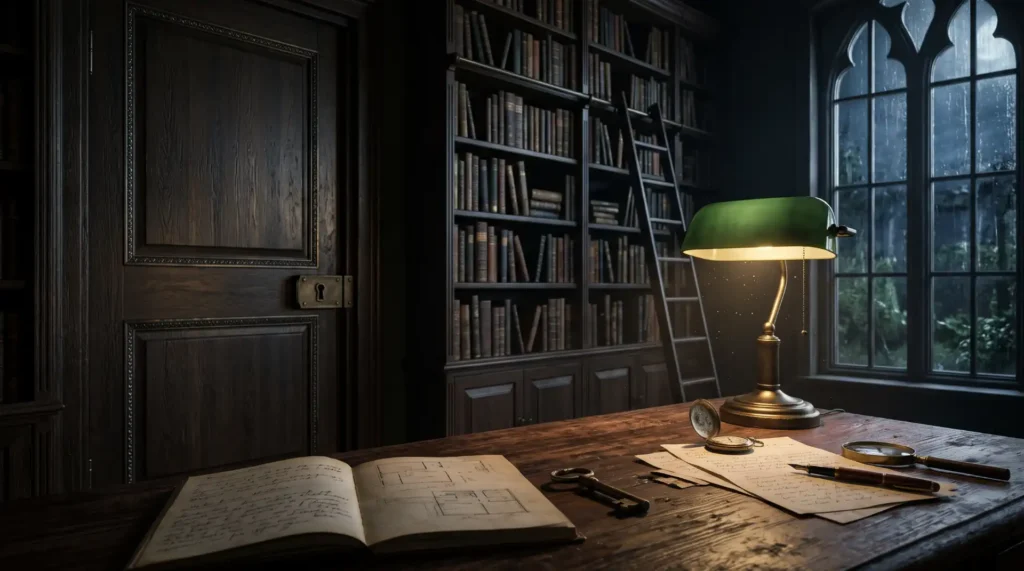
Some mystery novels begin with a body, a list of suspects, and a detective who must discover what happened. Locked-room mysteries add an extra challenge: the crime appears impossible. A victim is found inside a room secured from within, a remote mansion has no apparent escape route, or a person disappears from a location that seems impossible to leave unnoticed. The detective must determine not only who committed the crime, but also how it could have happened.
For readers who enjoy solving puzzles, this subgenre offers a particularly satisfying experience. Every detail might matter, from the position of a window to an unexpected sound in the hallway. An apparently unimportant conversation could undermine an alibi, while a perfectly ordinary object might become the key to an extraordinary solution.
The best locked-room mystery books invite readers to investigate alongside the characters. They establish rules, introduce competing explanations, and gradually reveal information that changes how the original crime appears. Some rely on elegant logic and careful observation, while others combine impossible crimes with psychological tension, Gothic atmosphere, or unsettling family secrets.
This guide explores classic and modern locked-room mysteries worth adding to your reading list. It includes Japanese puzzle mysteries, traditional British detective fiction, contemporary thrillers, and stories that use isolated settings to create an atmosphere of uncertainty. Each recommendation is presented without revealing its central solution, so you can enjoy the challenge of figuring out the truth yourself.
Whether you are an experienced armchair detective or a reader looking for an exciting introduction to the genre, these books offer different ways to experience the pleasure of an apparently unsolvable crime.
What Is a Locked-Room Mystery?
A locked-room mystery is a type of detective fiction built around an apparently impossible crime. The classic example involves a murder committed inside a room that appears to have been locked from the inside. The doors are secured, the windows seem inaccessible, and there is no obvious way for the killer to enter or leave without being seen.
However, the locked room is only one version of the puzzle. A victim might disappear from a crowded location, a person might be killed in a supposedly inaccessible place, or a crime might occur while every suspect appears to have a convincing alibi. These stories are sometimes described as impossible-crime mysteries because the central question concerns how the event could physically have occurred.
The genre differs from an ordinary whodunit in an important way. In a conventional murder mystery, the main challenge is identifying the culprit among several suspects. In a locked-room mystery, the author must also construct a credible explanation for the seemingly impossible circumstances.
This creates two interconnected puzzles. Readers must evaluate motive, opportunity, and character, but they must also examine physical evidence and the reliability of what witnesses believe they saw. A suspect may have an excellent motive yet lack the opportunity to commit the crime. Another person may appear to have no motive at all but possess information that changes the entire investigation.
The strongest examples make the solution surprising without making it arbitrary. After the explanation is revealed, readers should be able to look back and recognize why certain details mattered. The ending may be unexpected, but it should feel connected to the evidence rather than introduced solely to shock the audience.
Why Readers Love Impossible-Crime Fiction
Locked-room mysteries appeal to people who enjoy active reading. Instead of simply following a story, readers can pause to reconstruct timelines, compare statements, and develop their own theories. The book becomes an intellectual game between the author and the audience.
There is also a psychological attraction to the genre. An apparently sealed room represents a contradiction between what people believe is possible and what appears to have happened. Resolving that contradiction creates a special kind of suspense. Every new clue has the potential to change the reader’s understanding of the crime.
Settings contribute to the appeal, too. Isolated islands, country estates, old hotels, remote houses, and unfamiliar buildings can create a sense of confinement. When the characters cannot easily leave, tensions rise, secrets become harder to conceal, and even ordinary interactions can feel suspicious.
For American readers who enjoy mystery book clubs, these novels are especially useful because they encourage discussion. Different readers may interpret the same evidence differently, making it possible to debate theories without agreeing on every detail.
The Best Locked-Room Mystery Books to Read
1. The Decagon House Murders by Yukito Ayatsuji
Best for: Readers who enjoy isolated settings, atmospheric suspense, and classic detective-fiction puzzles.
The Decagon House Murders is one of the strongest choices for readers who want to experience the pleasures of a carefully constructed impossible-crime mystery. The story follows members of a university mystery club who travel to a remote Japanese island and stay in an unusual, ten-sided house. The location is associated with an earlier series of deaths, and the students soon find themselves confronting a frightening new mystery.
The house itself contributes substantially to the atmosphere. Its unusual design and isolation make the setting feel both intriguing and uncomfortable. The students have their own personalities, assumptions, and relationships, but their shared interest in detective fiction does not necessarily make them better prepared to face an actual crime.
Ayatsuji draws on the traditions of classic puzzle mysteries while giving the story a distinctly Japanese setting and sensibility. Readers who appreciate stories in which the environment influences the investigation will find plenty to examine. The island, the building, and the characters’ limited options all become important parts of the reading experience.
One of the novel’s greatest strengths is the way it encourages readers to form theories. Rather than relying exclusively on a detective’s deductions, the narrative creates opportunities to consider the evidence independently. Readers can pay attention to the relationships between characters, the physical layout of the house, and the timing of events.
This is an excellent starting point for anyone interested in Japanese locked-room mysteries. It is also a good choice for book clubs because its combination of atmosphere, structure, and clues offers plenty to discuss after everyone has finished reading.
If you enjoy detective stories that reward close attention, put The Decagon House Murders near the top of your list.
2. The Tokyo Zodiac Murders by Soji Shimada
Best for: Experienced puzzle-mystery readers who want an intricate investigation and an unusually ambitious crime.
Soji Shimada’s The Tokyo Zodiac Murders is a particularly memorable example of Japanese impossible-crime fiction. The novel begins with a disturbing historical murder case involving an artist, mysterious writings, and a bizarre plan described in his personal documents. Decades later, an investigation attempts to make sense of the events and determine how the crimes could have occurred.
The novel is known for its elaborate construction. The case involves a large amount of information, including written records, family relationships, and a sequence of events that demands careful reconstruction. Readers who enjoy drawing diagrams, keeping notes, and comparing competing explanations may find this approach especially rewarding.
Unlike a straightforward thriller that depends mainly on fast pacing, Shimada’s story places considerable emphasis on logical deduction. The reader is encouraged to consider the evidence and test possible explanations rather than simply wait for the detective to announce the answer.
That complexity also means this book is not necessarily the best first choice for someone who prefers short, uncomplicated mysteries. The crime is disturbing, and the novel includes violent material that may not suit every reader. Those who appreciate darker stories and intricate puzzle construction, however, may find it an absorbing challenge.
The book’s appeal lies in the relationship between its apparently extraordinary premise and its demand for logical analysis. The more unusual the case seems, the more carefully readers must examine the assumptions underlying it.
For fans of intricate detective fiction, The Tokyo Zodiac Murders offers an ambitious reading experience that can inspire lengthy discussions about clues, deductions, and the limits of intuition.
3. The Honjin Murders by Seishi Yokomizo
Best for: Readers who want a classic Japanese mystery with a traditional country-house atmosphere.
Seishi Yokomizo’s The Honjin Murders is a landmark of Japanese detective fiction and an excellent recommendation for readers who want to explore the history of the locked-room mystery. Set in a Japanese village in 1937, the story centers on a wealthy family preparing for a wedding. The celebrations are interrupted by a shocking crime involving the newly married couple.
The circumstances are baffling. The victims are discovered in a room that appears to have been secured from within, and the evidence left behind seems difficult to reconcile with an ordinary explanation. The investigation introduces Kosuke Kindaichi, an unconventional detective whose appearance and manner conceal a sharp analytical mind.
The historical setting gives the mystery a distinctive character. Family reputation, social expectations, and the structure of the household all influence the atmosphere surrounding the crime. The story also reflects the traditions of classic detective fiction, in which the reader is invited to consider the clues and challenge the apparent impossibility of the event.
Yokomizo’s approach is appealing because it balances the intellectual puzzle with the people affected by it. The family is not simply a collection of names on a suspect list. Its relationships, tensions, and expectations help create the conditions in which the crime becomes possible.
For readers in the United States who are accustomed mainly to British and American detective novels, this book provides a useful introduction to another major tradition of mystery writing. It demonstrates that the locked-room format can retain its familiar appeal while drawing on different cultural and historical circumstances.
Choose The Honjin Murders if you enjoy classic mysteries with a strong sense of place, a carefully defined crime, and a detective who approaches the case through observation and reasoning.
4. Murder in the Crooked House by Soji Shimada
Best for: Readers who love unusual buildings, elaborate puzzles, and mysteries in which architecture becomes part of the challenge.
In Murder in the Crooked House, Soji Shimada builds a mystery around a remote residence whose strange design immediately attracts attention. The building’s unusual angles and interior layout help establish an unsettling atmosphere, while the people inside become involved in a series of events that demand careful investigation.
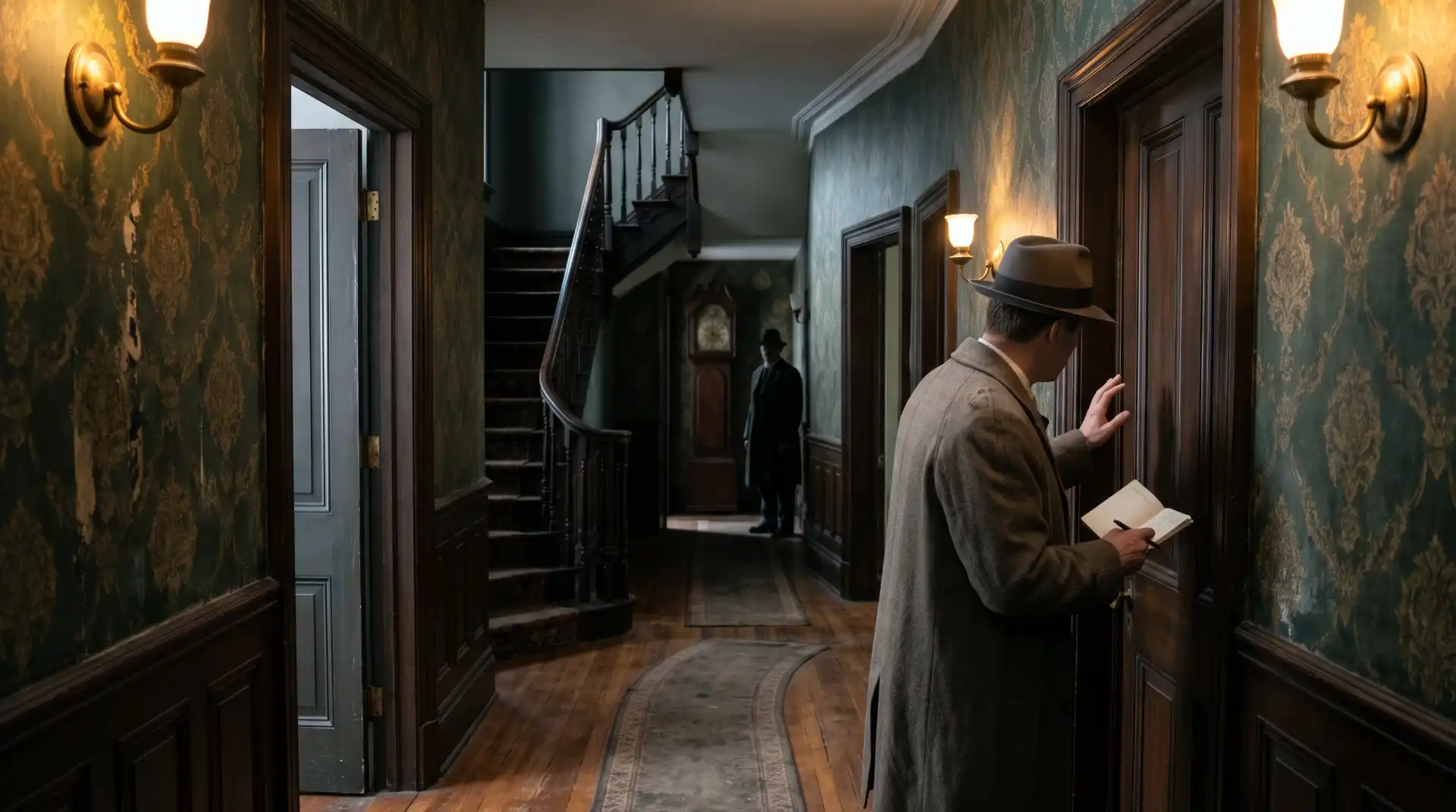
The setting is particularly important because it changes the way readers think about space. In an ordinary house, people generally understand how rooms connect and how someone might move between them. An unusual building makes those assumptions less reliable. Hallways, doors, sightlines, and the relationship between different rooms become potential sources of clues.
This is one reason architecture-based mysteries can be so satisfying. Readers are not simply asking who might have committed a crime; they are also trying to understand the physical environment in which it happened. The house becomes part of the puzzle rather than a decorative background.
Shimada’s approach suits readers who enjoy visualizing floor plans and testing explanations against the layout of a building. If you like stories in which an apparently minor spatial detail eventually changes the entire investigation, this novel deserves consideration.
The atmosphere also helps distinguish the book from a conventional police procedural. Its isolated setting and unusual architecture create a sense that the characters have entered a place where ordinary expectations no longer provide reliable guidance.
Murder in the Crooked House is a particularly strong choice for readers who want an elaborate, traditional impossible-crime puzzle. It rewards patience and attention while demonstrating how an author’s control of physical space can shape an entire mystery.
5. The Clock House Murders by Yukito Ayatsuji
Best for: Fans of haunted-house atmosphere, isolated suspects, and mysteries that combine suspense with intricate plotting.
The Clock House Murders offers another engaging route into Yukito Ayatsuji’s world of unusual buildings and dangerous secrets. The story takes place at a remote mansion filled with valuable timepieces and associated with rumors of a haunting. A group of visitors arrives to investigate the location, but the experience soon becomes far more dangerous than they anticipated.
The combination of clocks, isolation, and a potentially supernatural reputation gives the novel a distinctive mood. Time is already central to detective fiction because investigators must reconstruct when events occurred and determine whether witnesses’ accounts can be trusted. A house filled with clocks provides an especially appropriate setting for a story concerned with chronology, observation, and conflicting explanations.
The supernatural atmosphere adds another layer of uncertainty. Readers must consider whether frightening events can be explained by ordinary causes, whether the characters are interpreting evidence correctly, and how fear affects their judgment. The tension comes from the gap between what people believe and what they can actually demonstrate.
For fans of locked-room fiction, the most appealing element is the way the setting and the mystery reinforce one another. The building feels isolated, the characters have limited options, and the investigation becomes increasingly urgent as the situation deteriorates.
This novel is a good choice for readers who want something more atmospheric than a purely logical puzzle without abandoning the challenge of figuring out the crime. It combines the pleasures of classic detective fiction with a darker, more unsettling environment.
If you enjoy old mansions, suspicious visitors, strange sounds, and mysteries in which the apparent explanation may be misleading, The Clock House Murders is worth adding to your reading list.
6. And Then There Were None by Agatha Christie
Best for: Readers who want a classic isolated-setting mystery with mounting suspense and a carefully controlled cast of suspects.
Agatha Christie’s And Then There Were None is not a conventional locked-room mystery in the narrowest sense. Instead, it is a landmark of the broader impossible-crime tradition, built around isolation, a limited group of characters, and a growing sense that nobody can be trusted.
Ten people arrive at an isolated island location under different pretexts. As events unfold, they discover that the situation is far more dangerous than they expected. With escape and outside assistance limited, suspicion spreads among the group, and the characters struggle to understand who is responsible for the unfolding crimes.
The novel is an excellent choice for readers who enjoy a closed-circle mystery. Because the suspect pool is restricted, every interaction becomes significant. A person’s words, behavior, or apparent lack of fear may attract attention, while an innocent-looking detail can take on new meaning as the story progresses.
Christie’s control of suspense is central to the book’s lasting appeal. The reader is given reasons to question the characters, but the atmosphere keeps changing as new information emerges. The central mystery is not simply about identifying a villain; it is about understanding how the situation was created and why the characters have been brought together.
For modern American readers, the book also offers a useful introduction to the traditions that continue to influence isolated-setting thrillers, from remote retreats to stories about groups trapped during severe weather.
Because the novel contains violence and disturbing themes, it may not suit every reader. For those who enjoy psychological pressure, tightly controlled plotting, and a mystery that encourages constant reevaluation of the suspects, it remains a compelling classic.
7. The Second Gong by Agatha Christie
Best for: Readers who want a shorter, traditional locked-room puzzle featuring Hercule Poirot.
Not every great mystery requires a full-length novel. Agatha Christie’s short story The Second Gong demonstrates how an apparently impossible crime can be developed in a more compact format.
The story concerns a man found shot in a room whose doors and windows appear to have been secured. The circumstances raise an immediate question: how could the crime have happened if the room was inaccessible? Hercule Poirot must examine the available evidence and determine whether the apparent facts can be trusted.
Short mysteries have a particular advantage. Because the story has less room for extended subplots, readers can concentrate on the essential details. The timing of events, the behavior of witnesses, and the physical circumstances of the crime take center stage.
This makes The Second Gong a useful choice for readers who want to understand the structure of a classic impossible-crime story without committing to a long novel. It can also be a satisfying introduction for readers who are curious about Hercule Poirot but have not yet explored many of his cases.
The story’s brevity makes it suitable for a quiet evening, a short reading session, or a discussion with a friend who enjoys detective fiction. Readers can compare theories immediately after finishing and consider which clues seemed important before the solution became clear.
If you are building a collection of locked-room mysteries, do not overlook short fiction. A well-constructed story can provide the same intellectual satisfaction as a much longer book, particularly when the author understands exactly which details the reader needs to notice.
8. With a Vengeance by Riley Sager
Best for: Readers who prefer modern suspense, revenge-driven plots, and mysteries set aboard a train.
Riley Sager’s With a Vengeance brings contemporary thriller energy to a confined travel setting. Its premise centers on Anna Matheson, who boards a luxury overnight train bound for Chicago with a carefully considered purpose connected to people who caused devastating harm to her family years earlier.
The train setting provides many of the ingredients that make closed-circle mysteries effective. Passengers share a limited space, movement is constrained by the journey, and private conversations may carry consequences that extend beyond the immediate moment. The setting can create the feeling that everyone is moving toward the same destination while carrying a different version of the past.
Unlike a traditional puzzle mystery that concentrates almost exclusively on the mechanics of a single crime, a revenge thriller often gives greater attention to motive, history, and emotional conflict. The reader must consider what the characters want, what they know, and how earlier events influence their present decisions.
That makes this book an appealing option for readers who enjoy mysteries with momentum and dramatic stakes. The travel setting adds atmosphere, while the revenge element raises questions about justice, accountability, and the consequences of trying to settle old scores.
Readers should approach it as a contemporary suspense novel rather than a pure example of the locked-room formula. Its appeal lies in the combination of a confined environment, a carefully planned confrontation, and the uncertainty surrounding the characters’ intentions.
If you enjoy thrillers that bring a group of people together in a place where secrets cannot remain hidden forever, With a Vengeance is a strong modern addition to a mystery reading list.
9. The Library After Dark by Ande Pliego
Best for: Readers who enjoy books about books, unsettling libraries, and contemporary locked-room thrillers.
Ande Pliego’s The Library After Dark combines the appeal of a literary setting with the pressure of a confined mystery. The story follows a bookseller who must navigate an infamously haunted library connected to troubling secrets from her past. A murderer is also among the people present, turning an already unsettling situation into a dangerous struggle to survive.
Libraries are particularly effective settings for mysteries because they contain both information and uncertainty. Records, old documents, forgotten histories, and the organization of the building can all become relevant to an investigation. A library may look orderly from the outside while concealing complicated relationships and stories that have been deliberately hidden.
This novel’s premise will appeal to readers who enjoy stories in which the setting is closely connected to the characters’ emotional lives. A bookseller entering a library associated with her own secrets creates a natural relationship between the physical location and the personal history she must confront.
The haunted reputation adds atmosphere without eliminating the need to consider human motives. Readers who enjoy Gothic suspense may appreciate the tension between what the characters fear and what the investigation can establish.
For book lovers, the setting offers an additional attraction: the story treats a place devoted to books as something capable of inspiring both wonder and unease. It is a reminder that familiar literary spaces can become dramatically different when access is restricted and trust breaks down.
Choose The Library After Dark if you want a contemporary mystery that combines a book-centered environment, personal secrets, and the urgent atmosphere of a dangerous situation.
10. The Great Houses of Pill Hill by Diane Josefowicz
Best for: Readers interested in intricate mysteries, miniature crime scenes, and unconventional investigators.
Diane Josefowicz’s The Great Houses of Pill Hill offers a distinctive angle on the impossible-crime tradition. The novel follows an unconventional woman who creates miniature representations of murder scenes and becomes entangled in a real investigation after a client turns up dead.
The premise is particularly interesting because miniature crime scenes encourage the same kind of close observation that makes locked-room mysteries satisfying. A carefully constructed model isolates details that might be overlooked in a larger environment. It can draw attention to spatial relationships, the placement of objects, and the difference between what an observer sees and what actually happened.
The protagonist’s unusual professional skill provides a natural framework for exploring how people interpret evidence. A model can make a complicated scene easier to study, but it can also reflect the assumptions of the person who created it. Investigators must remain willing to question their first impressions rather than treat a representation as a complete explanation.
Readers who enjoy mysteries about specialized professions may find this approach especially appealing. The protagonist’s perspective differs from that of a conventional police detective, creating opportunities to examine the crime from an unusual angle.
The book is also a useful reminder that a mystery does not need to follow every convention of the traditional country-house puzzle to deliver an intellectually engaging investigation. A modern setting, an unconventional occupation, and a carefully designed crime can create a similarly absorbing experience.
If you like stories that combine an unusual central concept with the challenge of reconstructing what happened, consider adding The Great Houses of Pill Hill to your list.
How to Choose the Right Locked-Room Mystery
The best book for you depends on the kind of puzzle you enjoy. Although all the recommendations above involve mysteries, their approaches differ significantly. Some emphasize logical deduction, others prioritize atmosphere, and still others focus on the psychological relationships between the characters.
Choose Classic Detective Fiction for Fair-Play Puzzles
Readers who want to study clues and reach their own conclusions should begin with books such as The Honjin Murders, The Decagon House Murders, or The Second Gong. These stories draw on the traditional detective-fiction idea that the reader should have a meaningful opportunity to consider the evidence.
Fair-play mysteries do not necessarily make the solution easy. They may contain misleading statements, incomplete information, and details whose importance becomes clear only later. The essential difference is that the explanation should be grounded in the story rather than depend entirely on information introduced at the last moment.
If you enjoy solving logic puzzles or playing detective games, keep a notebook nearby. Record the timeline, list the suspects, and note any detail that seems inconsistent with a character’s account.
Choose Atmospheric Mysteries for Setting and Suspense
If you prefer a story that makes you feel trapped alongside the characters, consider The Clock House Murders, The Decagon House Murders, or The Library After Dark. These books use distinctive environments to strengthen the suspense.
Atmospheric mysteries are particularly effective when the setting influences the characters’ choices. A remote mansion may restrict communication, while a strange building can make ordinary movements difficult to interpret. The setting should contribute to the uncertainty rather than merely provide a dramatic backdrop.
Readers who enjoy Gothic fiction, haunted houses, and stories about isolated communities may appreciate these books even if they do not usually focus on solving every clue.
Choose Modern Thrillers for Faster Pacing
Readers who want contemporary suspense may prefer With a Vengeance or The Library After Dark. These novels combine mystery with personal stakes, dangerous circumstances, and a stronger emphasis on momentum.
Modern thrillers often give considerable attention to the characters’ histories and emotional conflicts. The question of who committed a crime may be inseparable from questions about revenge, betrayal, and the consequences of earlier decisions.
If you generally enjoy page-turners, these books may be a comfortable bridge between traditional detective fiction and contemporary suspense.
Consider Content, Length, and Reading Preferences
Before choosing a mystery, consider whether you enjoy graphic violence, psychological tension, historical settings, or complicated narratives. Some impossible-crime novels are relatively restrained, while others include disturbing material or elaborate descriptions of violent events.
Length also matters. A short story such as The Second Gong is ideal when you want a complete puzzle in one sitting. More elaborate novels such as The Tokyo Zodiac Murders require additional time and attention, but they can offer a deeper sense of involvement.
For readers who are new to Japanese mystery fiction, it can help to begin with one book rather than buying several at once. This allows you to discover whether you prefer the style, pacing, and structure before committing to a larger reading list.
Bookzee readers looking for more personalized recommendations can also visit How to Discover Your Next Favorite Book for ideas on matching books to individual interests.
How to Solve a Locked-Room Mystery Without Spoiling the Fun
One of the pleasures of reading an impossible-crime novel is trying to solve it before the detective. You do not need specialized training to do this. A few simple habits can help you pay closer attention to the clues while preserving the enjoyment of the story.
Build a Timeline of Events
Time is often one of the most important elements in a locked-room mystery. A character may claim to have been in one place when a crime occurred, but that statement means little until you know whether the movements described are physically possible.
As you read, note when the victim was last seen, when the crime was discovered, and when each suspect was accounted for. Pay attention to intervals that seem too short or unusually long. A timeline can expose contradictions that are easy to miss when reading quickly.
Do not assume that every character remembers events accurately. Some may be mistaken, some may be concealing information, and others may be interpreting what they witnessed through their own expectations.
Separate Facts From Assumptions
A locked-room mystery often depends on the difference between what characters know and what they believe. A witness might say that a door was locked, but the statement does not automatically establish every detail about how or when it was secured.
Ask yourself whether a piece of information comes from direct observation, a secondhand report, or an assumption. Consider whether the witness had a clear view, whether the timing is reliable, and whether the account is consistent with other evidence.
This approach is especially helpful in stories involving unusual buildings or multiple people who describe the same event differently.
Pay Attention to Small Details
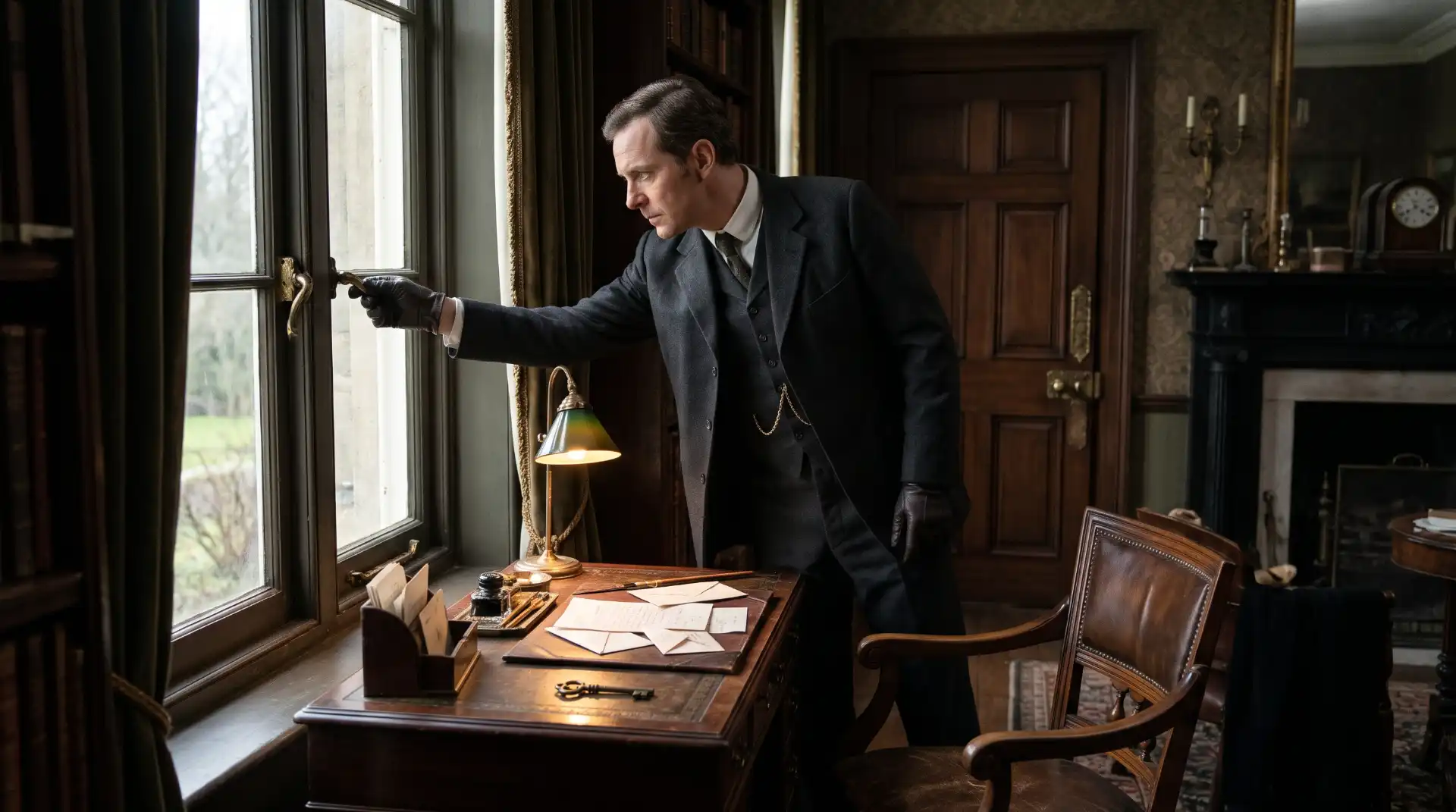
Authors frequently use ordinary objects to construct extraordinary puzzles. A key, a clock, a window latch, a piece of clothing, or a sound heard from another room may become important later.
However, do not assume that every unusual object must be the solution. Mystery writers also use red herrings to encourage readers to follow explanations that eventually prove incorrect.
The goal is to remain curious without becoming convinced too early. Record possible clues, but be willing to revise your theory when new information appears.
Avoid Searching for the Ending
Online searches can easily reveal the culprit or explain a mystery’s central mechanism. If you want to preserve the puzzle, avoid searching the title together with phrases such as “ending explained,” “who is the killer,” or “full solution” until you have finished the book.
Book reviews can also contain accidental spoilers. When choosing your next read, prioritize short descriptions, publisher summaries, and spoiler-free recommendations rather than detailed discussions of the final chapters.
Readers who discover books through social media may find it useful to review BookTok’s Impact on Reading Trends while remembering that viral enthusiasm does not always indicate whether a particular mystery will match their preferences.
Why Locked-Room Mysteries Make Excellent Book Club Selections
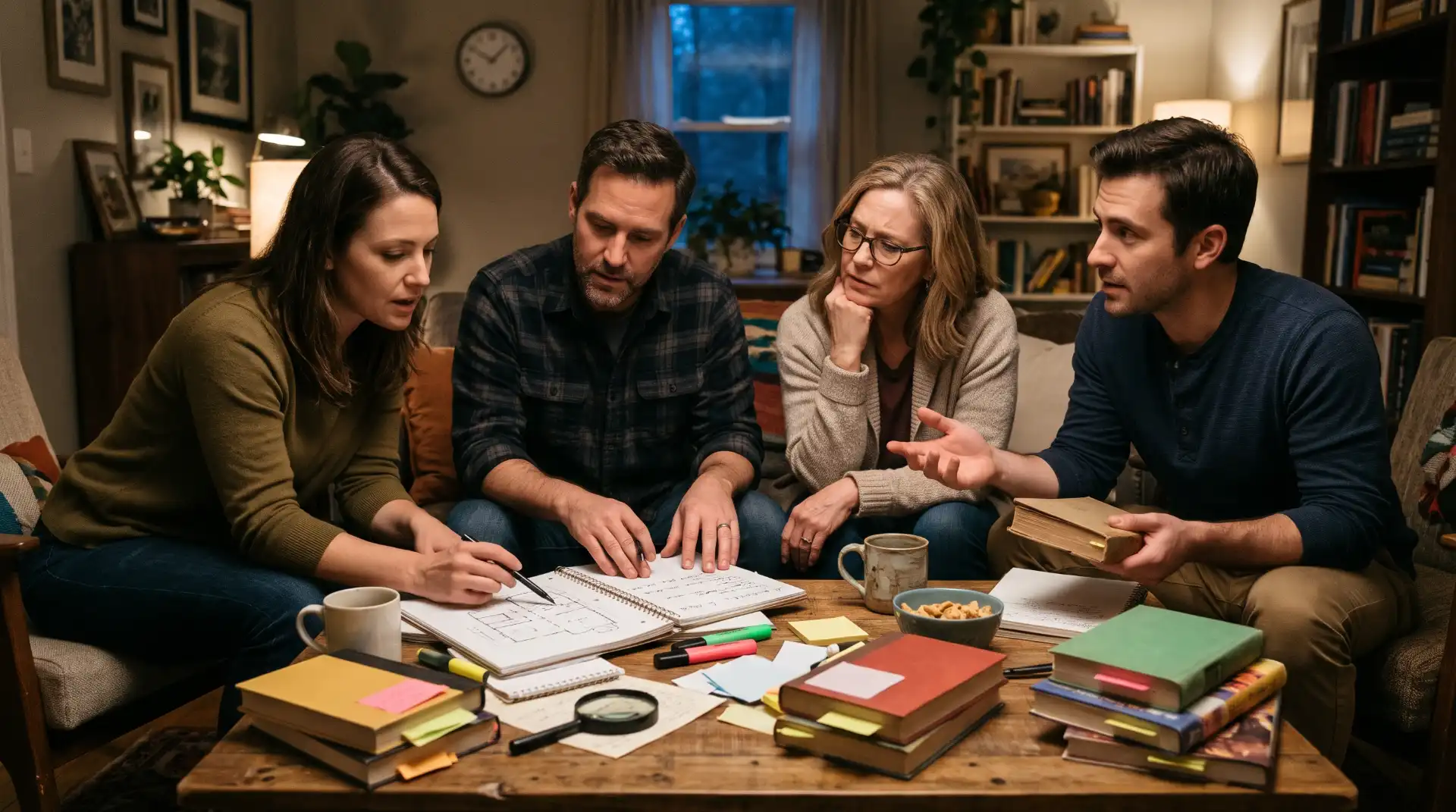
Locked-room mysteries can be especially enjoyable in a group because readers are likely to develop different explanations for the same evidence. One person may focus on physical access to the crime scene, another may notice a contradiction in a witness’s account, and a third may suspect a character whose behavior seems unusually helpful.
A book club can turn these observations into a lively discussion. Instead of asking only whether members enjoyed the book, ask which explanation seemed most plausible at different points in the story and what information changed their minds.
It is important to establish spoiler rules before the meeting. Members who finish early should avoid revealing the solution in a group chat or public discussion. For particularly intricate novels, a club can agree on a halfway discussion followed by a final meeting after everyone has completed the book.
The choice of title also influences the conversation. The Honjin Murders may encourage discussion about classic detective conventions and cultural context. The Decagon House Murders can prompt debate about setting and the arrangement of clues. The Tokyo Zodiac Murders may suit a group that enjoys detailed reconstruction and complex theories.
Readers who want more ideas for selecting books can explore Bookzee’s Fall 2026 reading list, which includes different genres and reading moods. A group can use such recommendations to balance a challenging mystery with lighter selections throughout the year.
For American readers, public libraries are also practical places to find book club copies, request titles, and discover related works. Availability varies by library and edition, so checking the catalog in advance can help everyone participate without needing to purchase every book.
Where to Find Locked-Room Mystery Books in the United States
You do not need to buy every mystery novel at full retail price. Public libraries, independent bookstores, used-book shops, and ebook services can all help you build a collection that fits your budget.
Start with your local public library’s catalog. Search by title and author, then look for related subject terms such as detective fiction, classic mysteries, or Japanese crime fiction. If the exact book is unavailable, a librarian may be able to suggest a similar title or help you request it through interlibrary loan, depending on local policies.
The Library of Congress Crime Classics collection is another useful resource for readers interested in the history of detective fiction. Its catalog includes classic crime works and collections that can help readers discover the broader traditions behind modern mystery novels.
For newer books, publisher websites provide useful information about editions, publication dates, formats, and official descriptions. Penguin Random House’s guide to locked-room mysteries is a helpful starting point for exploring additional titles beyond this list.
When buying books, compare formats and availability. A hardcover edition may be more expensive than a paperback, while an ebook or library copy may be a practical option for readers who want to try a new author before purchasing more titles. Used bookstores can be particularly useful for finding older mystery novels that are no longer displayed prominently in mainstream shops.
Final Thoughts: Find Your Next Impossible-Crime Mystery
The best locked-room mystery books turn a seemingly impossible event into an invitation to think more carefully. They challenge readers to question assumptions, reconstruct timelines, examine physical evidence, and consider whether the most obvious explanation is necessarily the correct one.
For classic puzzle construction, The Honjin Murders and The Decagon House Murders are excellent places to start. Readers who want a more elaborate intellectual challenge may prefer The Tokyo Zodiac Murders or Murder in the Crooked House. Those who enjoy atmospheric suspense can explore The Clock House Murders and The Library After Dark, while fans of classic closed-circle tension may appreciate And Then There Were None.
There is no single perfect entry point for every reader. Some people enjoy the strict logic of a traditional detective story, while others prefer a mystery in which the setting, emotional stakes, and characters create as much suspense as the central puzzle.
Whichever book you choose, try to resist the temptation to look up the solution before finishing. The real pleasure of an impossible-crime mystery lies in experiencing the uncertainty, developing your own theories, and discovering how the evidence fits together.
Choose a title that appeals to your reading style, settle into a comfortable spot, and begin investigating. The door may be locked, the suspects may all have convincing stories, and the crime may seem impossible—but the clues are waiting to be found.