
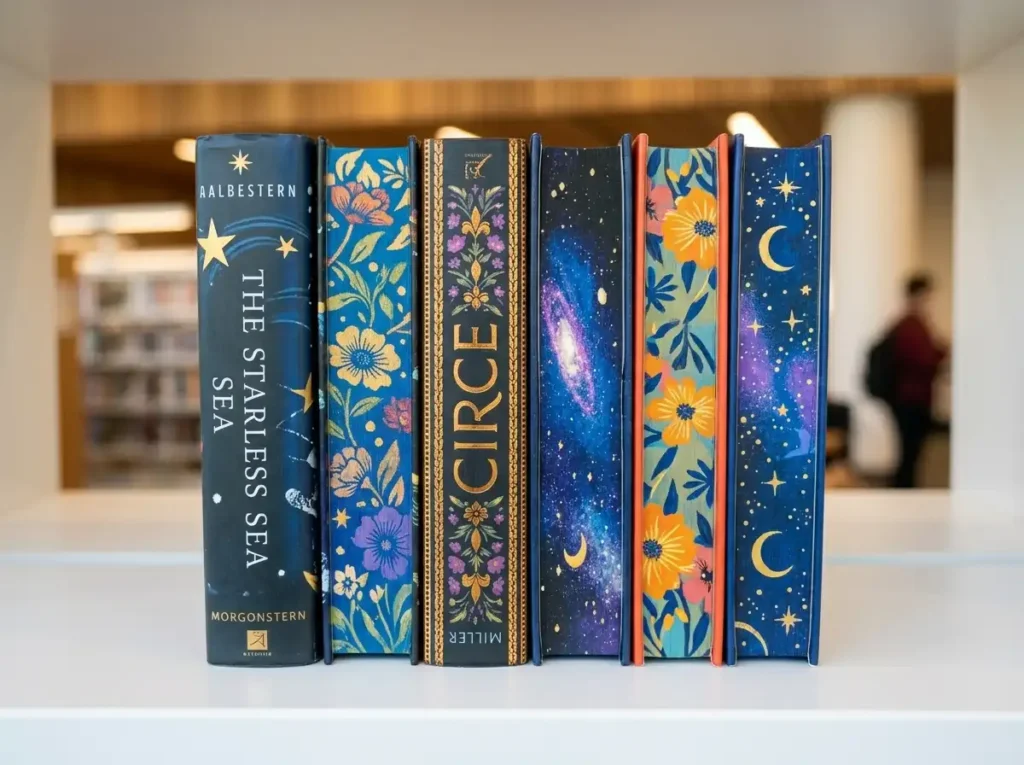
For centuries, the primary value of a book lay entirely within its text. A book was an entry point into an imaginative world, a vehicle for philosophy, or a tool for education. While beautiful leather-bound special editions and gold-foiled hardcovers certainly existed, they were traditionally treated as premium luxury items reserved for dedicated bibliophiles with deep pockets. The standard mass-market paperback, by contrast, was built purely for utility: cheap, lightweight, disposable, and easily packed away into a bag. You bought it to read it, and if the spine creased or the pages yellowed, it was simply a sign of a book well-loved.
However, the modern digital landscape has completely rewritten the relationship between readers and their personal libraries. Fueled by the visual-heavy curation of BookTok, Bookstagram, and digital community aesthetics, we are currently living through a massive “Aesthetic Object” boom. Books are no longer being consumed merely as intellectual text—they are being collected, styled, and displayed as essential pieces of interior design. The defining development of this shift is the explosive, viral rise of sprayed edge paperbacks, a design phenomenon that has successfully transformed the humblest book format into a highly competitive, limited-edition collector’s item.
The Shift from Hardcover Luxury to Paperback Customization
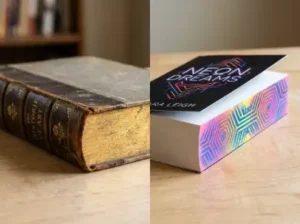 To understand the magnitude of this trend, one must trace how decorative page edges entered the mainstream consciousness. Historically, edge-gilding (coating the cut edges of a book’s pages with gold leaf) was an ancient technique used to protect books from dust and moisture while signaling extreme wealth. When the modern special-edition market began to heat up a few years ago, subscription boxes like FairyLoot and Illumicrate revived this concept by partnering with publishers to produce exclusive hardcovers featuring solid-color sprayed edges or stenciled designs.
What changed the game entirely was the trickling down of this premium treatment from collector-tier hardcovers into standard, everyday paperbacks. Publishers realized that the modern Gen Z and Millennial readership didn’t just want affordable books; they wanted beautiful objects that added personality to their social media feeds and physical shelves. By introducing stenciled patterns, vibrant neon solids, and intricate character artwork directly onto the edges of sprayed edge paperbacks, traditional imprints successfully commercialized an aesthetic that was previously trapped behind expensive paywalls or complex DIY crafting tutorials.
The Mechanics of Manufactured Scarcity: The First Print Run Strategy
The ubiquity of these decorative paperbacks isn’t merely an artistic choice; it is a brilliant, highly calculated commercial strategy designed by publishing houses to combat the rise of digital e-books and casual used-book marketplaces. For years, publishers struggled to convince consumers to buy brand-new physical books at full retail price upon release when they could simply wait a few months for a cheaper digital copy or a discounted second-hand alternative.
Enter the “First Print Run Only” model. Publishers are now intentionally producing sprayed edge paperbacks exclusively for the very first wave of a book’s physical printing. Once that initial inventory sells out, subsequent printings revert to plain, standard white edges. This creates an intense environment of manufactured scarcity. When a popular author announces a new release, social media communities instantly erupt into a buying frenzy driven by FOMO (Fear Of Missing Out). Readers know that if they do not pre-order the book or run to an indie bookstore on release day, they will miss their chance to own the aesthetic variant, successfully driving massive early-week sales spikes for traditional retailers.
The BookTok Effect: Transforming Unboxing into Performance Art
It is impossible to separate the rise of beautifully designed paperbacks from the visual ecosystems of modern social media. On BookTok, books are frequently reviewed not just by their plot or pacing, but by their overall physical aesthetic. The visual satisfaction of spinning a book around on camera to reveal a hidden, stenciled edge design has turned book hauls and unboxing videos into high-engagement performance art.
This environment has fostered a unique culture of competitive shelf curation. Readers no longer store their books away with the spines facing out; the “forward-facing” shelf display style has grown significantly, allowing collectors to showcase stenciled artwork and color-blocked edges like miniature canvases. This hyper-focus on appearance has naturally sparked debates within the community about the commercialization of reading. Critics argue that treating books like fast-fashion home decor items undermines the value of the prose itself. Yet, for the majority of young readers, the aesthetic appeal acts as a joyful gateway—making reading feel like an interactive, community-shared hobby where showing off your curated shelf is half the fun.
The Boutique Indie Economy: Custom Hand-Painted Edges
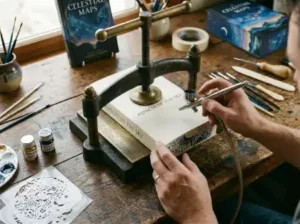 While massive corporate publishers are driving the commercial scale of this movement, the craze has also unlocked a thriving, lucrative indie economy. On marketplaces like Etsy and Shopify, independent artists and amateur bookbinders have built highly successful small businesses by purchasing standard paperbacks, masking the covers, and using airbrushes or digital stencils to apply custom, hand-painted edge designs.
These boutique creations frequently feature hyper-detailed landscapes, iconic quotes, or character silhouettes that match the specific plot of the novel. Because these are handmade items produced in tiny batches, collectors are willingly paying two to three times the original retail price of a paperback just to own an artist-customized version. This grassroots movement has forced publishers to innovate even further, pushing corporate design teams to transition from basic solid-color sprays to complex, multi-layered digital edge printing to keep up with indie artisan standards.
Conclusion: The Future of the Book as a Material Artifact
The explosive demand for decorated paperbacks signals a profound truth about the survival of print media in an increasingly digital world. When e-readers and audiobooks first emerged, pundits predicted the total demise of the physical bookstore. They believed that convenience and lower digital prices would inevitably render paper books obsolete. What those predictions missed was the deeply human desire for tangibility, ownership, and beauty.
The sprayed edge paperbacks craze proves that physical books aren’t just surviving; they are thriving by leaning heavily into their identity as tactile, material artifacts. By turning a simple paper edge into an emotional, visually stunning connection to a beloved story, publishers and readers have guaranteed that the physical library remains an indispensable sanctuary of personal expression. As long as readers find joy in the look, feel, and weight of a beautiful book in their hands, the printed page will continue to evolve—proving that sometimes, you absolutely should judge a book by its edges.