
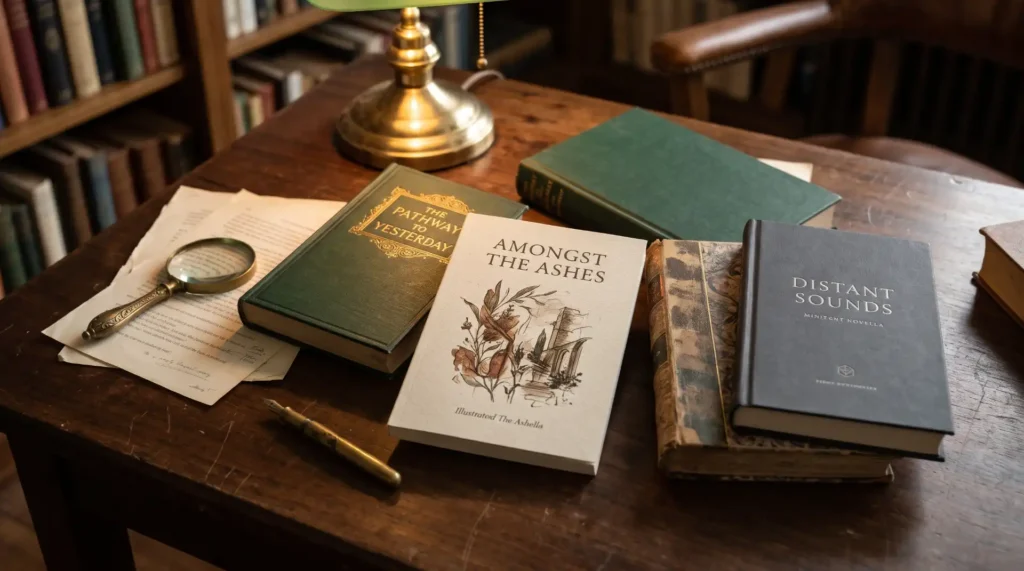
For generations, the publishing industry has placed considerable emphasis on the traditional novel. Long literary works, expansive fantasy series, complicated historical narratives, and lengthy contemporary fiction have occupied prominent positions in bookstores, bestseller lists, and readers’ personal libraries. A substantial book has often been associated with ambition, depth, and literary accomplishment. However, the relationship between readers and book length is becoming more interesting.
The literary novella, a form of fiction positioned between the short story and the full-length novel, is receiving renewed attention from readers, independent publishers, literary enthusiasts, and collectors. These shorter works offer opportunities for concentrated storytelling without requiring readers to commit to hundreds of pages. At the same time, beautifully designed editions are giving compact literary works a stronger physical presence, transforming some relatively short publications into desirable objects for personal libraries and book collections.
This development is about more than convenience. Readers are increasingly recognizing that a story does not need to be extremely long to be meaningful. A carefully constructed novella can explore complicated relationships, social conflicts, philosophical questions, historical experiences, and psychological struggles with remarkable depth. Its shorter structure can encourage precision, emotional intensity, and a reading experience that remains memorable long after the final page.
The physical presentation of books is also contributing to this renewed interest. Publishers are experimenting with attractive cover artwork, distinctive typography, textured materials, illustrated endpapers, special bindings, and limited print runs. These details can make a compact literary work feel like a carefully produced edition rather than an ordinary paperback.
For American readers, the return of the literary novella represents an opportunity to rediscover a traditional literary form while exploring a different side of contemporary publishing. It also creates new possibilities for collectors who appreciate the combination of storytelling, craftsmanship, visual design, and the history of printed books.
What Exactly Is a Literary Novella?
A novella is a work of prose fiction that is longer than a short story but shorter than a conventional novel. Although there is no universal definition that every publisher follows, the novella generally occupies a middle position between these two familiar literary formats.
One useful professional reference comes from the Science Fiction and Fantasy Writers Association (SFWA). Its Nebula Awards rules classify a novella as a work containing at least 17,500 words but fewer than 40,000 words. Under those rules, a novel begins at 40,000 words. These are award-category definitions rather than universal requirements for every publishing house, but they provide a helpful framework for understanding the format.
The distinction is important because a novella is not simply an incomplete novel or an unusually long short story. It is a literary form with its own possibilities. Writers can develop characters, explore a central conflict, establish an atmosphere, and create meaningful changes without introducing the extensive collection of subplots that often accompanies longer fiction.
A novella might follow one character through a major personal crisis, examine a family relationship over several weeks, or explore a fictional society through a narrowly focused narrative. The limited scope allows the author to maintain attention on the most important elements of the story.
Some novellas can be read in a single afternoon, while others require several reading sessions. Their final page count depends on typography, paper size, margins, illustrations, and other production choices. A 30,000-word manuscript, for example, could produce a relatively slim paperback or a more substantial hardcover if the publisher chooses a larger typeface and generous page design.
For readers, this flexibility is part of the appeal. A novella can deliver a complete literary experience without demanding the time commitment associated with a lengthy novel.
 Why Readers Are Rediscovering Shorter Literary Works
Reading Time Has Become an Important Consideration
One reason literary novellas are attracting attention is that readers have different expectations about how they spend their free time. Many Americans balance demanding work schedules, family responsibilities, education, commuting, and entertainment activities. Finding several uninterrupted evenings to finish a long novel can be difficult.
This does not mean readers have lost interest in substantial literature. Rather, many are becoming more selective about how they organize their reading time.
A novella offers a practical alternative. Readers can experience a complete fictional narrative without committing to a lengthy series or a book containing hundreds of pages. The shorter format can make it easier to finish a story during a weekend, a vacation, or a few evenings after work.
There is also a psychological benefit to completing books. Readers who frequently purchase novels but struggle to finish them may find satisfaction in choosing shorter literary works that provide a clear beginning, development, and conclusion within a manageable timeframe.
However, convenience alone does not explain the novella’s appeal. A compact story can be intellectually demanding and emotionally powerful. The strongest examples do not feel like shortened versions of larger novels. They feel complete because the author has selected the right material for the story being told.
The Appeal of Focused Storytelling
Long novels often have room for several character perspectives, complicated family histories, extensive world-building, and multiple narrative developments. These features can be wonderful when they support the story, but they are not always necessary.
Novellas frequently operate through concentration. Rather than following several unrelated characters, an author might explore one person’s internal transformation or a single conflict that gradually reveals larger questions about society.
This concentrated approach can produce an especially powerful reading experience. A relatively small event might reveal a character’s deepest insecurity. A conversation between two people might expose years of resentment. A seemingly ordinary location might become a symbol of isolation, memory, or social change.
Because the narrative has fewer distractions, readers may pay closer attention to the language, imagery, atmosphere, and emotional development.
For writers, the format also encourages discipline. Every scene needs a purpose, and secondary characters must contribute meaningfully to the central narrative. The author has less room for unnecessary detours.
The result can be fiction that feels remarkably complete despite its modest length.
Short Books Can Encourage More Diverse Reading
Another advantage of the novella is that it can introduce readers to unfamiliar writers and literary traditions.
A person who normally reads contemporary American fiction might be more willing to try a translated novella than a lengthy international novel. Someone interested in classic literature might begin with a compact work by an unfamiliar author before exploring that writer’s larger body of work.
This is particularly useful for independent publishers and smaller literary presses. A shorter publication can provide an accessible introduction to an emerging writer, an experimental style, or a literary tradition that has received limited attention in mainstream American publishing.
Readers who enjoy discovering international fiction can also explore Bookzee’s coverage of Japanese-inspired fiction and its growing American audience. The article examines how translated storytelling, distinctive literary traditions, and visually appealing editions are introducing American readers to a broader range of international books.
Compact literary works can serve a similar purpose. They allow readers to explore unfamiliar voices without feeling obligated to undertake an extensive reading project.
The Historical Importance of the Novella in American and World Literature
The novella is not a newly invented publishing trend. Its history stretches across several centuries, and some of the most influential literary works ever written belong to this category or are frequently discussed as examples of novella-length fiction.
The form has been particularly attractive to writers who want to explore a complicated subject without constructing an enormous narrative. Throughout literary history, authors have used shorter fiction to examine human behavior, political systems, moral decisions, psychological conflict, and social change.
Classic Novellas That Continue to Influence Readers
Several well-known literary works demonstrate why the novella remains relevant.
Of Mice and Men by John Steinbeck is one of the most recognizable examples in American literature. Published in 1937, the story follows two traveling workers during the Great Depression as they pursue an uncertain dream of building a better life. Its relatively compact structure allows Steinbeck to examine friendship, economic insecurity, loneliness, disability, and the vulnerability of working people.
The book is frequently taught in American schools because its accessible length does not diminish its thematic complexity. It also demonstrates how a limited cast of characters and a focused setting can produce a story with lasting cultural significance.
The Old Man and the Sea by Ernest Hemingway is another important example. The story follows an aging Cuban fisherman struggling to catch a giant marlin after a prolonged period of bad luck. Hemingway uses a relatively simple narrative situation to examine perseverance, pride, aging, personal identity, and the relationship between human beings and nature.
Its success demonstrates that literary impact does not necessarily depend on elaborate plotting.
The Metamorphosis by Franz Kafka provides a very different example. The story begins with an extraordinary transformation and uses that situation to explore alienation, family relationships, responsibility, and the experience of being treated as an outsider.
Other frequently discussed works include A Christmas Carol by Charles Dickens, Animal Farm by George Orwell, The Turn of the Screw by Henry James, and The Strange Case of Dr. Jekyll and Mr. Hyde by Robert Louis Stevenson.
These books demonstrate the flexibility of the novella. It can accommodate social criticism, psychological fiction, supernatural storytelling, political allegory, and emotional drama.
For modern readers, returning to these works can provide a useful reminder that shorter literary fiction has always occupied an important position in publishing.
Why the Novella Is Different From the Short Story
Although novellas and short stories share certain characteristics, they generally offer different narrative possibilities.
A short story often concentrates on a particular moment, revelation, encounter, or turning point. It may introduce a character shortly before an important event and conclude once the reader understands its significance.
A novella usually has more room for development. The author can establish a setting, introduce several characters, develop relationships, and build a sequence of events that produces a more extensive transformation.
The distinction is not simply about page count. It is also about narrative structure.
A short story might examine a conversation between a father and daughter that reveals a hidden family problem. A novella could follow that family over several days, showing how the problem affects different relationships and ultimately changes their understanding of one another.
The novella therefore offers a middle ground between concentrated short fiction and the broader architecture of a novel.
Why Literary Awards Matter
Literary awards have helped maintain the visibility of shorter fiction.
The SFWA Nebula Awards, for example, include a separate novella category. This gives eligible writers an opportunity to receive recognition without competing directly against full-length novels.
The Hugo Awards also recognize novella-length fiction, helping readers identify important works in science fiction and fantasy.
These categories are valuable because shorter fiction can sometimes receive less commercial attention than conventional novels. A separate award category makes it easier for readers, publishers, reviewers, and literary communities to recognize the achievements of writers working in the form.
Readers interested in exploring the official classification can consult the Science Fiction and Fantasy Writers Association’s Nebula Awards rules.
The continued recognition of novellas by established literary organizations demonstrates that the form is not simply a publishing compromise. It is a legitimate creative category with its own artistic standards.
 The Beautiful Book Edition: Why Physical Design Matters Again
The renewed interest in literary novellas is closely connected to another development in publishing: the growing attention given to the physical appearance and construction of printed books.
For many years, book production was frequently approached as a practical process. Publishers needed to create attractive covers, print readable text, and produce books at prices that would appeal to customers.
Those priorities remain important. However, some publishers are increasingly treating the physical book as an object that deserves careful artistic consideration.
A beautifully designed edition can turn a relatively short literary work into something readers want to keep, display, give as a gift, or collect.
Cover Design Has Become Part of the Reading Experience
A book cover is often the first connection between a reader and a story.
Before opening a book, customers encounter its title, typography, illustrations, colors, and overall visual composition. These elements communicate something about the book’s personality.
For literary novellas, the cover can be especially important because the physical format may be smaller and less visually imposing than a conventional hardcover novel.
Publishers can use distinctive illustrations, unusual color combinations, minimalist artwork, and carefully selected typography to establish a recognizable identity.
For example, an edition of a psychological novella might feature a restrained cover with a single architectural detail. A story about memory could use layered illustrations, faded colors, or translucent design elements. A historical narrative might incorporate typography inspired by an earlier publishing period.
The goal is not simply to make the cover attractive. It is to create a visual introduction to the story.
When the design reflects the themes of the book, the physical object becomes part of the overall artistic experience.
The Importance of Typography
Typography is one of the most overlooked elements of book design.
Readers may not consciously notice the typeface, but it influences the appearance, readability, and personality of a printed book.
A traditional literary novella might use a classic serif typeface that creates a familiar reading experience. A contemporary experimental work might use more unconventional typography to support its visual identity.
The spacing between lines, margins, chapter headings, paragraph layout, and placement of page numbers also influence the finished publication.
For collectors, these details can distinguish a carefully produced edition from a mass-market paperback.
A well-designed novella should be comfortable to read while maintaining a consistent visual relationship between its cover, interior pages, and binding.
Publishers that invest in professional typesetting can make shorter works feel particularly refined.
Paper Quality and the Tactile Experience
The physical qualities of paper are another reason some readers prefer printed editions.
Different papers have different textures, weights, colors, and finishes. A publisher might choose warm-toned uncoated paper for a literary work, smooth white paper for a modern illustrated edition, or heavier stock for a book containing artwork.
These choices influence how the book feels in the reader’s hands.
A slightly textured cover can create a more distinctive impression than a standard glossy finish. Thick endpapers can add a sense of quality, while carefully selected interior paper can improve the reading experience.
The important distinction is that premium materials should support the purpose of the publication rather than simply increase its price.
A beautifully designed book does not necessarily need expensive materials. Good proportions, appropriate typography, thoughtful artwork, and consistent production can create an appealing result without making a book financially inaccessible.
Clothbound Editions and Decorative Bindings
Clothbound books have a long history in publishing and remain attractive to collectors.
Instead of using a conventional printed paper cover, a clothbound edition uses fabric as the outer covering material. The cloth can be printed, embossed, or decorated with foil lettering.
This approach can produce a subtle and elegant appearance.
Some publishers also experiment with colored cloth, illustrated spines, decorative stamping, and contrasting endpapers. These details can make even a relatively small book look substantial.
For literary novellas, clothbound editions are particularly interesting because the compact dimensions can create a sense of intimacy.
A small hardcover with a distinctive spine and carefully selected materials may look striking on a bookshelf without requiring the physical size of a large illustrated volume.
Collectors often appreciate the relationship between a book’s dimensions and its production quality.
Illustrated Endpapers and Interior Artwork
The design of a book does not end with its cover.
Endpapers, the pages connecting the book’s interior text block to its covers, provide another opportunity for publishers to introduce visual details.
Some editions use decorative patterns, maps, illustrations, archival imagery, or colors that complement the cover design.
A novella set in a fictional city might include a simple map. A historical story might use an illustration inspired by the period. A literary work exploring family history might include a decorative design that reflects the narrative’s themes.
Interior artwork can also appear between chapters or at important narrative transitions.
However, restraint is often important. The purpose of illustration should be to strengthen the publication rather than distract from the writing.
A beautifully designed novella can be visually distinctive while still allowing the literary text to remain central.
Why Collectors Are Paying Attention to Beautifully Designed Short Books
Book collecting has traditionally included several different motivations.
Some collectors focus on first editions, signed copies, historical publications, rare authors, or books associated with important cultural events. Others are more interested in binding techniques, illustrations, printing history, typography, and the physical construction of publications.
The literary novella provides opportunities for all these interests.
The Appeal of Limited and Special Editions
A limited edition is a publication produced in a restricted quantity. Publishers may create these editions to mark a special release, celebrate an author, or offer readers a more elaborate version of an existing work.
A special edition might include a signed bookplate, an alternative cover, a unique binding, decorative endpapers, or additional illustrations.
Not every limited edition becomes valuable, and a restricted print run does not automatically make a book rare in the long term.
Nevertheless, collectors often appreciate the opportunity to own a publication that differs from the standard commercial edition.
For a literary novella, a special edition can be particularly appealing because the smaller format provides opportunities for experimentation.
A publisher might release a numbered hardcover with a distinctive cover illustration, a slipcase, and a short introduction by a literary scholar. Another might produce a hand-numbered edition with original artwork.
The appeal comes from the combination of the story and the way it has been presented.
Why Smaller Editions Can Feel More Personal
A large book can make an impressive display, but smaller publications have their own charm.
A compact hardcover may feel more intimate and carefully considered. It can be easy to hold, transport, display, or arrange alongside other books by the same author.
Collectors who enjoy building themed shelves may appreciate the consistency of a group of similarly sized novellas.
For example, someone interested in American literary history might collect compact editions of works by Steinbeck, Hemingway, and other influential writers. Another collector might focus on contemporary independent publishers that specialize in short fiction.
A third might collect translated novellas from different countries, using the collection to explore international literary traditions.
This approach makes book collecting less dependent on the market value of individual titles.
The collection becomes a reflection of personal interests.
First Editions and Signed Copies
First editions remain an important part of traditional book collecting.
However, buyers should understand that the first printing, first edition, signed copy, and limited edition are not necessarily interchangeable terms.
A first edition generally refers to the initial published edition of a work. A first printing refers to a particular printing within that edition. Publishers use different conventions to identify printings, so collectors should examine the publication details rather than relying only on a seller’s description.
A signed copy includes an author’s signature, but the circumstances of signing can vary. A book signed during a public event may be widely available, while a specially inscribed copy connected to a particular person or occasion may be more unusual.
For literary novellas, these distinctions matter when collecting important works or tracking the publication history of contemporary authors.
A collector purchasing an expensive edition should verify the publisher, printing information, condition, signature authenticity, and any documentation accompanying the book.
The Role of Independent Publishers
Independent publishers are important to the renewed interest in beautifully designed short fiction.
Smaller presses can sometimes take creative approaches that larger commercial publishers may find difficult to justify across a mass-market publishing program.
They may publish unusual literary formats, experimental fiction, translated novellas, poetry collections, or works by writers whose audiences are still developing.
Some independent publishers also place significant attention on the physical construction of their publications.
They might commission original cover artwork, work with specialist printers, experiment with binding materials, or produce carefully numbered editions.
This creates opportunities for collectors who want to discover books outside the most heavily promoted commercial releases.
Independent publishing also helps preserve literary diversity. A short work that might be difficult to position within the conventional expectations of a major commercial publisher can find a suitable audience through a smaller press.
For readers, this means the novella can provide access to writing that might otherwise remain difficult to discover.
The Influence of Independent Bookstores and Literary Communities
The renewed interest in printed novellas is not happening entirely online.
Independent bookstores, public libraries, literary festivals, university bookstores, and specialist bookshops all play important roles in introducing readers to shorter literary works.
These spaces allow customers to examine a publication before purchasing it.
A reader can pick up a hardcover, examine the paper, look at the binding, compare editions, and ask a bookseller about the author or publisher.
That experience is difficult to reproduce through a product photograph.
Independent bookstores can also create dedicated displays featuring literary novellas, translated short fiction, classic shorter works, and beautifully produced editions.
Such displays encourage readers to explore a format they might otherwise overlook.
The growing interest in physical reading also connects with Bookzee’s article on the slow reading movement and the return of physical books. That discussion explores why some readers are choosing printed books as part of a more deliberate relationship with reading and screen time.
For novella collectors, the physical book can represent both the story itself and the experience of owning a carefully produced object.
Literary Events Can Introduce Readers to Short Fiction
Author readings, independent publishing fairs, literary festivals, and bookstore events can help shorter works reach new audiences.
A publisher might organize an evening dedicated to contemporary novellas, inviting several authors to read selected passages and discuss the creative decisions behind their books.
A bookstore could arrange a display of compact classics alongside contemporary publications, encouraging readers to compare how the form has developed over time.
These events also offer opportunities for readers to discover independent presses and emerging authors.
A short literary work can be particularly suitable for an author reading because selected passages can often be presented within a reasonable amount of time without losing the narrative’s overall character.
For collectors, these events may also create opportunities to purchase signed copies or meet the people responsible for producing the editions.
Libraries Help Preserve the Literary Form
Public and university libraries remain important institutions for shorter literature.
A library collection allows readers to explore novellas without having to purchase every title. This is especially valuable for students, researchers, and readers interested in unfamiliar authors.
Libraries also preserve different editions, translations, and historical publications that help document changes in publishing.
For example, a researcher studying American literature might compare different editions of a classic novella to examine changes in cover design, typography, introductory material, or editorial presentation.
A library’s collection can therefore support both reading and the study of books as physical cultural objects.
Libraries also provide opportunities for readers who are interested in the literary form but cannot afford collectible editions.
A person can read an ordinary library copy of a novella and later decide whether to purchase a special edition for a personal collection.
This separation between reading access and collecting is important. Beautiful editions should not become the only way readers can experience important literature.
How to Start Collecting Literary Novellas
Collecting literary novellas does not require an enormous budget or extensive knowledge of rare books.
The most rewarding collections often begin with a particular interest rather than an attempt to acquire expensive publications.
A reader might start by collecting classic American novellas, then expand into contemporary fiction or translated literature.
Another person might focus on the work of one author, looking for different editions of the same title.
The important thing is to develop a clear collecting interest.
Choose a Theme for Your Collection
A collection becomes more meaningful when its books share a recognizable connection.
Some collectors focus on a particular literary period, such as American modernism or nineteenth-century European fiction. Others collect books published by independent presses, translated works, signed editions, or publications featuring distinctive illustrations.
A theme also helps buyers make purchasing decisions.
Instead of purchasing every attractive short book they encounter, collectors can evaluate whether a publication contributes something meaningful to the collection.
A theme might involve classic American literature, contemporary women writers, international novellas in translation, experimental fiction, or beautifully designed literary hardcovers.
The possibilities are extensive.
Understand the Difference Between Rarity and Desirability
One of the most important lessons for new collectors is that rarity and desirability are different concepts.
A book may have a small print run but attract very little demand. Another title may have been printed in large quantities but remain highly sought after because of its literary importance, historical significance, or association with a famous author.
The price of a collectible book depends on several factors, including condition, edition, printing history, author reputation, demand, and availability.
Collectors should therefore avoid assuming that a limited edition will automatically increase in value.
A special edition should ideally be purchased because its design, production, or literary content is genuinely appealing.
Financial appreciation, if it occurs, should be treated as uncertain rather than guaranteed.
Inspect Condition Before Purchasing
Condition is particularly important when buying collectible books.
A beautiful edition can lose much of its appeal if the dust jacket is torn, the binding is damaged, pages are missing, or the book has been exposed to moisture.
Collectors should examine the spine, corners, hinges, pages, endpapers, and dust jacket.
They should also look for signs of mold, insect damage, excessive sunlight exposure, and previous repair work.
When purchasing online, ask sellers for clear photographs of the actual copy rather than relying entirely on generic product images.
Descriptions such as “like new,” “fine,” or “very good” can vary between sellers. It is useful to understand the seller’s grading system and request clarification when the condition is uncertain.
Build a Collection Gradually
There is no need to purchase dozens of books immediately.
A smaller collection of carefully selected editions can be more satisfying than a large shelf of publications chosen without a clear purpose.
Start with works you genuinely want to read. Then explore different editions to understand what makes certain publications especially attractive.
Over time, you may discover preferences for particular publishers, binding materials, cover artists, or printing techniques.
This knowledge makes future purchases more intentional.
It also helps prevent impulse buying based solely on attractive packaging or limited-edition marketing.
How to Preserve and Display a Collection of Beautiful Books
Collecting beautifully designed novellas is only part of the experience. Keeping them in good condition is equally important.
Printed books are made from materials that respond to their environment. Paper can become brittle, bindings can deteriorate, cloth covers can fade, and moisture can encourage mold growth. Even relatively new publications can suffer damage if they are stored improperly.
Collectors who want their books to remain attractive for many years should consider the conditions in which they are displayed and stored.
Protect Books From Direct Sunlight
Sunlight can gradually fade book covers, dust jackets, and printed illustrations. This is particularly noticeable with editions that use strong colors, delicate artwork, or foil details.
A bookshelf positioned directly beside a sunny window may look attractive, but it can expose valuable publications to unnecessary light.
A better approach is to display collectible novellas away from direct sunlight. Rooms with controlled lighting are preferable, especially for signed copies, limited editions, and publications with unusual materials.
If a book is particularly valuable, collectors may choose to keep it stored safely and display another copy.
Maintain a Stable Storage Environment
Temperature and humidity are important considerations.
Excessive humidity can encourage mold growth, while very dry conditions can contribute to the deterioration of some materials. Large fluctuations in environmental conditions can also place stress on bindings and paper.
Avoid storing valuable books in basements, attics, garages, or other locations where temperature and humidity are difficult to control.
For American collectors, this is particularly relevant because regional climates vary considerably. A collection stored in a humid coastal environment may require different precautions from one kept in a dry inland home.
Air circulation, stable indoor conditions, and protection from water leaks are useful starting points.
Handle Collectible Editions Carefully
Readers sometimes assume that wearing cotton gloves is always the safest way to handle valuable books. Interestingly, the Library of Congress recommends clean, dry hands for handling many paper-based collection materials because gloves can reduce tactile sensitivity and increase the risk of accidental damage.
The institution also advises against pulling books from shelves by their top edges, which can damage the spine.
Collectors can consult the Library of Congress guide to proper book handling and preservation for additional practical guidance.
When opening an older or delicate hardcover, avoid forcing the book completely flat. Supporting the covers reduces unnecessary strain on the binding.
These simple habits can help preserve books that are intended to remain in a collection for many years.
Display Books Without Exposing Them to Unnecessary Risk
A thoughtfully arranged bookshelf can become an important part of a collector’s home.
Some people organize books by author, publisher, literary period, or subject. Others prefer to arrange special editions by color, size, or binding style.
For literary novellas, grouping similarly sized editions can create a particularly attractive display.
However, appearance should not take priority over preservation.
Books should not be packed so tightly that they become difficult to remove. Shelves should provide sufficient support, and heavier books should not be positioned where they might fall onto smaller publications.
Collectors can also use protective archival boxes for especially delicate editions.
A collection does not need to resemble a museum exhibition. The best arrangement is one that allows books to be enjoyed while protecting their physical condition.
How Independent Publishers Can Take Advantage of the Novella Revival
The renewed attention given to shorter literary fiction also creates opportunities for the publishing industry.
Traditional publishers, independent presses, and self-publishing authors can approach the novella as a format with its own commercial and creative advantages.
However, success requires more than publishing a shorter manuscript and placing it in a small paperback.
The format needs to be presented clearly to readers.
Position Novellas as Complete Literary Experiences
One challenge facing novella publishing is that some readers associate shorter books with less substantial storytelling.
Publishers can address this perception by explaining what makes the format different.
Instead of promoting a novella primarily through its word count, marketing should emphasize its central themes, distinctive characters, literary style, and emotional impact.
A publication might be described as a concentrated psychological portrait, an intimate historical narrative, or a complete fictional exploration of a particular social issue.
This helps customers understand that they are purchasing a deliberately structured work rather than an unfinished novel.
Develop Distinctive Physical Editions
Independent publishers can also differentiate their publications through design.
A novella might be released in a compact hardcover with original artwork, carefully selected paper, and a distinctive binding. Another publication could include an author’s introduction, an illustrated title page, or a short essay explaining the historical background of the story.
The objective is to make the physical edition memorable without introducing unnecessary production costs.
Not every novella needs a luxury treatment. An affordable paperback can still have excellent typography, attractive cover artwork, and thoughtful interior design.
Publishers should consider the intended audience, retail price, distribution costs, and expected demand before deciding how elaborate an edition should be.
Use Special Editions Strategically
Limited editions can be useful for publishers that already have an established audience.
For example, an independent press might release a standard paperback for general readers and a numbered hardcover for collectors.
This allows the publisher to serve different purchasing preferences without making the entire print run expensive.
A signed edition could also be offered through the publisher’s website or during a bookstore event.
However, limited-edition claims should be transparent. Publishers should communicate the number of copies produced and explain what makes the edition different.
Collectors appreciate authenticity, and misleading scarcity claims can damage trust.
Give Emerging Writers More Opportunities
The novella can provide a useful publication route for emerging authors.
A writer developing a distinctive literary style may have a story that does not fit comfortably into the conventional length expectations of commercial novels.
Rather than expanding the manuscript with unnecessary material, the writer may be better served by publishing it as a novella.
Independent presses can use the format to introduce new authors to readers while maintaining a more focused editorial approach.
A successful novella may also help an author establish a readership before publishing longer works.
This does not guarantee commercial success, but it provides another way for distinctive literary voices to enter the publishing market.
Digital and Print Editions Can Complement Each Other
The return of beautifully designed printed books does not mean digital publishing is becoming irrelevant.
E-books remain useful for readers who prioritize portability, affordability, accessibility, and immediate availability.
A publisher can offer a digital novella alongside a carefully designed print edition.
The digital version can introduce the story to a wider audience, while the physical version appeals to readers who enjoy printed books and collectors interested in the publication itself.
This approach is especially practical for independent publishers that want to reach readers across the United States without relying exclusively on physical bookstore distribution.
The two formats serve different purposes and can support the same literary work.
 Where American Readers Can Find Interesting Novellas and Special Editions
Readers interested in literary novellas have several options for discovering new publications.
Independent bookstores are often excellent places to begin because booksellers may recommend shorter works that receive less attention in mainstream bestseller displays.
University bookstores can also be useful, particularly those with strong literature, history, and international studies collections.
Used bookstores provide another opportunity. They frequently contain older editions, discontinued publications, and literary works that are difficult to find through ordinary retail channels.
Online bookstores can help readers compare editions and search for particular publishers, authors, or printing details. However, collectors should carefully examine seller descriptions and condition photographs before purchasing expensive copies.
Explore Independent Literary Publishers
Many independent presses specialize in distinctive literary fiction and are willing to publish works that fall outside conventional commercial categories.
Some focus on translations, experimental writing, regional literature, or shorter works by emerging authors.
Readers should explore publisher catalogs rather than relying entirely on bestseller lists. A press that specializes in literary fiction may offer a novella that receives little mainstream publicity but becomes an important discovery for someone interested in the form.
Publisher newsletters and seasonal catalogs can also introduce readers to upcoming releases.
Look Beyond the Most Famous Authors
Classic novellas by Hemingway, Steinbeck, Kafka, and Dickens provide excellent starting points, but collectors should not limit themselves to familiar names.
Contemporary authors are continuing to explore the format, and international writers bring different narrative traditions and perspectives.
A collection that combines established classics with contemporary publications can become much more interesting than one focused exclusively on famous literary works.
Readers can also explore the growing popularity of international storytelling through Bookzee’s article on the rise of manga and international storytelling among American readers. Although manga is a different literary format, its growing presence in American publishing demonstrates the value of exploring stories beyond familiar domestic categories.
Attend Book Fairs and Literary Festivals
Book fairs can be especially rewarding for collectors.
Events organized around independent publishing, small presses, literary arts, and bookmaking provide opportunities to discover publications that may not appear in large retail chains.
Some events feature handmade books, artist books, limited print runs, and specialist publishers.
Visitors can speak directly with publishers, examine materials, and learn about the decisions behind a particular edition.
This experience adds another dimension to collecting. Instead of simply purchasing a book, readers can learn about the people and processes involved in producing it.
Is Collecting Beautifully Designed Novellas Expensive?
It does not have to be.
Although some collectible editions can command substantial prices, there are plenty of ways to develop an attractive collection on a reasonable budget.
Standard paperback editions of classic novellas are often inexpensive, especially when purchased secondhand. Used bookstores, library sales, estate sales, and online secondhand marketplaces can provide opportunities to find interesting publications.
Readers can also watch for publisher sales, seasonal promotions, and discounted remainder copies.
A useful strategy is to distinguish between books purchased primarily for reading and those purchased primarily for collecting.
A reader might buy an affordable paperback to experience a particular novella and later acquire a special hardcover edition if the story becomes a personal favorite.
This prevents collectors from spending significant amounts of money on books they have not yet read.
It also makes collecting more personal. The most valuable book on a shelf does not necessarily have to be the most expensive one.
Sometimes a modest paperback discovered in a used bookstore becomes the publication that inspires an entire collection.
What the Return of the Literary Novella Means for the Future of Publishing
The renewed attention given to literary novellas reflects several developments occurring simultaneously in the book industry.
Readers are exploring different approaches to reading time. Independent publishers are looking for ways to distinguish their publications. Collectors are paying attention to physical book design. Literary communities are rediscovering works that do not fit neatly into conventional commercial categories.
Together, these developments create opportunities for the novella to occupy a more visible position in contemporary publishing.
The form also challenges the assumption that commercial and literary success must depend on length.
A carefully written 25,000-word story can leave a lasting impression. A slim hardcover can become a treasured part of a personal library. An independent publisher can introduce a promising writer through a focused publication rather than waiting for a conventional full-length novel.
There are also opportunities for more international literary exchange. Compact fiction can introduce readers to authors whose work might otherwise seem intimidating because of unfamiliar historical settings, cultural references, or literary traditions.
As publishers continue experimenting with formats and physical design, the novella may become an increasingly attractive option for readers who appreciate both literary quality and thoughtful production.
However, the format’s future will depend on more than attractive covers or limited editions.
The stories themselves must remain compelling.
Beautiful design may encourage someone to pick up a book, but memorable writing is what encourages them to keep it.
Frequently Asked Questions About Literary Novellas and Collectible Editions
Are novellas becoming popular again?
Novellas are receiving renewed attention as readers, publishers, and independent presses explore shorter literary formats. Their appeal comes from focused storytelling, manageable reading commitments, and opportunities for creative publishing design. However, the revival should be understood as growing interest in the format rather than evidence that novellas have replaced traditional novels in the commercial market.
How many pages does a literary novella usually have?
There is no fixed page requirement. A novella commonly contains approximately 17,500 to 40,000 words under the SFWA Nebula Awards classification. Depending on the book’s dimensions, typography, spacing, and illustrations, this might translate into approximately 70 to 160 printed pages. Some editions may be longer because of additional introductory material or decorative design.
What are some famous examples of literary novellas?
Well-known examples include Of Mice and Men by John Steinbeck, The Old Man and the Sea by Ernest Hemingway, The Metamorphosis by Franz Kafka, A Christmas Carol by Charles Dickens, and The Strange Case of Dr. Jekyll and Mr. Hyde by Robert Louis Stevenson. These works demonstrate the variety of subjects and storytelling approaches possible within the format.
What makes a book edition collectible?
Several characteristics can make an edition desirable to collectors, including its publication history, printing number, author signature, condition, binding quality, illustrations, provenance, and scarcity. A beautifully designed limited edition may attract interest, but limited availability does not automatically guarantee future financial value.
Are beautifully designed books worth collecting?
They can be, particularly for readers who appreciate printing, illustration, typography, and bookbinding. A well-produced edition can provide enjoyment beyond the story itself. However, collectors should prioritize personal interest, production quality, and condition rather than assuming that every special edition will appreciate in value.
How should collectible books be stored?
Books should generally be kept in a stable indoor environment, away from direct sunlight, excessive moisture, and extreme temperature fluctuations. Avoid storing valuable publications in damp basements or hot attics. Handle delicate books carefully, support their bindings when opening them, and consider archival boxes for particularly fragile editions.
Conclusion: Small Books Can Make a Lasting Literary Impression
The return of the literary novella represents an interesting development in contemporary reading and publishing culture. At a time when readers have access to enormous novels, digital libraries, subscription platforms, and countless entertainment options, shorter literary works are reminding people that meaningful storytelling does not depend on the number of pages.
Novellas offer concentrated narratives, memorable characters, and opportunities to explore complicated subjects without unnecessary expansion. Their history includes some of the most influential works in American and international literature, and their continued recognition by literary organizations demonstrates the importance of the format.
At the same time, beautifully designed editions are giving these works another reason to attract attention. Thoughtful typography, distinctive cover artwork, cloth bindings, quality paper, decorative endpapers, and limited production runs can transform a compact publication into a desirable object.
For American readers, the combination creates an appealing opportunity to explore literature in a different way. Someone can discover a classic novella, purchase a contemporary work from an independent press, or begin collecting beautifully produced editions that reflect personal literary interests.
The most important point is that collecting and reading do not need to be separate activities. A book can be enjoyable because of its writing, its physical construction, its historical importance, or the memories associated with discovering it.
A carefully written novella can remain on someone’s bookshelf for decades, just like a much longer novel. Its modest size does not reduce its literary significance.
Perhaps that is the strongest reason the form deserves renewed attention: some stories do not need hundreds of pages to stay with a reader.